


The three-company competition, the controversial government contract, and the design that changed automotive history.
The Jeep is one of the most recognizable vehicles ever produced. Its upright grille, circular headlights, flat fenders, and utilitarian proportions have become symbols of American ingenuity and automotive freedom. But despite its close association with Willys-Overland, the original Jeep was not the invention of a single manufacturer.
Its creation was the result of an extraordinary competition involving three American automobile companies, the U.S. Army, and a demanding development schedule that would be nearly impossible by modern automotive standards.
The story begins in 1940, before the United States entered World War II, when the military urgently needed a new kind of vehicle.
The Army’s Challenge: 135 Companies Invited.
In the summer of 1940, with war already raging in Europe, the U.S. Army sought a compact, lightweight, four-wheel-drive reconnaissance vehicle that could replace motorcycles with sidecars and other inadequate military transport.
The proposed vehicle had to carry soldiers and equipment, travel over difficult terrain, and be simple enough to manufacture and maintain in large numbers.
On July 11, 1940, the Army’s Quartermaster Corps invited 135 manufacturers to compete for the project.
The initial specifications were demanding: four-wheel drive, a folding windshield, a short wheelbase, a payload of approximately 600 pounds, and an extraordinarily low vehicle weight of 1,300 pounds. The vehicle also needed to achieve a road speed of at least 50 mph.
Manufacturers had just 11 days to submit their proposals. The winning bidder would then have 49 days to deliver a working pilot model and 75 days to deliver a total of 70 vehicles for testing.
Of the 135 companies invited, only two submitted bids: American Bantam and Willys-Overland. Ford Motor Company would join the development competition later.
American Bantam: The company that started it all.
The American Bantam Car Company, based in Butler, Pennsylvania, was a small automobile manufacturer descended from the American Austin Car Company.
Although financially troubled, Bantam had already been working with military officials on compact reconnaissance vehicles. Its engineers understood the Army’s requirements better than most established manufacturers.
With the bidding deadline approaching, Bantam recruited Detroit engineer Karl Probst to help develop the proposed vehicle. Working with Bantam chief engineer Harold Crist and the company’s technical team, Probst prepared the essential drawings in a remarkably short period.
Bantam submitted its proposal on July 22, 1940.
Although Willys offered a lower initial unit price, it required more time than the Army permitted. Once delivery penalties were considered, Bantam’s bid prevailed.
American Bantam received the first Jeep development contract.
On September 23, 1940, Bantam delivered its pioneering four-wheel-drive reconnaissance car to Camp Holabird, Maryland, for military evaluation.
The prototype was immediately recognizable as the ancestor of the Jeep: compact, open-bodied, four-wheel-drive, with a folding windshield and minimal bodywork.
The Army subjected it to rigorous testing, and its performance demonstrated the practicality of the concept.
Bantam had accomplished what the military needed. Unfortunately, success also attracted competition.
Willys and Ford enter the picture.
The Army understood that Bantam’s limited factory capacity might become a serious obstacle if thousands of vehicles were required.
Rather than depend on one small manufacturer, military officials encouraged additional companies to develop their own versions. Bantam’s early design and testing information were made available to the competing manufacturers.
Willys-Overland, based in Toledo, Ohio, produced the Willys Quad, developed under engineering vice president Delmar G. Roos. Delivered for testing in November 1940, the Quad used Willys’ powerful Go-Devil four-cylinder engine.
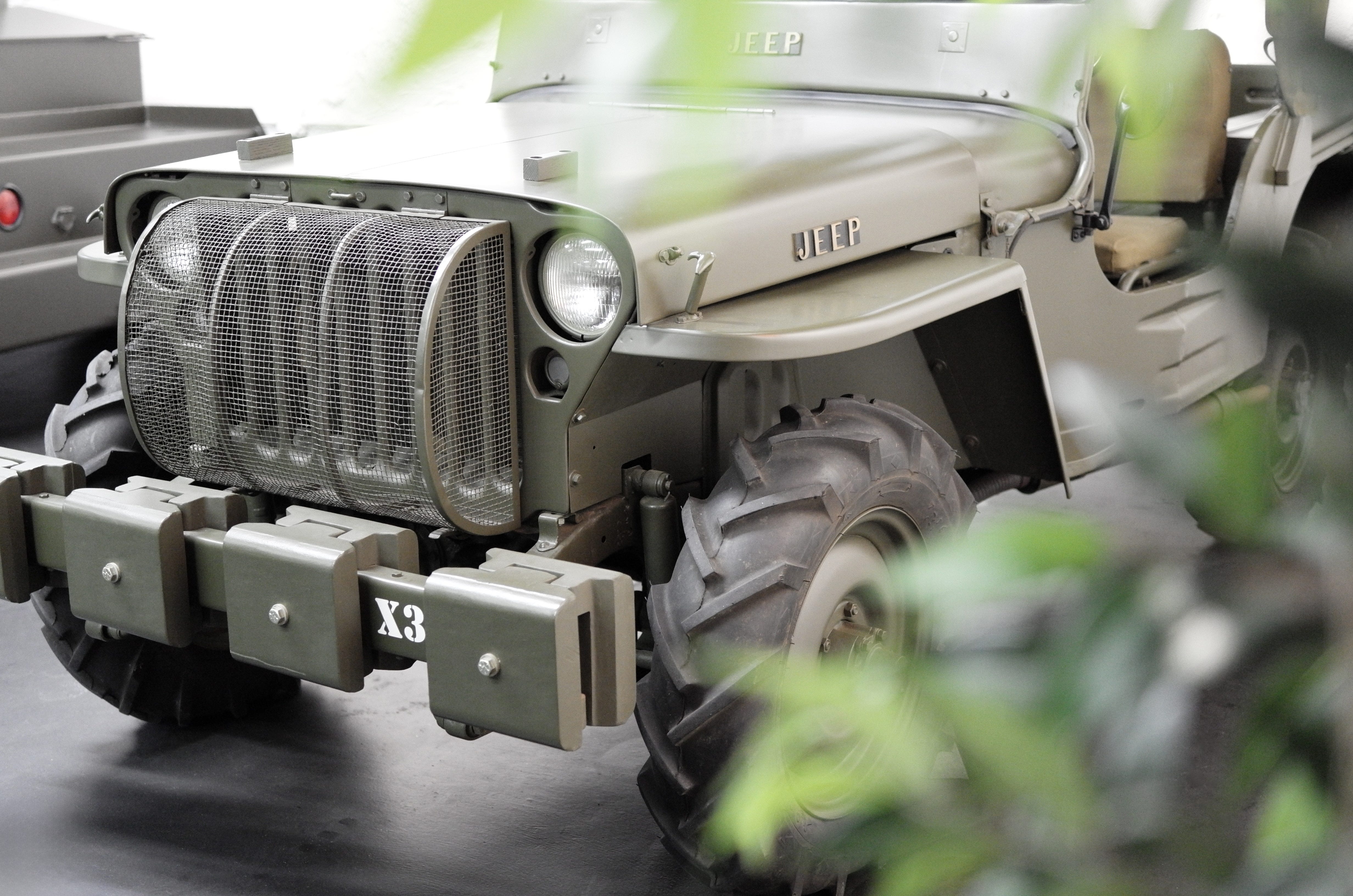


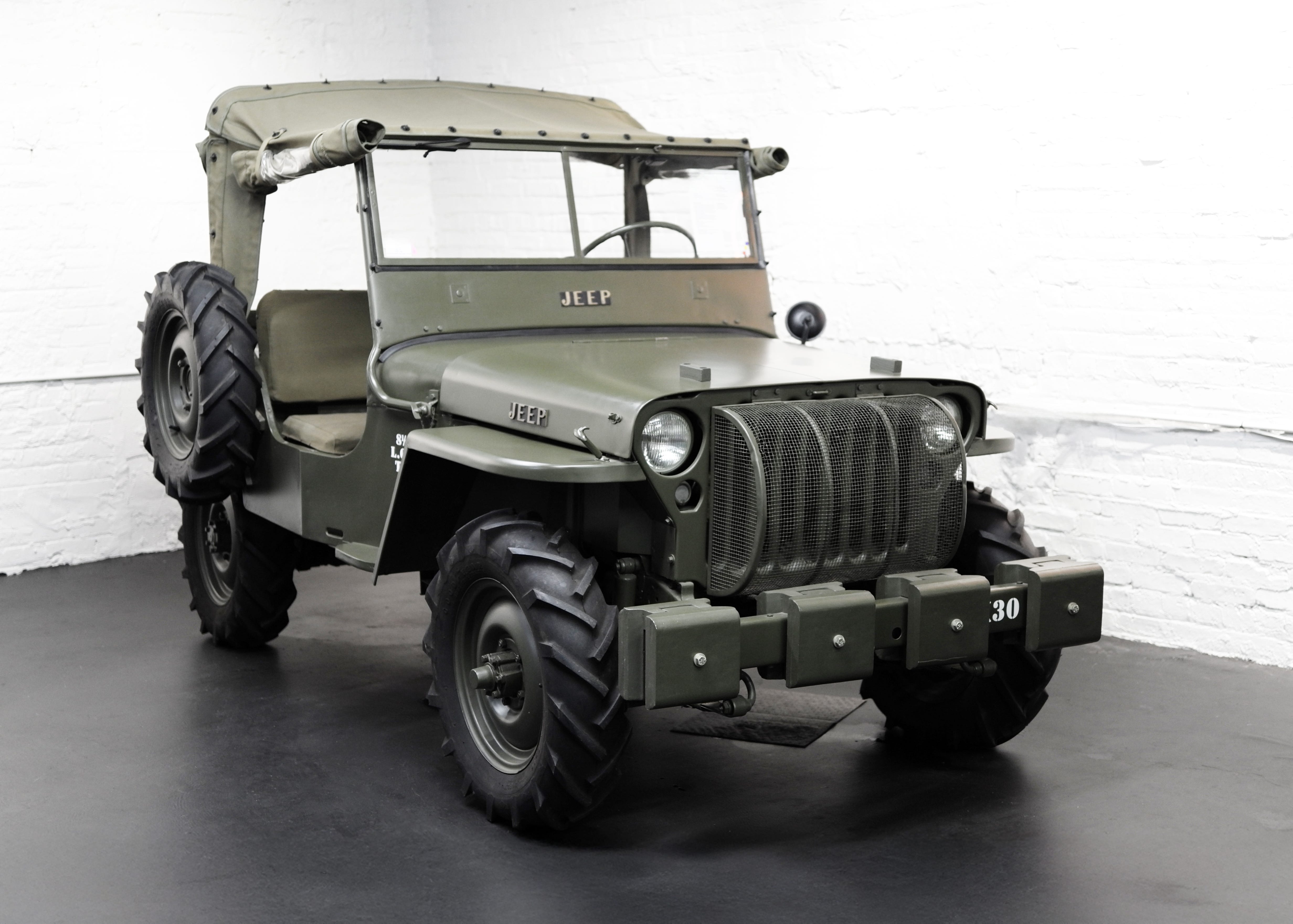
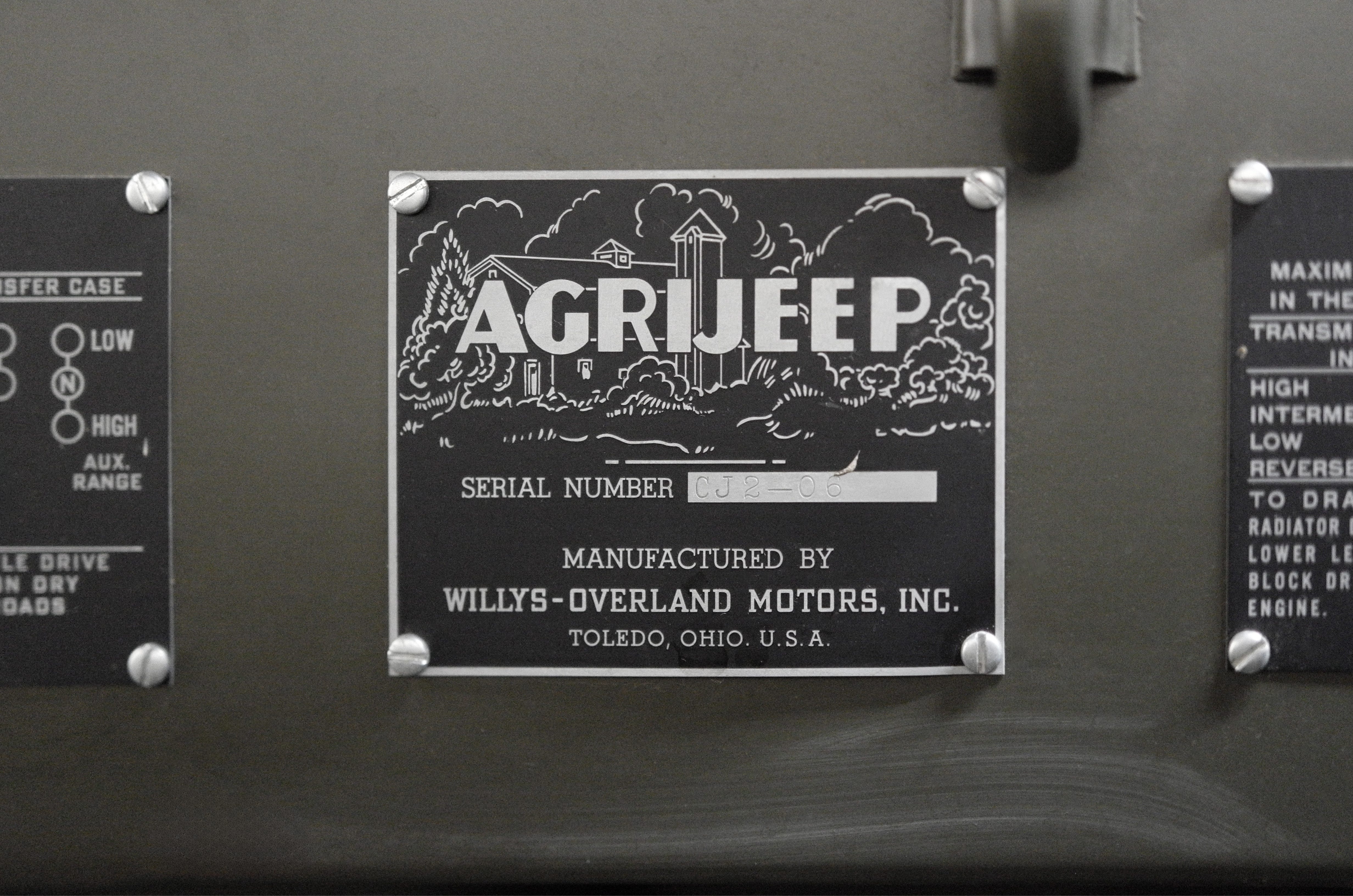
The engine became Willys’ greatest advantage. Although its vehicle exceeded the original weight limit, it offered substantially more power than its competitors.
Ford Motor Company entered with its Ford Pygmy, delivered in November 1940. It used an engine derived from Ford’s agricultural tractor operations and introduced several design details that would influence the eventual production Jeep.
By the end of 1940, the Army was evaluating three competing designs:
American Bantam BRC: The original prototype, notable for its lightweight construction, agility, fuel economy, and braking performance.
Willys Quad: A powerful and robust design whose engine would become the foundation of the standardized Jeep.
Ford Pygmy: A practical alternative that contributed important bodywork, controls, and manufacturing improvements.
The Army did not simply choose one prototype and discard the others. Instead, it continued development while examining the advantages of all three.
1941: Three companies receive production orders.
By late 1940, the military had authorized a new round of development contracts, with each manufacturer receiving an order for approximately 1,500 vehicles.
These became the American Bantam BRC-40, Willys MA, and Ford GP.
The purpose was to evaluate the vehicles in greater numbers under actual military conditions.
Testing revealed that each design possessed strengths and weaknesses. Bantam’s vehicle was comparatively light and economical. Ford offered advantages in driver controls and industrial production capability. Willys supplied the most desirable engine.
The Army also recognized that the original weight limits had been unrealistic and revised its requirements.
As the vehicles evolved, the military increasingly favored a standardized design that could be manufactured in enormous quantities, with interchangeable components and simplified field maintenance.
The decision was no longer simply about which company had built the best prototype.
It had become a question of engineering, price, production capacity, and wartime logistics.
The Final Competition: How Willys won.
In July 1941, the Army requested bids for a major order of 16,000 standardized vehicles.
An interesting detail frequently omitted from Jeep histories is that four companies submitted prices in this final round, not three.
The historical bidding records identify the following offers:
Checker Cab Company $736.53
Willys-Overland $748.74
Ford Motor Company $782.59
American Bantam $788.32
Checker Cab submitted the lowest price, but the company had not provided a prototype for the Army’s earlier tests. Consequently, its bid was not considered eligible for the contract.
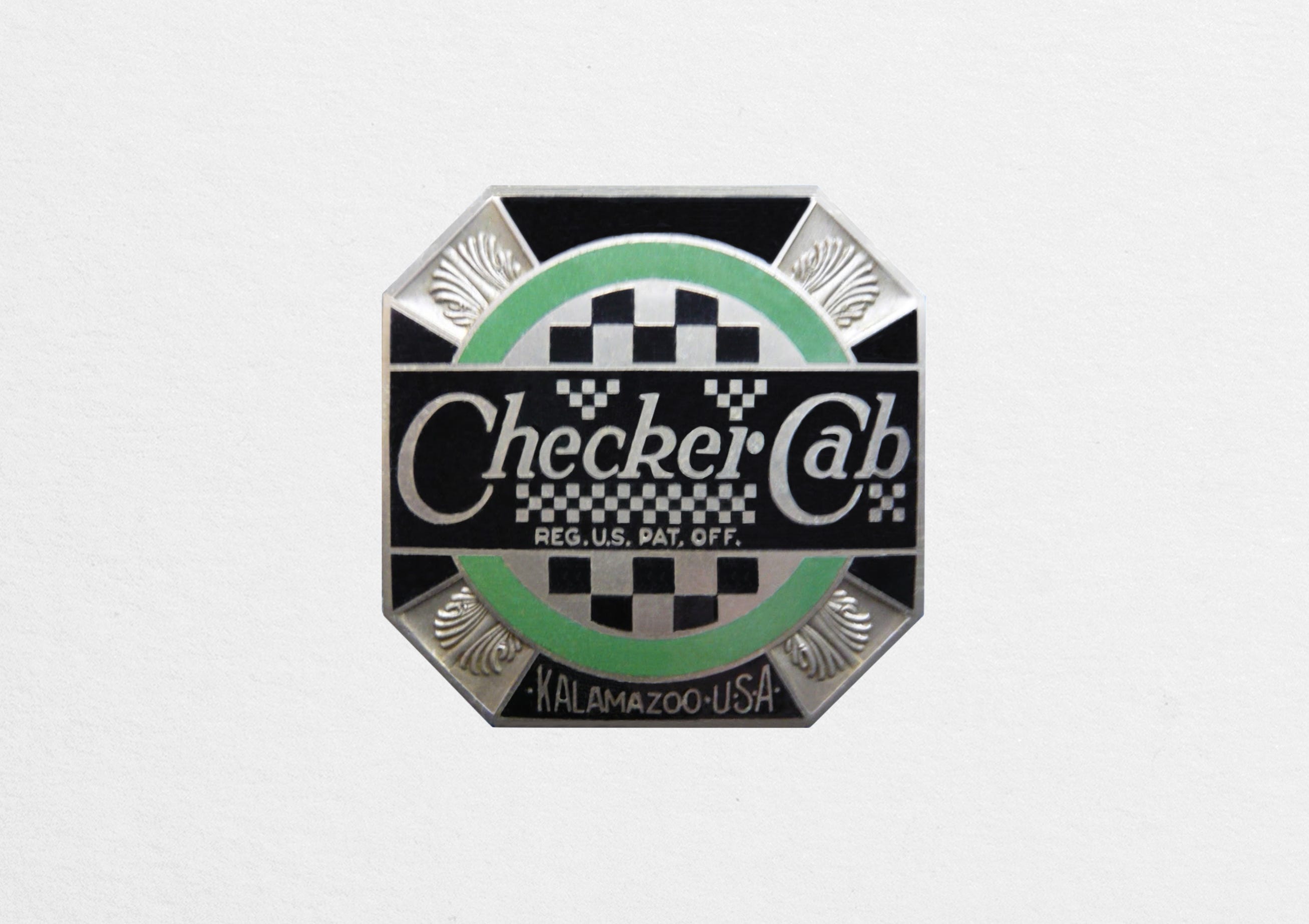
Among the three qualified manufacturers, Willys was the lowest bidder.
Nevertheless, the Quartermaster Corps initially preferred Ford because of its extensive production resources, stronger delivery record, and ability to provide replacement parts reliably.
The Army’s recommendation to award the contract to Ford was rejected by the government’s Office of Production Management, which favored Willys as the lowest qualified bidder.
On August 1, 1941, Willys was notified that it had won the contract for 16,000 vehicles.
The decision combined Willys’ competitive pricing and superior engine with the government’s preference for a proven design.
Willys had won the mass-production contract, even though Bantam had produced the original prototype.
The Jeep’s design was a combination of three companies.
Following the contract award, the Army worked with Willys to finalize the standardized vehicle.
The resulting Willys MB incorporated engineering and design characteristics refined throughout the competition.
Bantam had established the fundamental concept of a compact, lightweight, four-wheel-drive reconnaissance vehicle. Its work with Spicer also helped establish critical drivetrain components.
Willys contributed its durable chassis design and the 134-cubic-inch Go-Devil engine, the most important mechanical advantage of the winning vehicle.
Ford’s contributions included bodywork and front-end design developments, as well as manufacturing refinements that helped make the Jeep easier to produce.
The standardized vehicle was therefore not identical to any single original prototype. It was the product of an extensive military evaluation program that combined and refined the best available ideas.
Ford’s contribution to the famous Jeep grille.
From an automotive design perspective, Ford’s influence is especially significant.

The original Bantam prototype featured a relatively conventional radiator opening and separate headlamps. Ford’s Pygmy introduced a flatter, more unified front-end treatment, with headlights incorporated into the grille assembly.
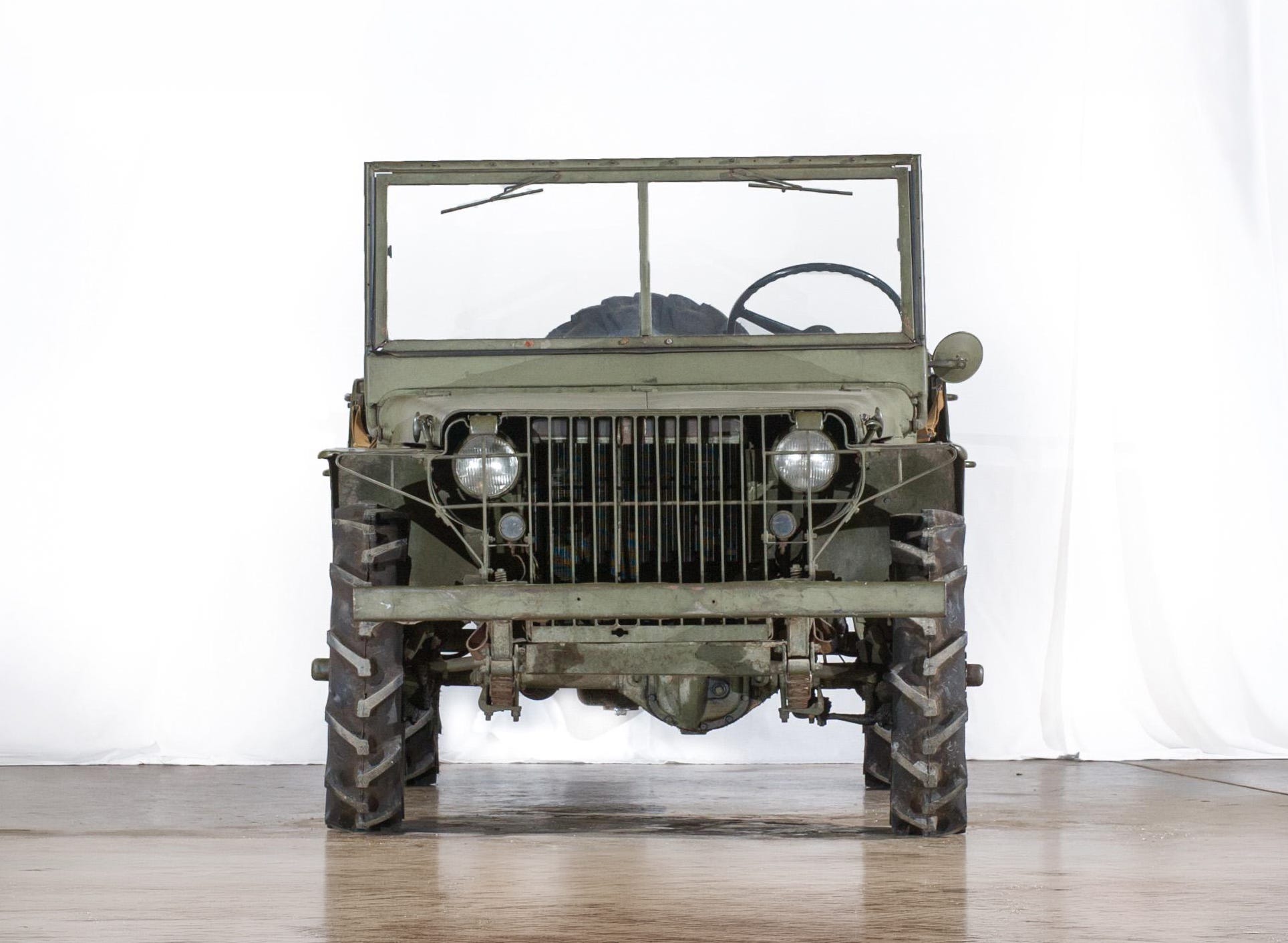
As the design evolved, Ford developed a stamped-steel grille that was lighter, simpler, and more economical to manufacture than the earlier fabricated assembly.
This manufacturing improvement was adopted for the standardized wartime Jeep.
The familiar vertical-slot grille subsequently became the vehicle’s most recognizable visual feature.
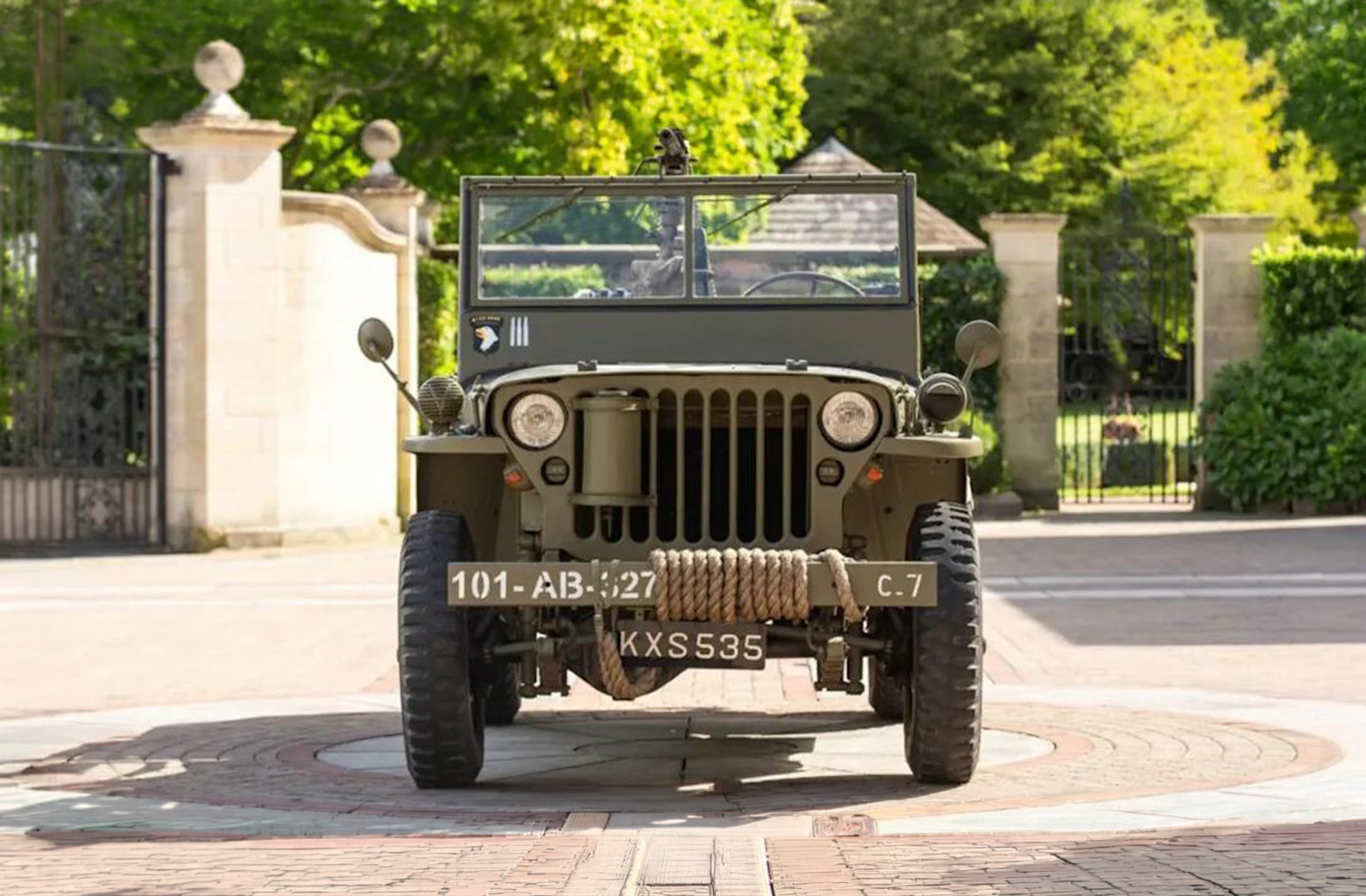
Early examples used different numbers of grille openings. The standardized wartime design eventually featured nine vertical slots, while postwar civilian Jeeps adopted the now-famous seven-slot arrangement.
Although the seven-slot grille became closely associated with the Jeep brand, an important part of its visual ancestry originated with Ford.
Ford's Secret Signature: The “F” Bolts of the WWII Jeep.
Ford left its identity on thousands of tiny components of the legendary military vehicle.
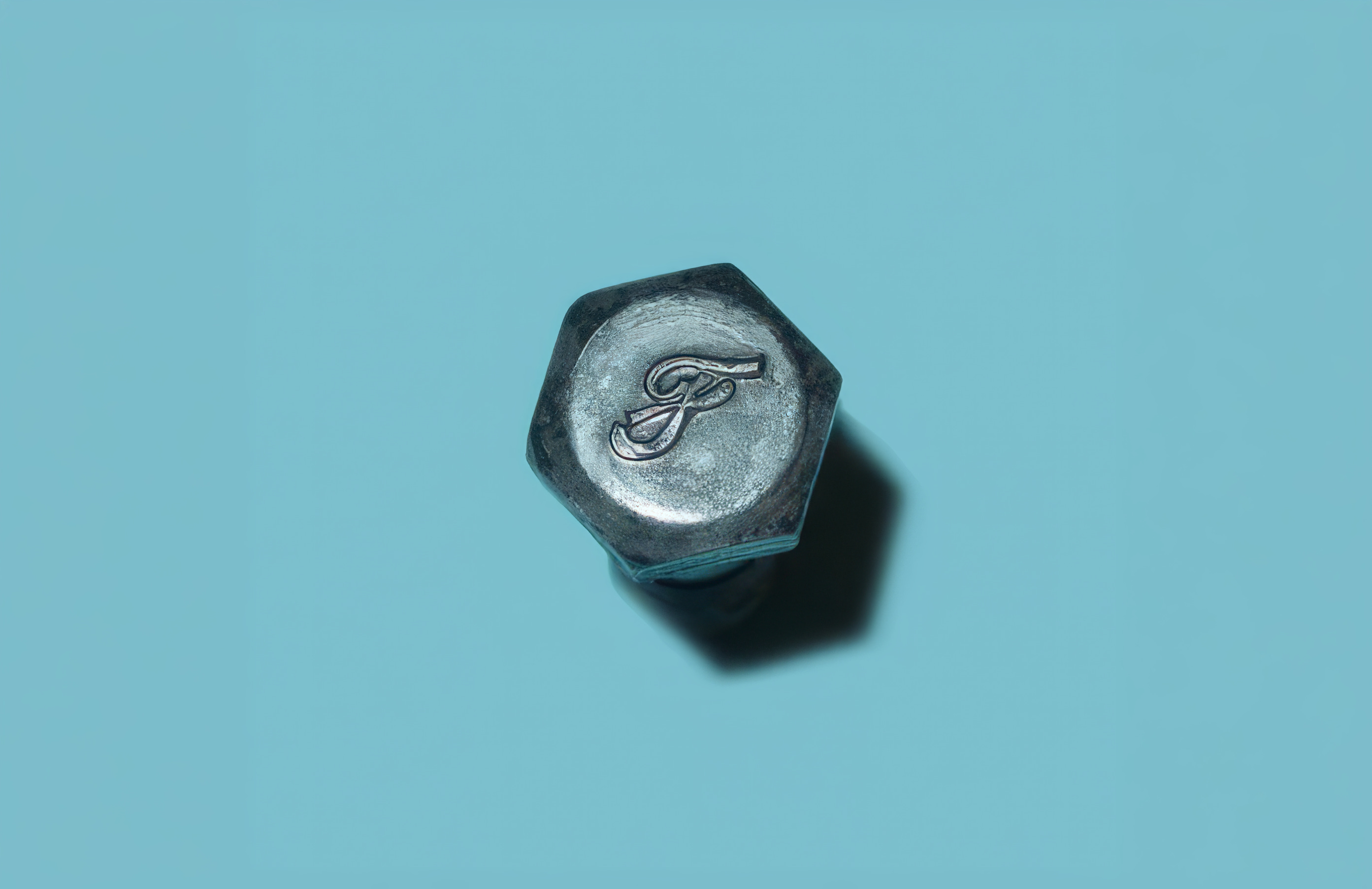
The small, stylized “F” stamped into the bolt head is known as the Ford script F, a distinctive manufacturer’s marking associated with the Ford GPW military Jeep produced during World War II.
It is one of the most fascinating details in the history of the Jeep, reflecting the unusual relationship between two competing American automobile manufacturers.
Why Ford eventually built so many Jeeps.
Winning the initial large-scale contract did not mean Willys would manufacture every wartime Jeep.
As military requirements expanded, it became clear that Willys alone could not meet the enormous demand.
In late 1941, the government brought Ford into the standardized production program.
Ford was instructed to manufacture vehicles using Willys’ drawings and specifications, enabling both companies to produce essentially interchangeable vehicles.
The Ford-built version received the designation GPW, while Willys continued manufacturing the MB.
Over the course of World War II, Willys and Ford together produced approximately 640,000 standardized Jeeps, making the vehicle one of the most successful military transportation designs of the twentieth century.
Bantam, meanwhile, was excluded from the main mass-production program because of concerns about its manufacturing capacity.
Although Bantam had created the first prototype and built approximately 2,600 early reconnaissance vehicles, the company spent much of the war producing military trailers rather than the vehicle it had helped originate.
The battle over who invented the Jeep.
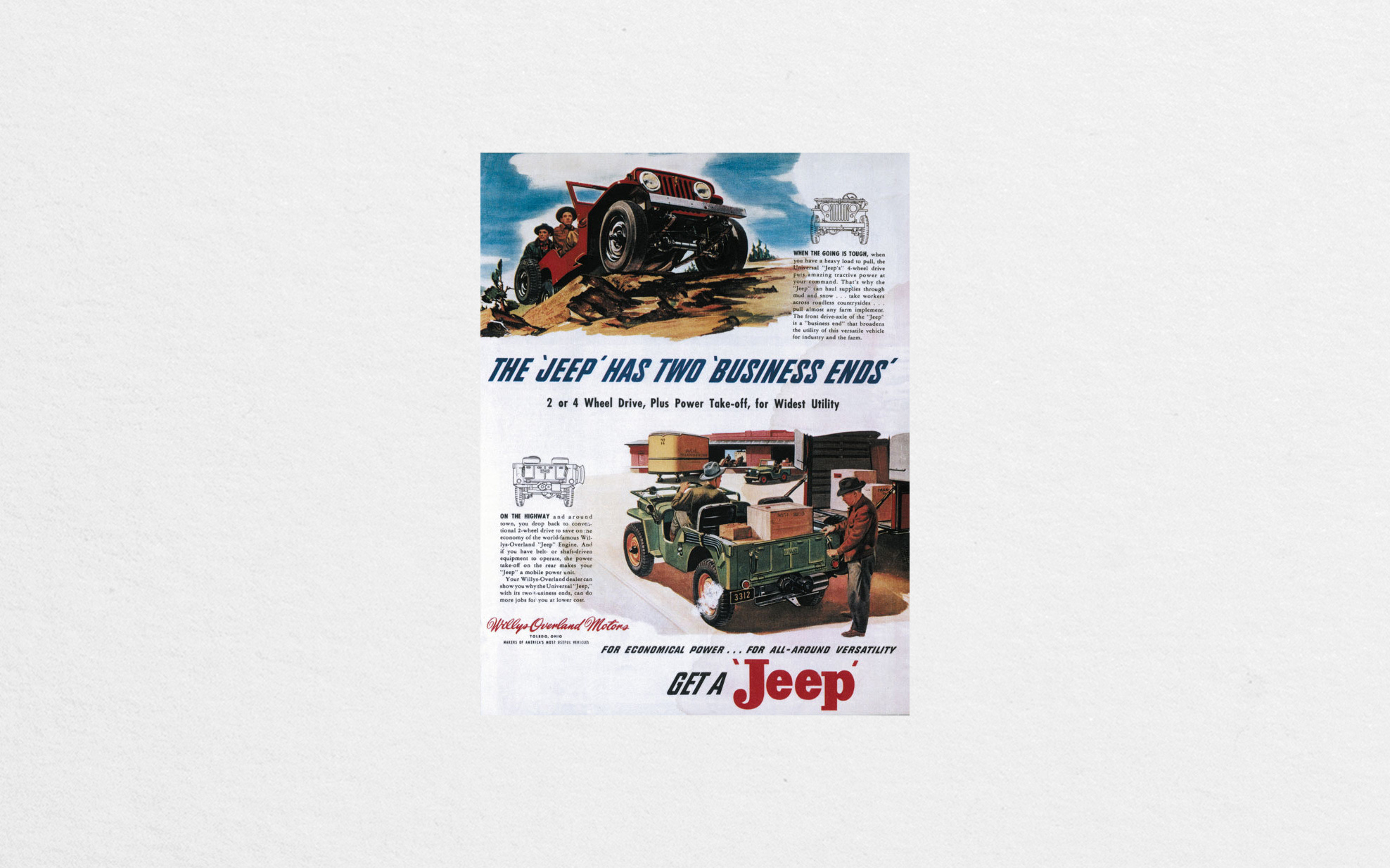
The controversy did not end with the war. Willys-Overland began promoting itself as the creator of the Jeep, using its wartime manufacturing success to establish a civilian automobile brand.
American Bantam challenged these claims.
In 1948, following proceedings before the Federal Trade Commission, Willys was ordered to stop advertising itself as the original creator of the Jeep.
The commission found that the vehicle was the product of contributions by the Army and multiple manufacturers, rather than the exclusive invention of Willys-Overland.
The ruling recognized that although Willys had played an important role in developing and perfecting the vehicle, it could not claim sole credit for its origin.
That distinction remains central to understanding the Jeep’s history.
How the Jeep got its name.
The origins of the word Jeep are also disputed. One popular explanation is that it developed from the pronunciation of the initials GP, often interpreted as General Purpose.
However, Ford’s GP designation was an internal model code: G indicated a government-contract vehicle, while P referred to its 80-inch-wheelbase classification.
Other explanations connect the name to established military slang for unfamiliar equipment or to Eugene the Jeep, a small, extraordinary creature introduced in the Popeye comic strip in 1936.
By early 1941, soldiers and newspaper reporters were already using the term Jeep to describe the new four-wheel-drive military vehicle.
Whatever its precise origin, the nickname survived and eventually became one of the world’s most recognizable automotive brand names.
Three companies, one Automotive Icon.
The Jeep’s creation demonstrates how military necessity accelerated automotive design and industrial cooperation.
American Bantam deserves recognition for building the first functioning prototype and demonstrating that the concept could succeed.
Willys-Overland deserves credit for developing the powerful engine and successful standardized vehicle that won the principal production contract.
Ford deserves recognition for its engineering contributions, influential grille design, and the massive manufacturing capacity that helped supply Allied forces.
The U.S. Army, meanwhile, defined the requirements, coordinated development, evaluated the competing designs, and ultimately determined the production configuration.
No single company can legitimately claim every aspect of the Jeep’s invention.
The vehicle that emerged from this competition was more than a military utility truck. Its combination of simple construction, versatility, and four-wheel-drive capability established an entirely new category of automobile.
After the war, Willys introduced the civilian CJ series, beginning with the CJ-2A in 1945, transforming a military necessity into a lasting commercial success.
More than eight decades later, the Jeep’s fundamental visual identity remains remarkably recognizable.
The original Jeep began with Bantam, was perfected for production by Willys and the Army, and was manufactured on a massive scale by Willys and Ford. Its history belongs to all three companies.
This article is based on documentary sources including the U.S. Army’s procurement history, a later federal court record detailing the competing bids, and the 1948 FTC decision.
National Park Service — Historic American Engineering Record, Ford Richmond Assembly Plant — pages 65–70 document the development and procurement controversy.
Overland Corporation v. Commissioner, 1964 — detailed original contract bidding amounts and August 1941 decision.
Federal Trade Commission — Willys-Overland Motors, 1948 — the dispute over the company’s claim to have created the Jeep.
Smithsonian — 1940 Bantam Jeep Prototype — surviving original vehicle and historical documentation.
Jeep — Official History, 1940s — vehicle development and production history.
Poor Bantam! They did the groundwork, Willys got the contract, and Ford got in on the action. And I had to laugh at 135 companies being invited to bid and only two responding. I've worked in purchasing long enough to know that some things never change! 😂