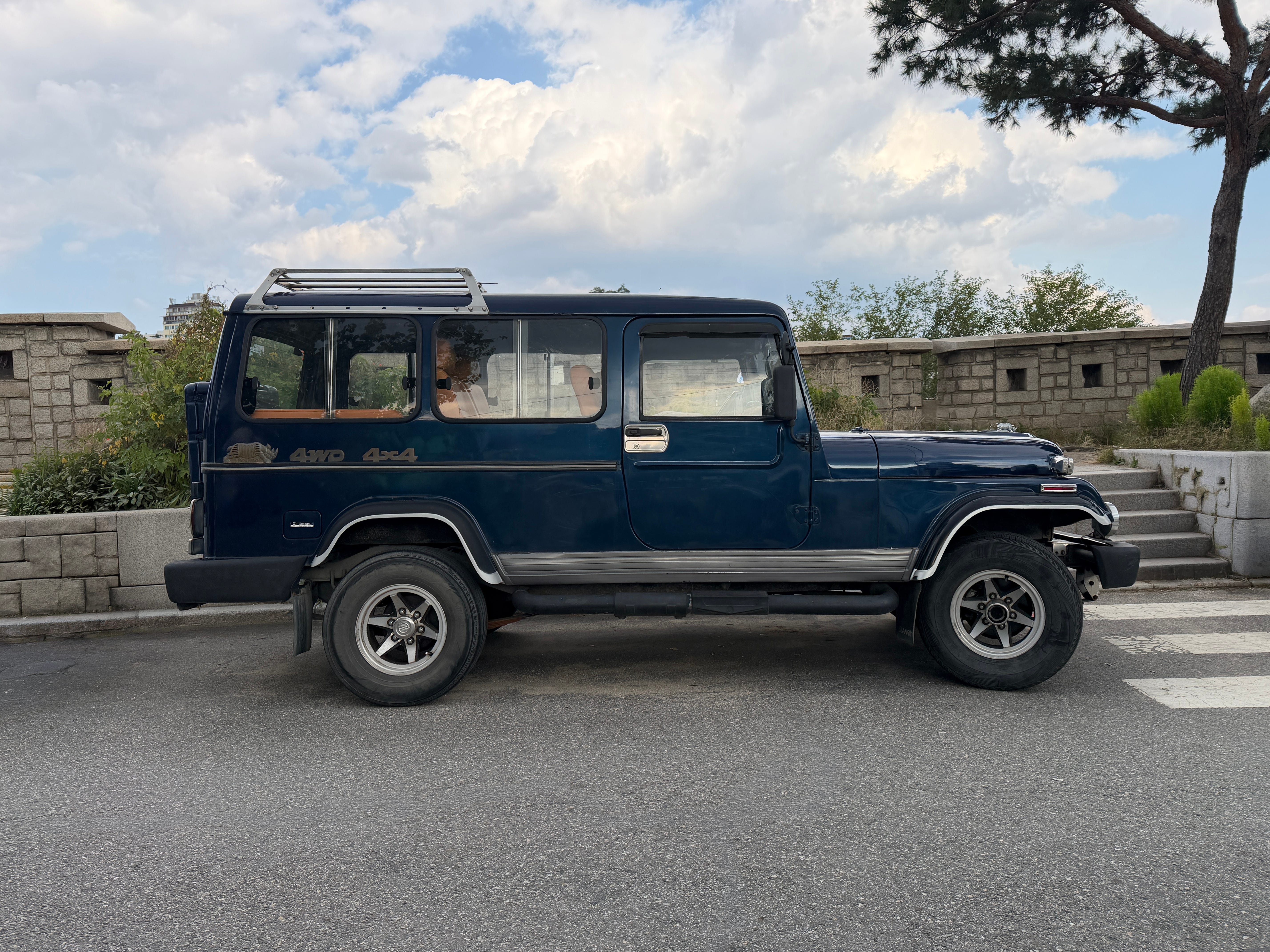
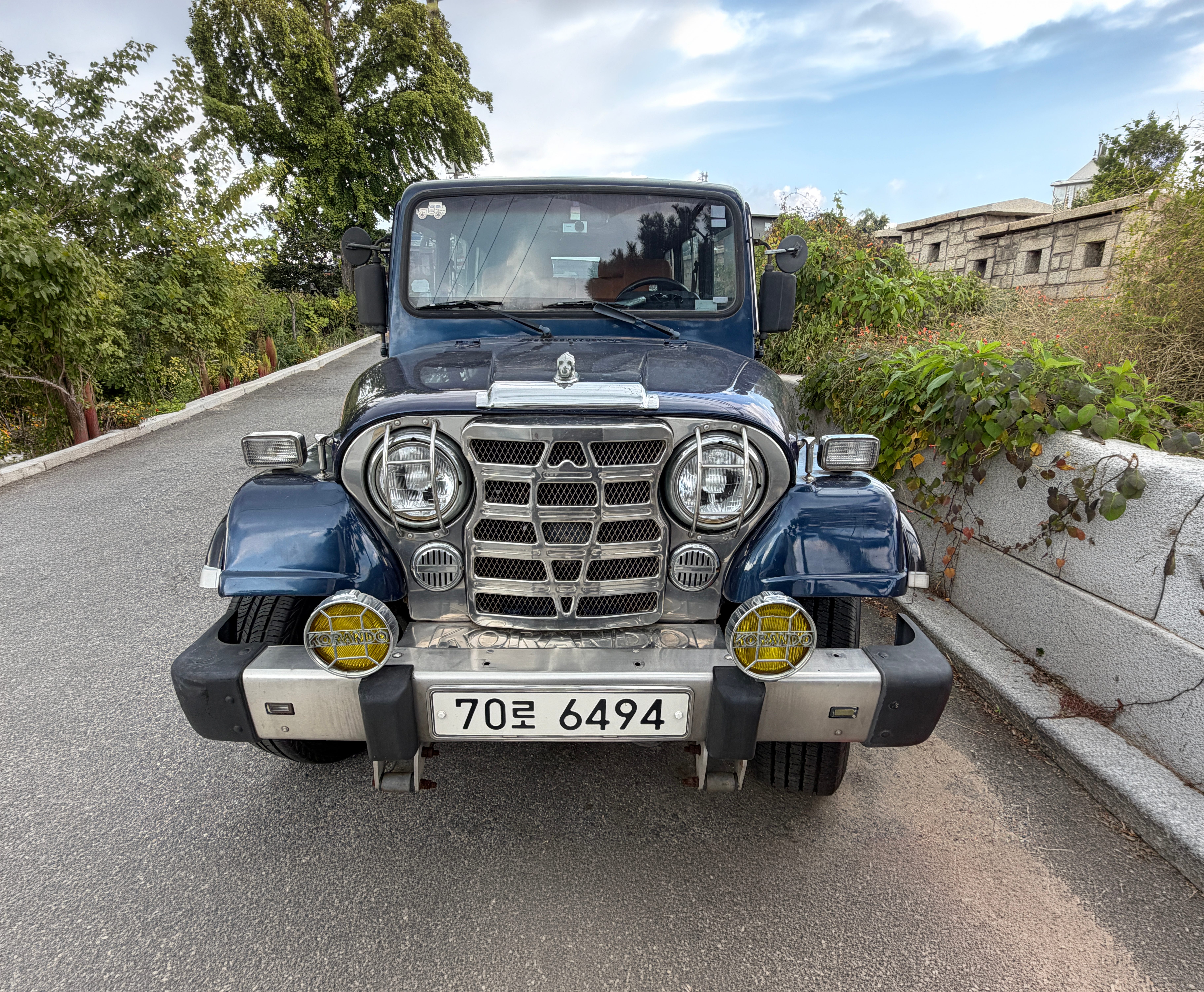
The Korando has a rather complicated genealogy because it predates SsangYong Motor itself.
Its ancestry begins with Korea’s production of Jeep-type vehicles. Ha Dong-hwan Motor was building utility vehicles in the 1960s, while Shinjin Motors became involved in licensed Jeep production with AMC. After a series of corporate changes, Keohwa (거화) took over the Jeep operation.
The name Korando began appearing around 1982–83, and Keohwa formally adopted the Korando trademark in March 1983. Contemporary histories commonly explain the name as:
KORean cAN DO → KORANDO
In other words, essentially “Koreans can do it.”
That slogan is particularly significant in the context of South Korea’s rapidly developing domestic automobile industry in the 1980s.
Keohwa was acquired by Dong-A Motor in December 1984, and the Korando continued to evolve under Dong-A. SsangYong Group acquired Dong-A in 1986, and the automobile company was eventually renamed SsangYong Motor Company in 1988.
So an early Korando might correctly be described as a Keohwa Korando, Dong-A Korando, or SsangYong Korando, depending on its date.
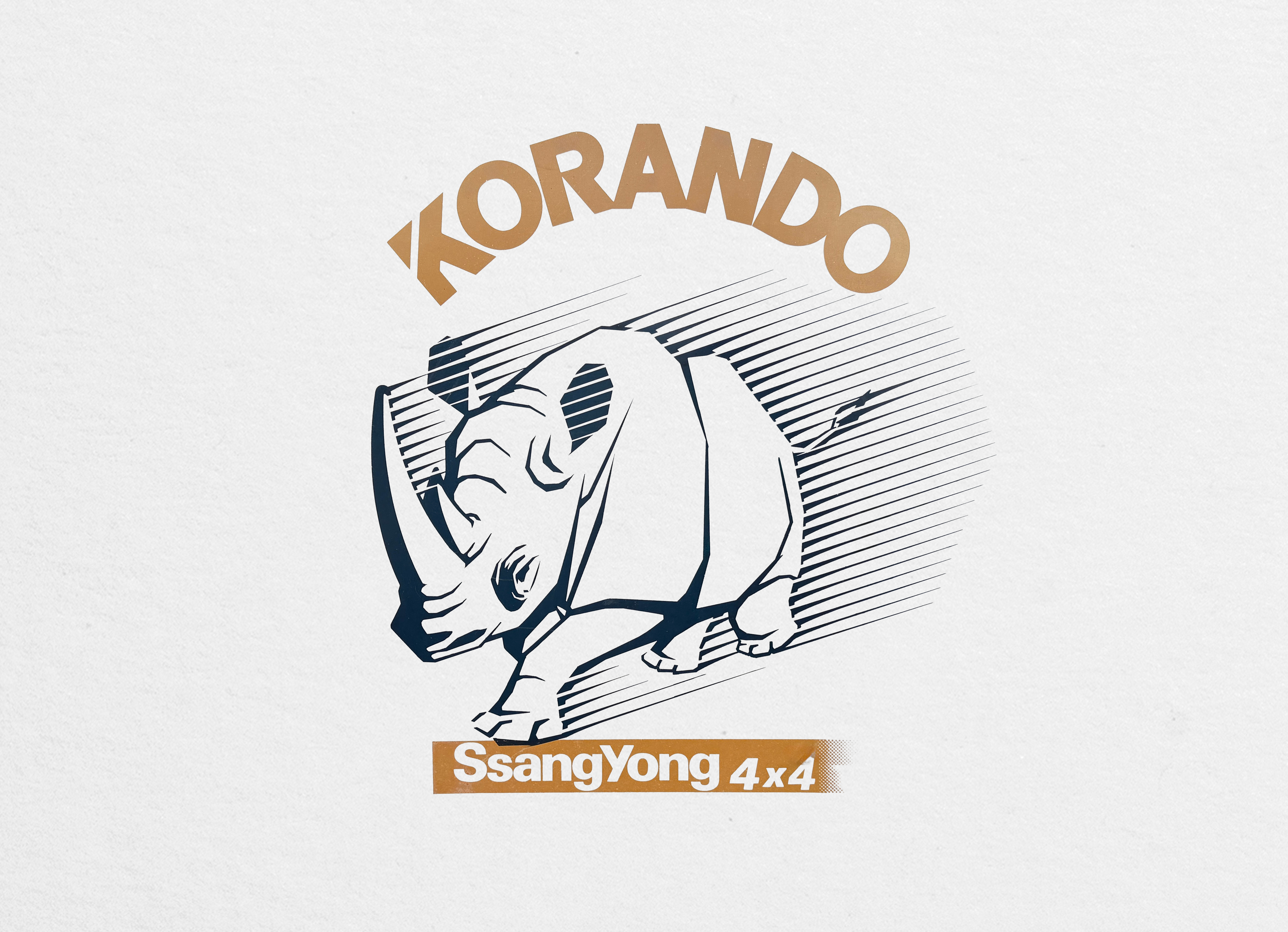
And then came the rhinoceros.
This is where the branding becomes especially interesting.

In 1986, a small sculptural rhinoceros appeared on the front of the Korando’s hood.
A Korean history of the model published by Dong-A Ilbo specifically records that the 코뿔소 엠블럼 — rhinoceros emblem — appeared at the front of the hood in 1986.
The reason is fairly obvious visually: the rhino communicated exactly what Dong-A/SsangYong wanted the Korando to represent strength, toughness, durability and off-road capability and became the model mascot / hood ornament.
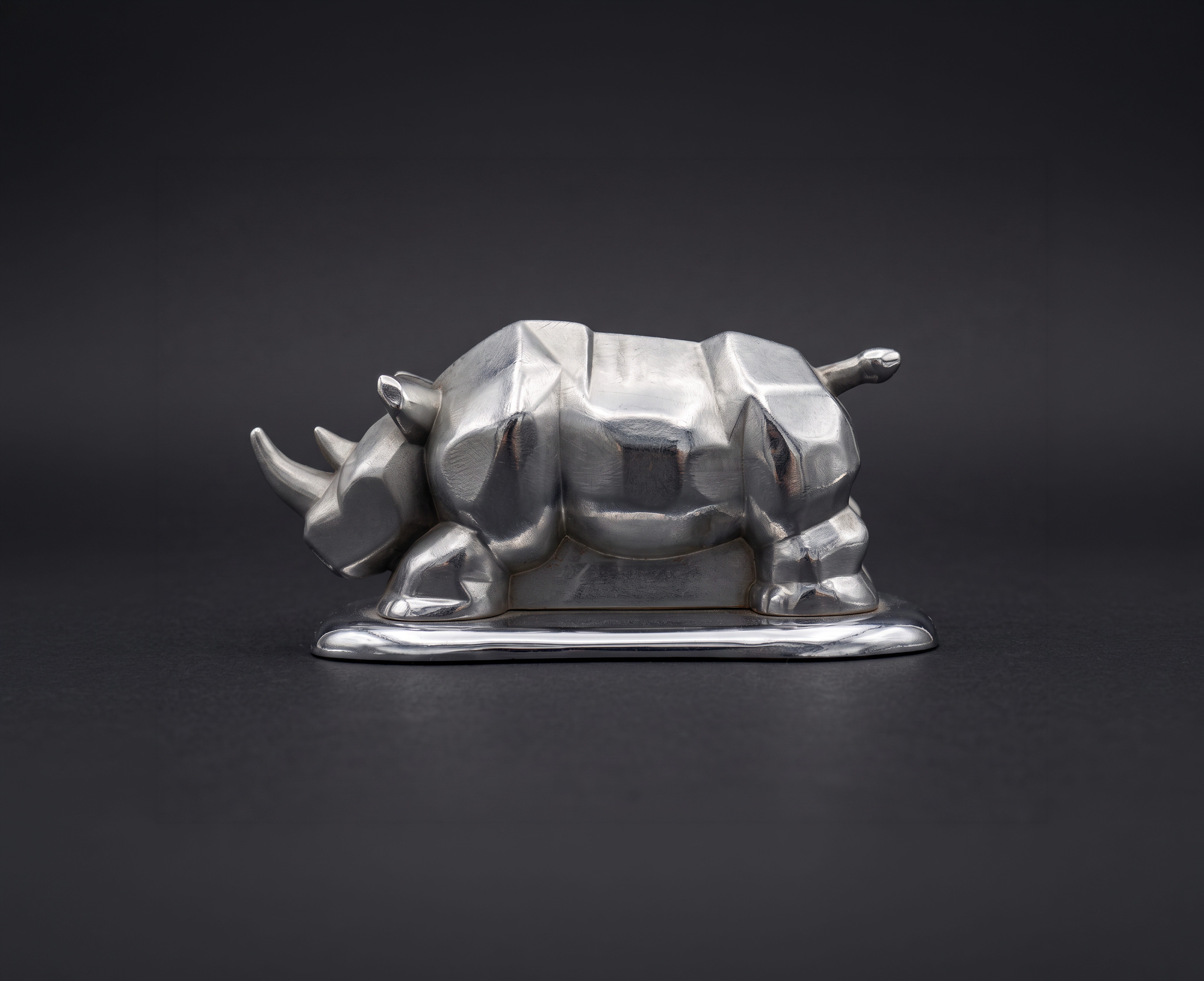
Customers reportedly complained that they didn't want the vehicle without the rhinoceros, and the ornaments became desirable enough that people actually stole them from parked Korandos.
There's an amusing cultural footnote too: a 1989 Korean film was titled 《미스 코뿔소 미스터 코란도》 — Miss Rhinoceros, Mister Korando, further demonstrating how closely the rhino had become associated with the vehicle.
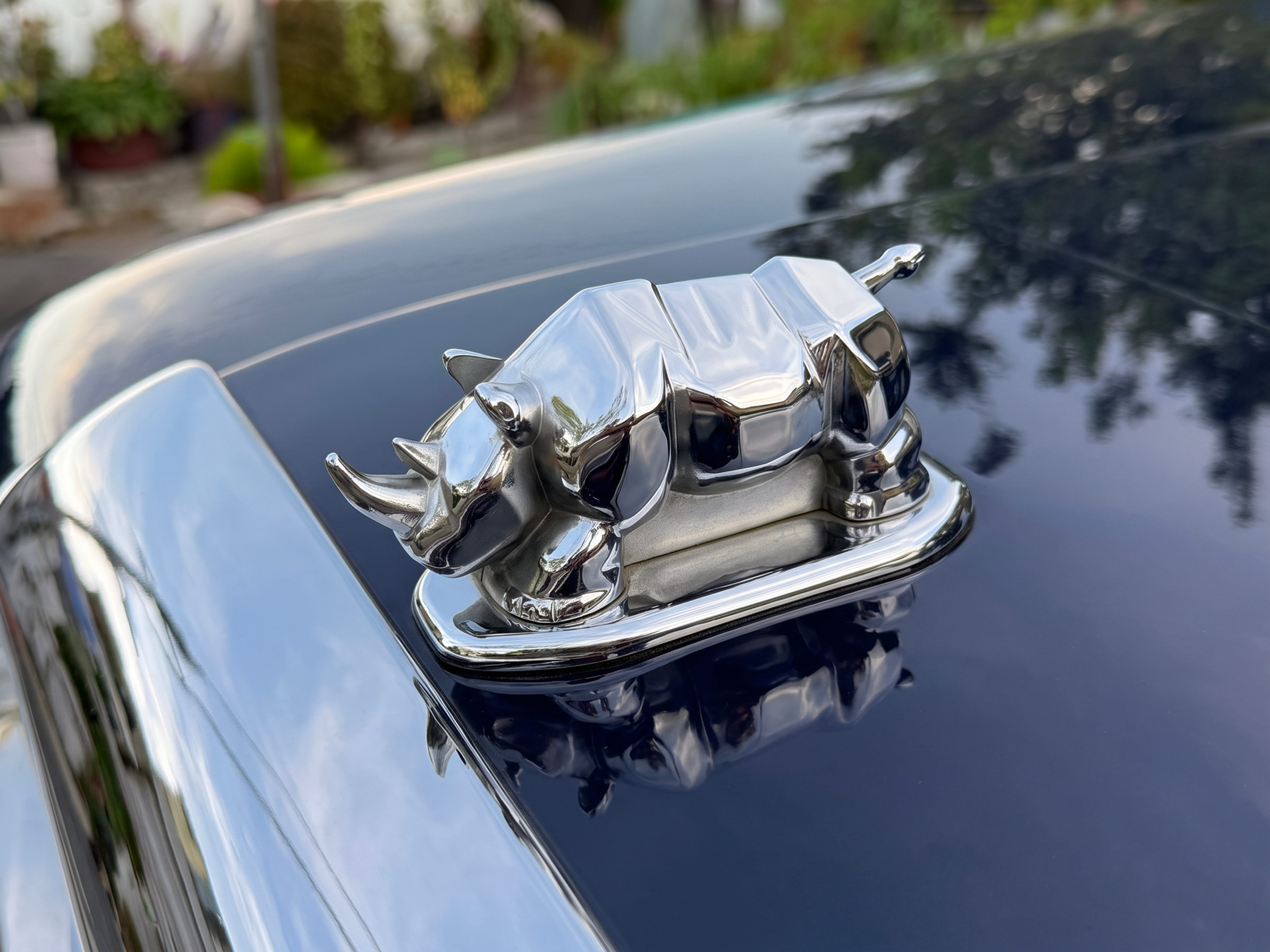
There's an interesting wrinkle in the historical record. Some enthusiast sources say the ornament was introduced with the 1993 facelift, while contemporary-history accounts trace the first rhino ornament to 1986. The latter is better supported: Korean reporting based on SsangYong's history explicitly dates its introduction to 1986, and histories of the 1986 New Korando also describe a rhinoceros sculpture being added to the bonnet at that time.