


1919 Slaby-Beringer — The Tiny Electric Car That Helped Give Birth to DKW.
The 1919 Slaby-Beringer Elektrowagen is one of the most fascinating forgotten automobiles of the early 20th century. Built in Berlin immediately after World War I, this extraordinarily small electric vehicle was designed to provide affordable personal transportation at a time when automobiles remained expensive luxuries.
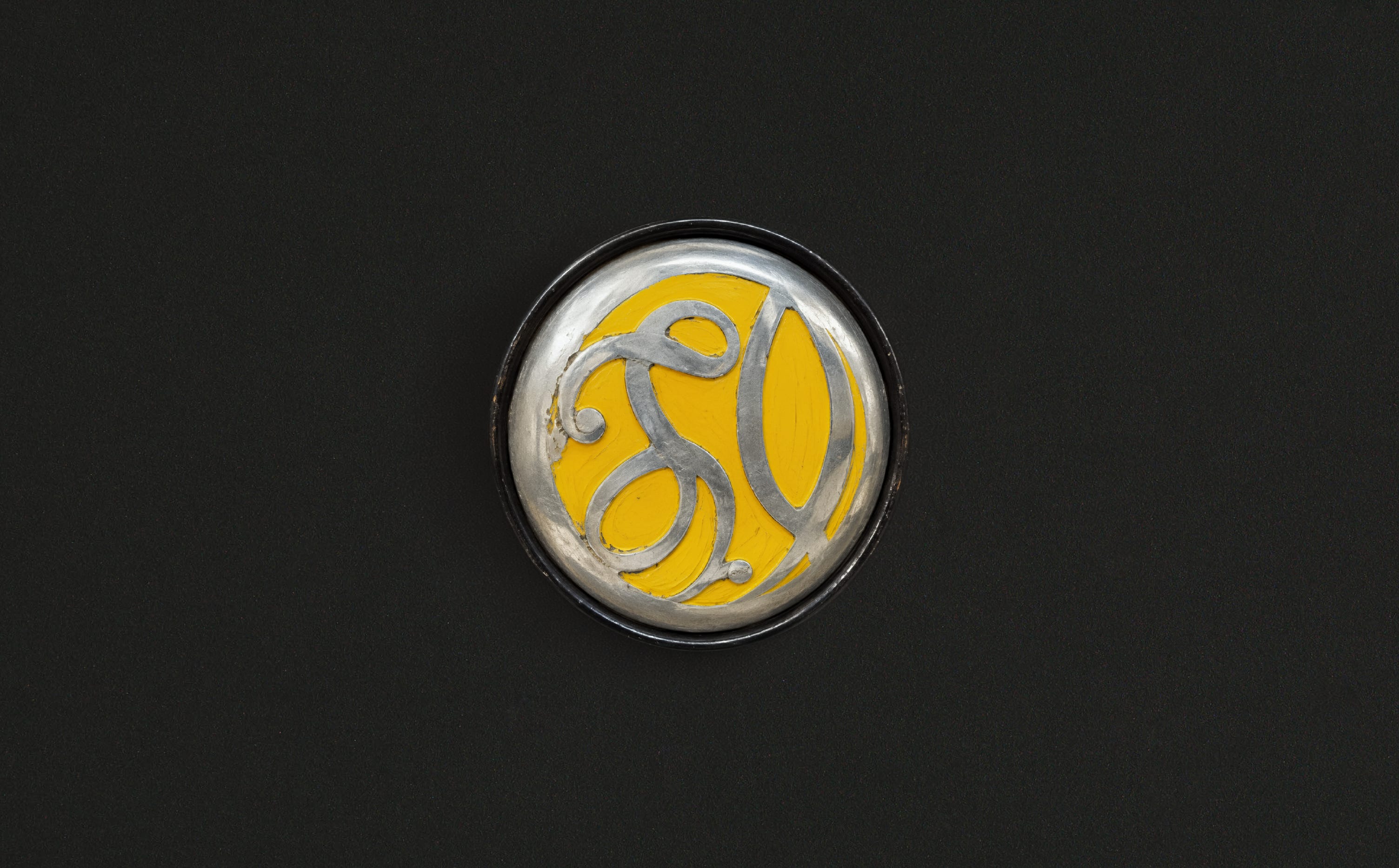
What makes the Slaby-Beringer particularly interesting is that it was not only an early electric microcar. It also helped lay the foundations for DKW’s automobile business, which eventually became part of Audi.
The origins: Berlin, 1919.
The story begins with German engineer Dr. Rudolf Slaby (1887–1963), the son of Adolf Slaby, a prominent electrical engineer and co-founder of Telefunken.
Rudolf Slaby had worked in the aircraft industry, but following Germany’s defeat in World War I, restrictions on aircraft manufacturing pushed him toward a different engineering challenge.
In 1918–1919, Slaby developed an exceptionally lightweight, electrically powered vehicle for individual transportation. The car was conceived as an economical urban runabout and was also intended to provide mobility for disabled veterans returning from the war.
The original prototype attracted enough attention that Slaby joined forces with his cousin, Hermann Beringer, who owned a paint factory in Berlin-Charlottenburg.
Together they established SB-Automobil-Gesellschaft m.b.H. in 1919, using part of Beringer’s factory for production.
An electric car more than 100 years ahead of its time.
The Slaby-Beringer was remarkably minimalist, even by the standards of 1919.
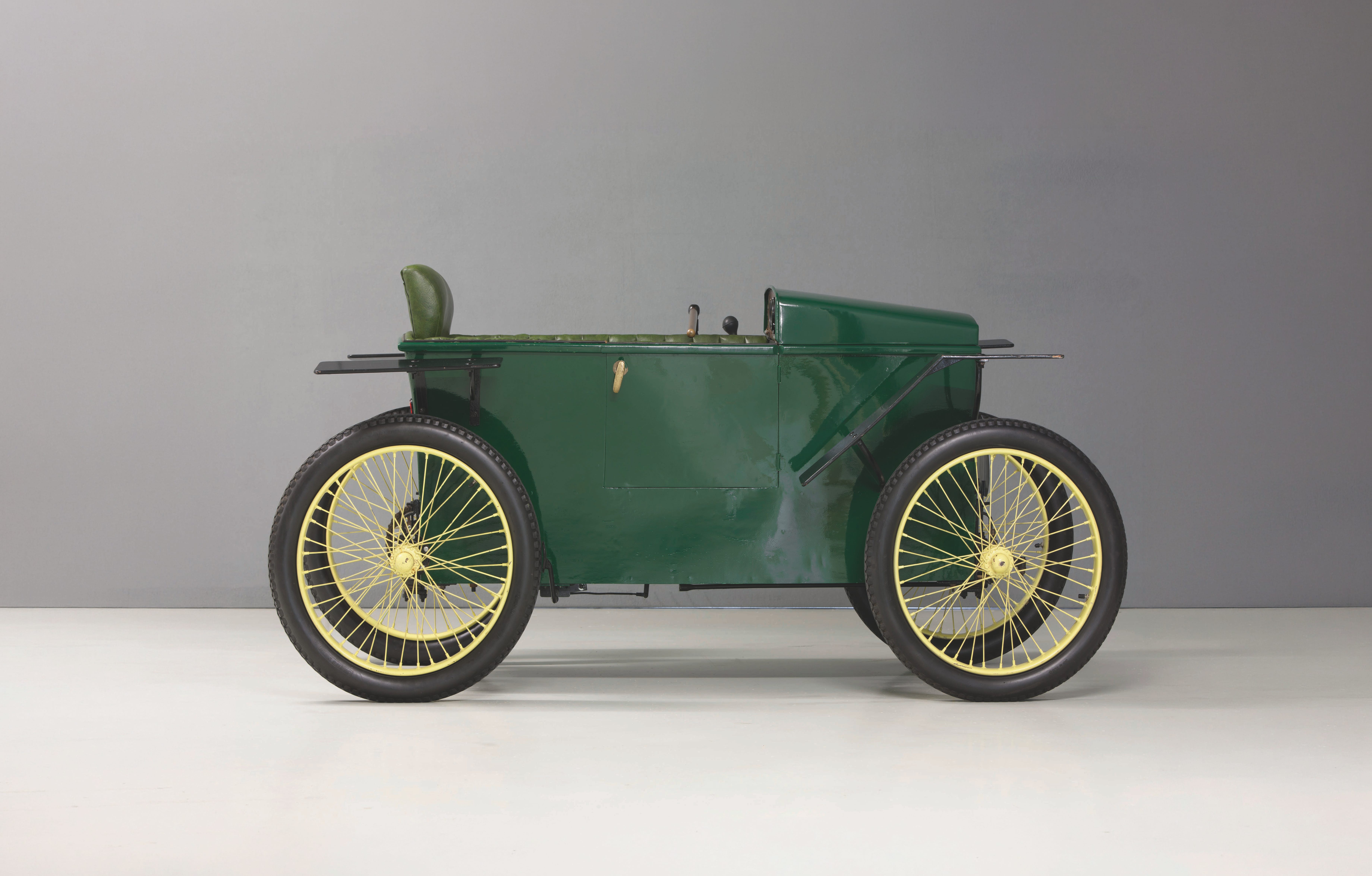
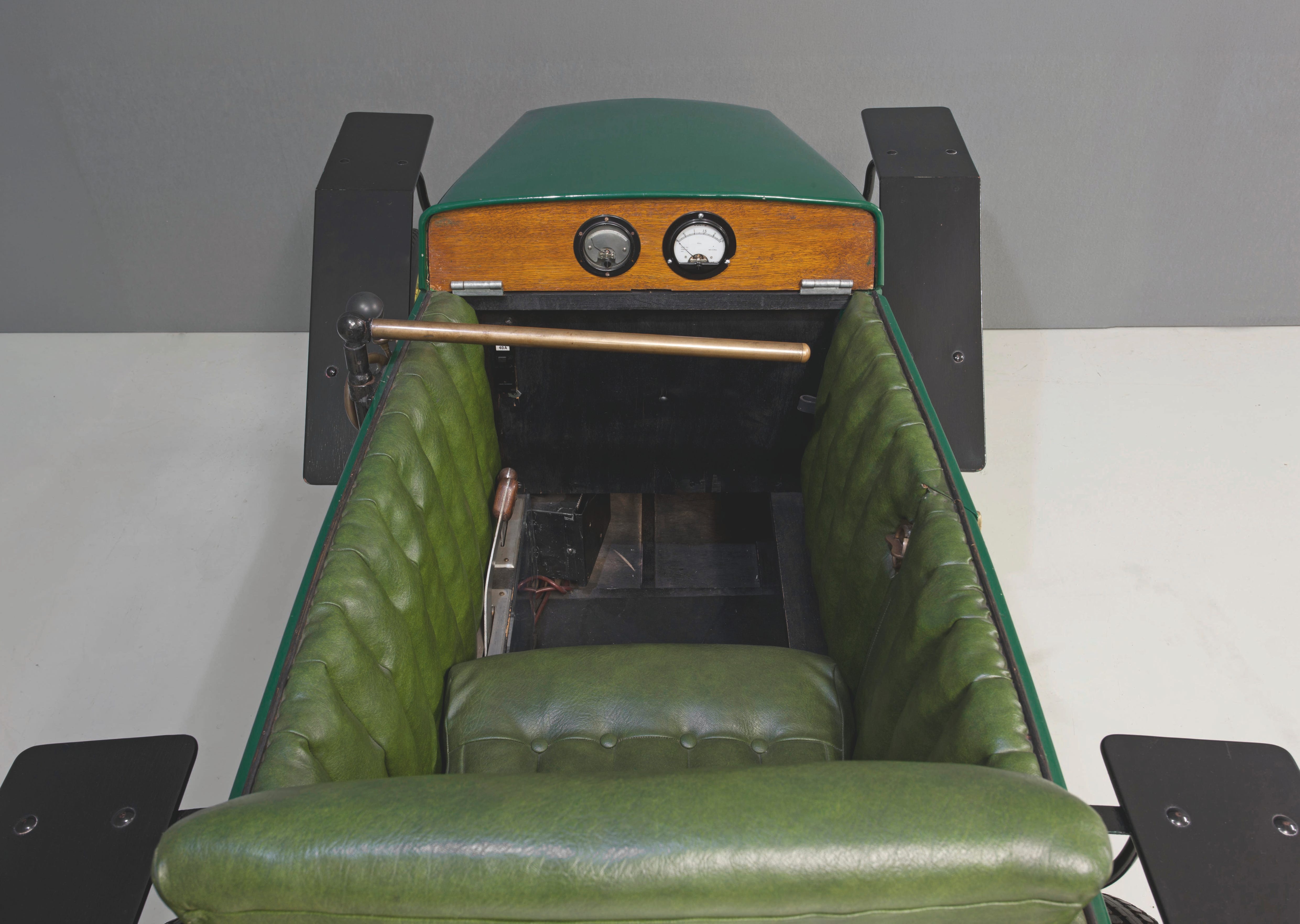
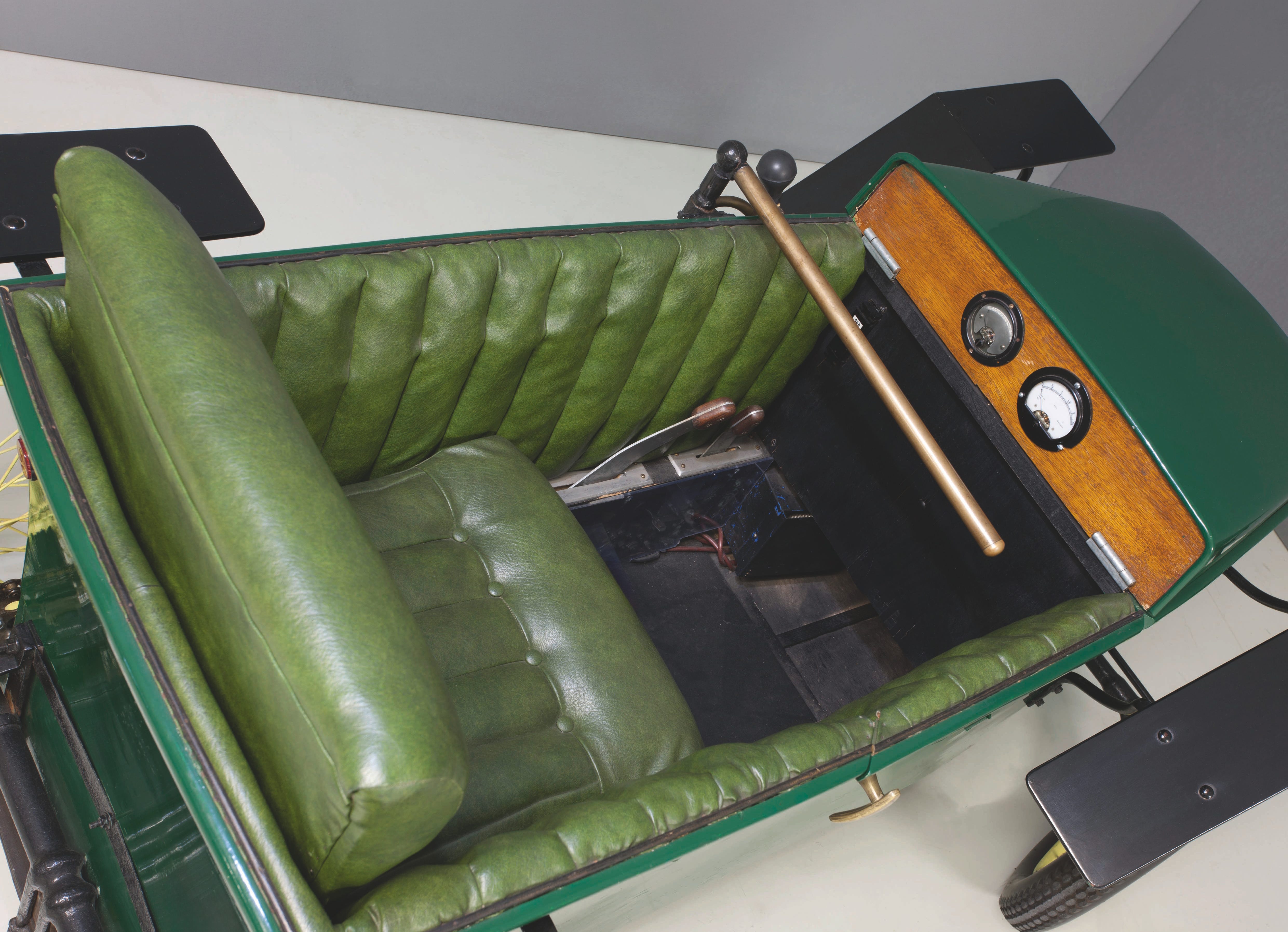
Rather than constructing a conventional automobile with a separate metal chassis, Slaby developed a self-supporting wooden body, integrating the structure and bodywork into a single lightweight assembly.
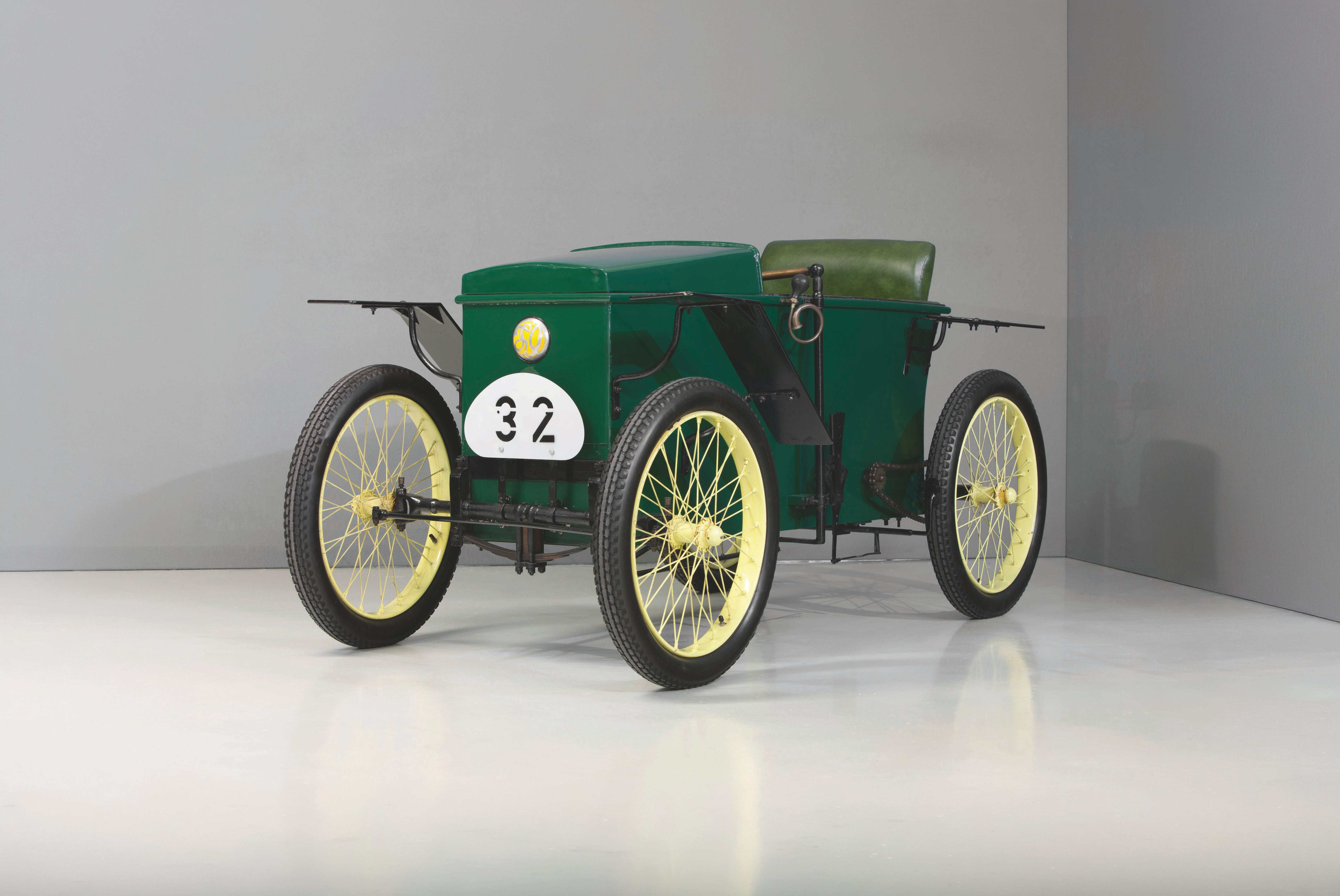
Its bicycle-like wire wheels, narrow rectangular body, exposed suspension and simple controls reflected an engineering philosophy of eliminating unnecessary weight and complexity.
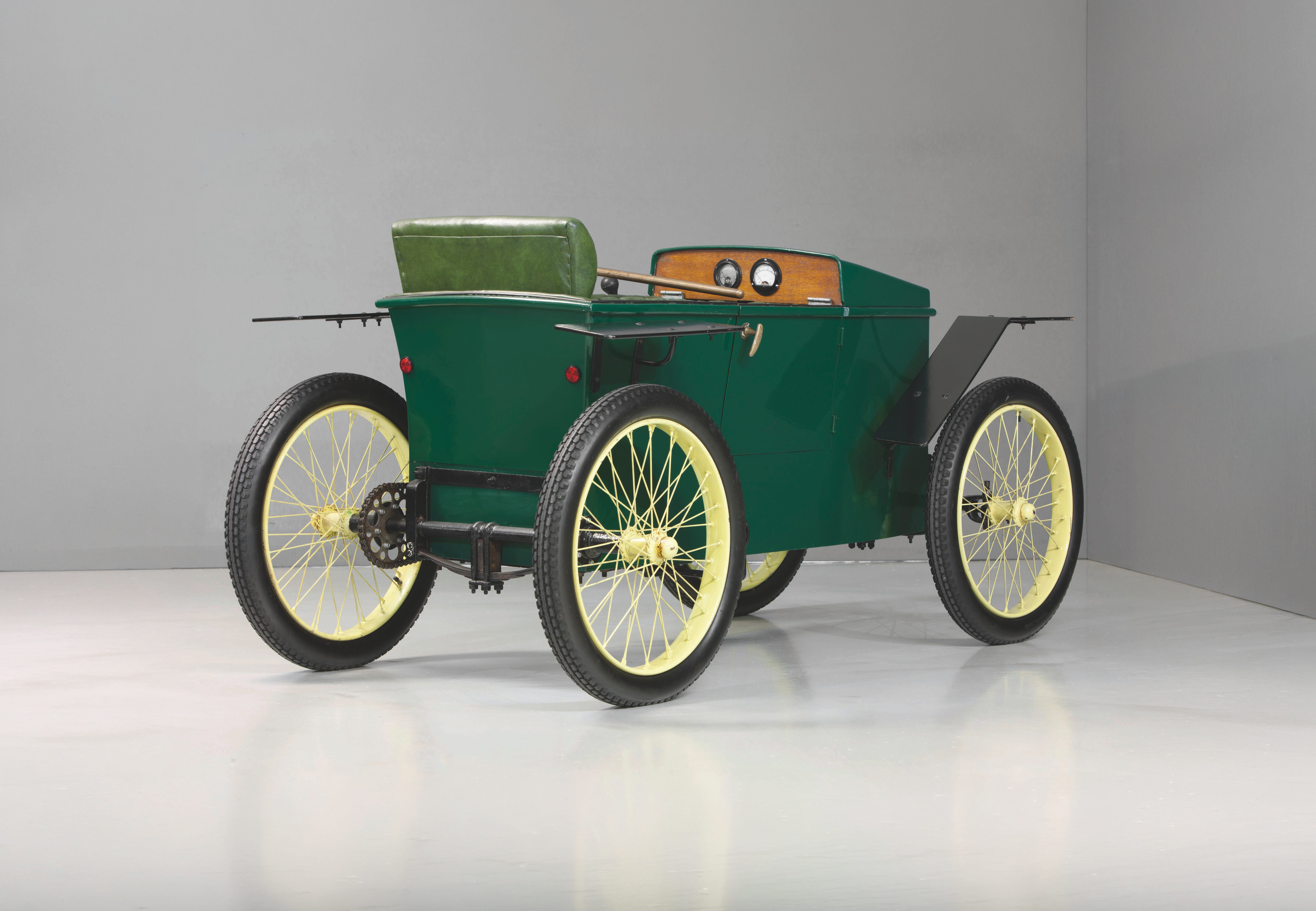
Unlike most cars, the Slaby-Beringer had no conventional steering wheel. Instead, the driver controlled the vehicle using a hand-operated steering lever. The electric motor was mounted toward the rear, with the batteries positioned toward the front to improve weight distribution.
The connection to DKW and Audi.
Perhaps the most consequential chapter in the Slaby-Beringer story began with an encounter in Berlin in 1919.
Industrialist Jørgen Skafte Rasmussen, the founder of DKW, reportedly saw Rudolf Slaby driving his little electric automobile through the city.
Impressed by the design, Rasmussen placed an order for 100 vehicles. He subsequently acquired a one-third interest in the company.
During its first business year, November 1919 through October 1920, Slaby-Beringer manufactured 257 single-seat electric cars.
The business expanded, and by the early 1920s Japan had become an important export market. An initial order for 200 vehicles was followed by additional business, with some cars used by government organizations and larger models employed as taxis.
The unexpected collapse.
Despite its early promise, Slaby-Beringer faced two devastating problems.
Germany’s hyperinflation of 1923 created severe financial difficulties, making manufacturing and fulfilling foreign orders increasingly complicated.
Then came the Great Kantō earthquake of September 1, 1923, which devastated parts of Japan, destroyed vehicles and disrupted the company’s Japanese distribution network.
With its principal export market damaged, Slaby-Beringer’s financial situation became unsustainable.
The company experimented with gasoline-powered versions using DKW motorcycle engines, but the effort could not save the business.
In 1924, Slaby-Beringer entered bankruptcy. Rasmussen acquired its remaining assets, incorporating them into his expanding DKW operations. Rudolf Slaby remained involved as an engineer and subsequently contributed to the development of DKW’s first production automobiles.
Approximately 2,000 Slaby-Beringer vehicles are generally reported to have been manufactured, although historical sources disagree on the exact figure.
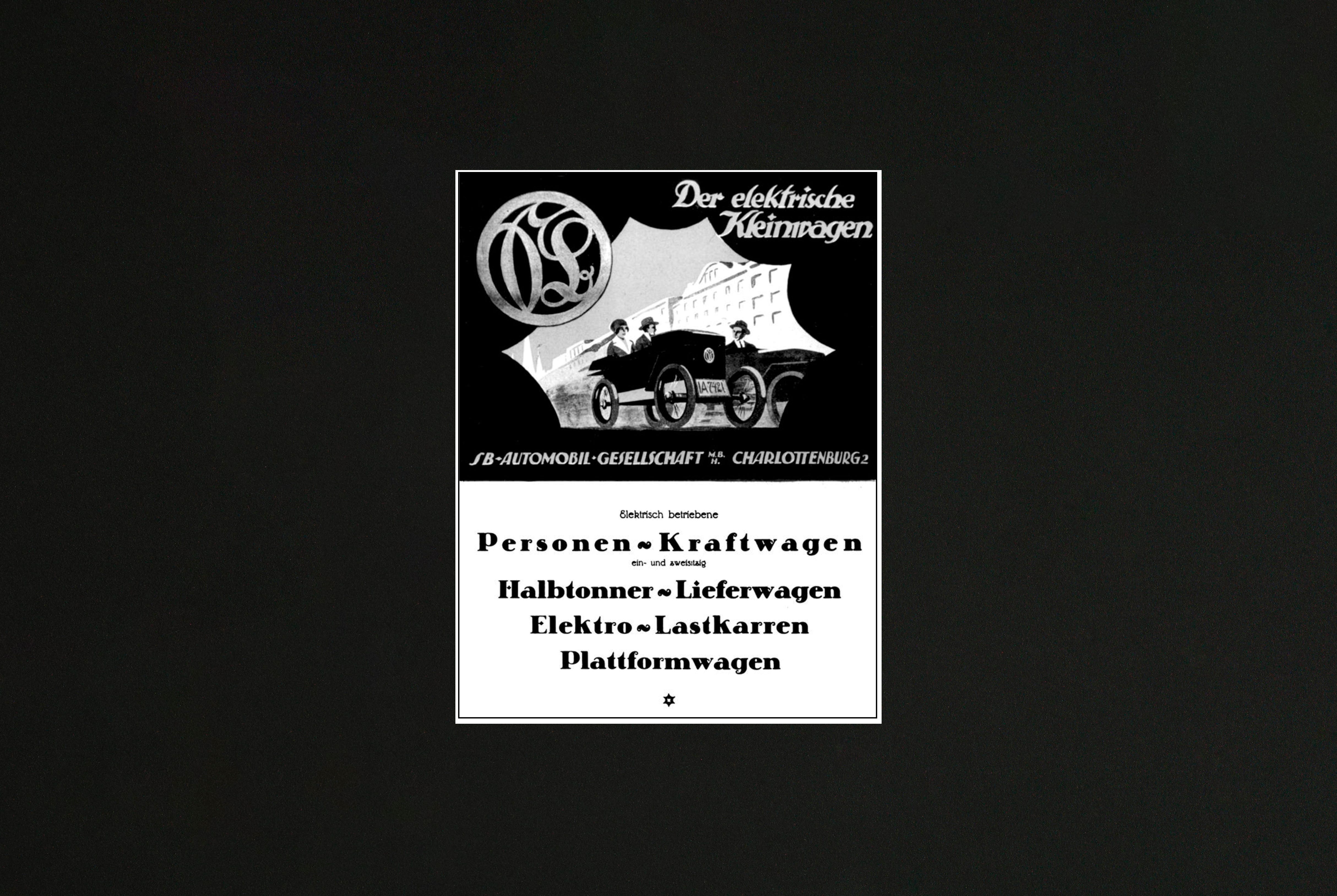
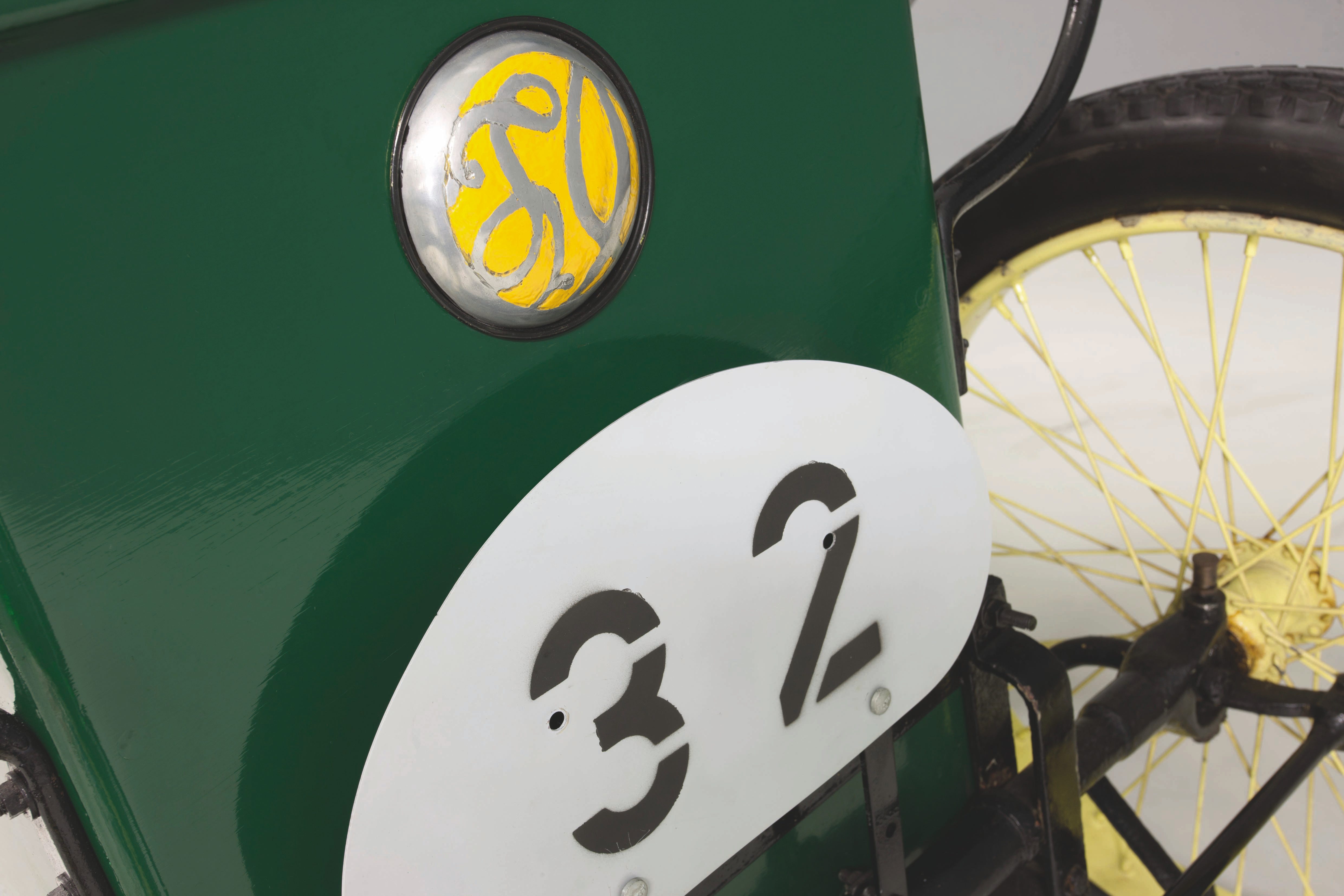
Historical records reproduce at least two early variations of their identity: an oval design dated 1919–1920 and a circular design dated 1921. The circular mark is particularly close in composition to the emblem shown on the vehicle.

(sources: Audi, Axel Oskar, Museumsportal Berlin)
Now here's a little oddity! I knew about the early DKWs, but the Slaby-Beringer was new to me.
And here we are, more than a century later, still talking about lightweight, affordable electric city cars. Apparently, we've been reinventing the wheel for quite some time!
And what a peculiar little thing it is. The wooden body and lever steering make it look like someone crossed an automobile with a piece of garden furniture.
Thanks for another interesting bit of automotive history!
wonderful graphics for such a boxy car!