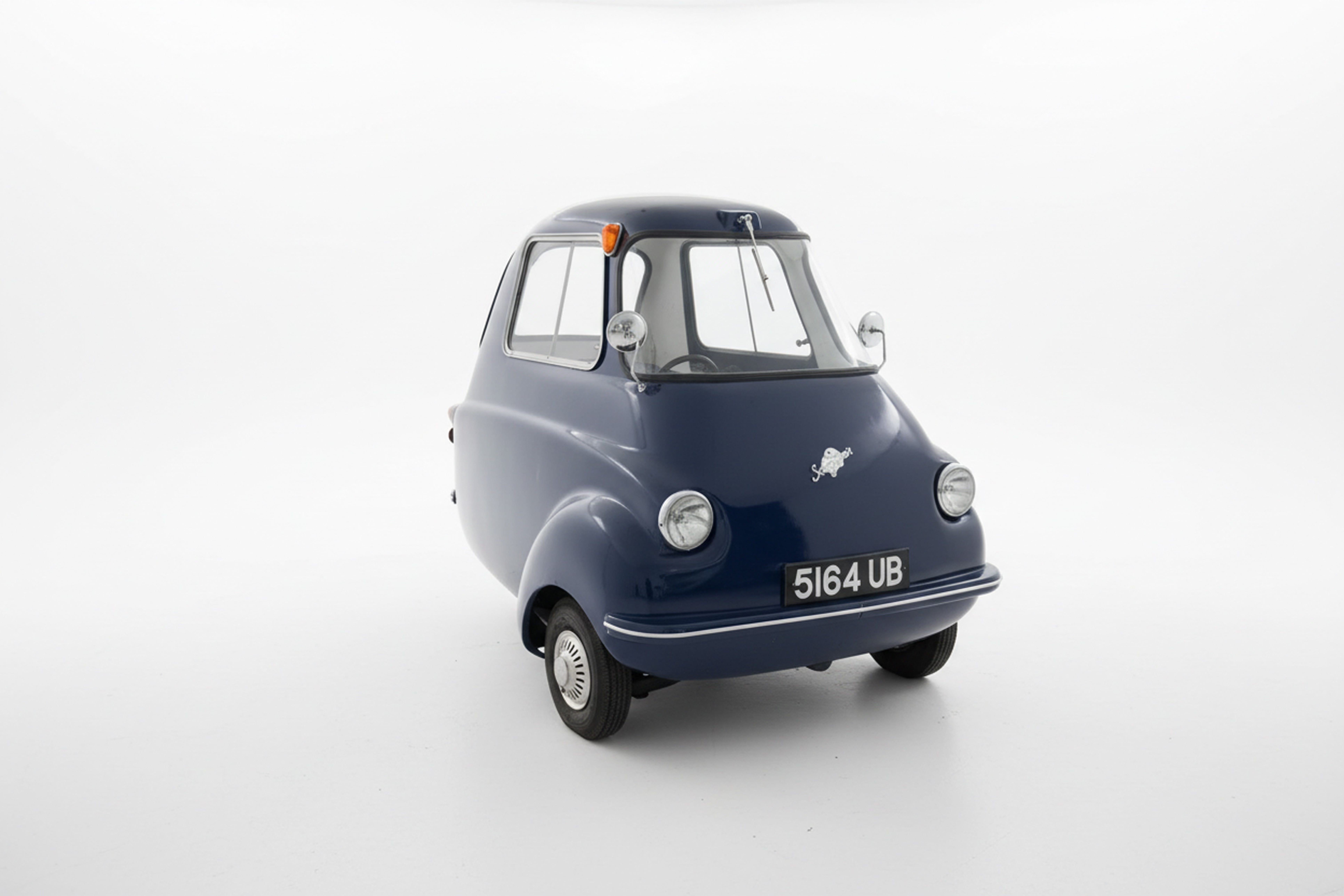
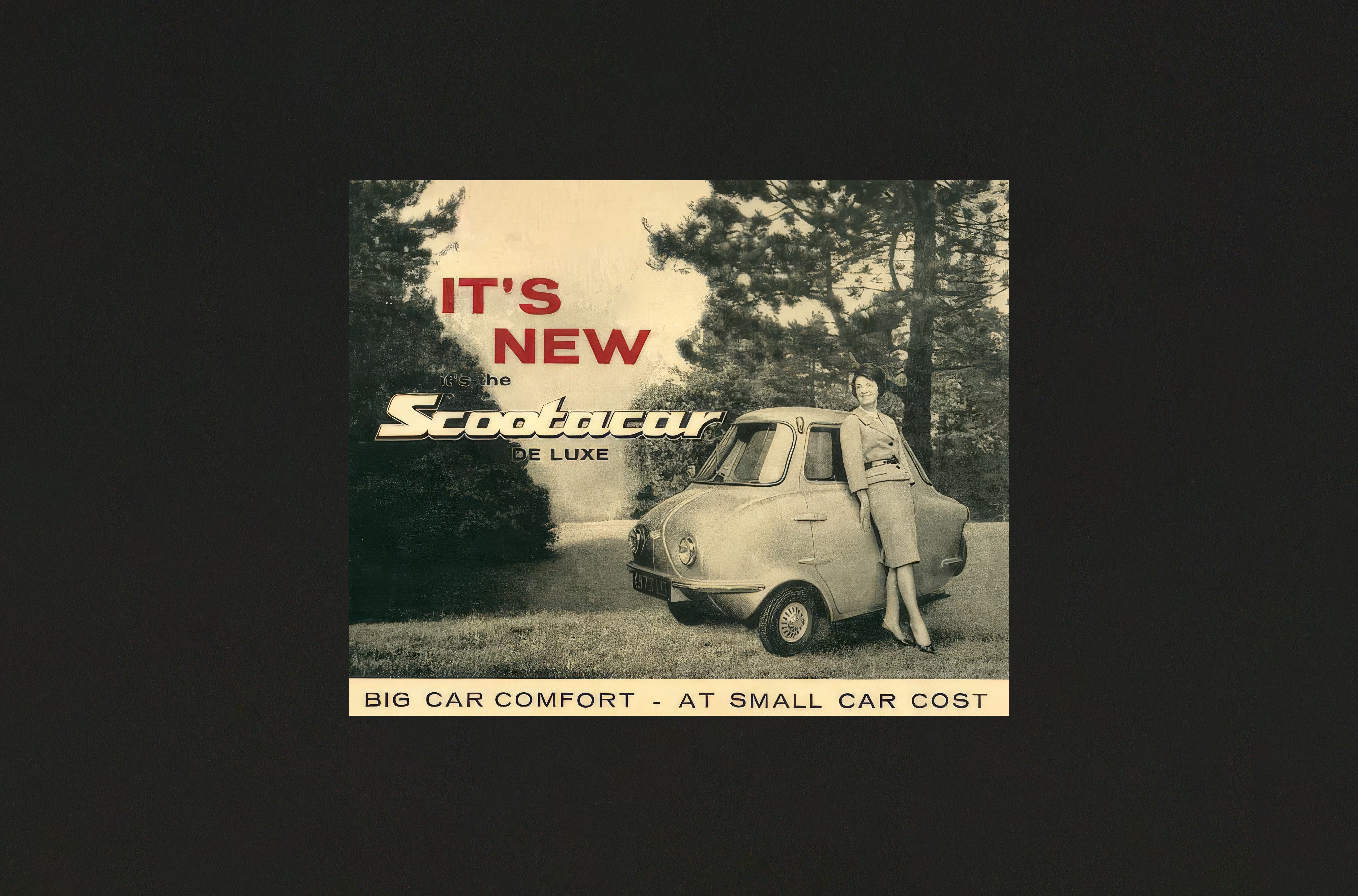
The Scootacar was a British microcar produced between 1957 and 1964 by Scootacar Ltd., a subsidiary of the famous manufacturer Hunslet Engine Company of Leeds.
Hunslet was known for building locomotives, not cars—so the Scootacar was a surprising and quirky detour for them.

The idea for Scootacar reportedly originated when a Hunslet director’s wife complained that she wanted a vehicle that was small enough to navigate narrow village lanes, easy to park and simple to drive and maintain
She wanted a car she could “step into like a dress,” and this unusual request inspired the early design process.
An engineer shaped the prototype by literally having someone sit on a motorcycle and building a car around them. This led to the Scootacar’s memorable bubble-like silhouette.
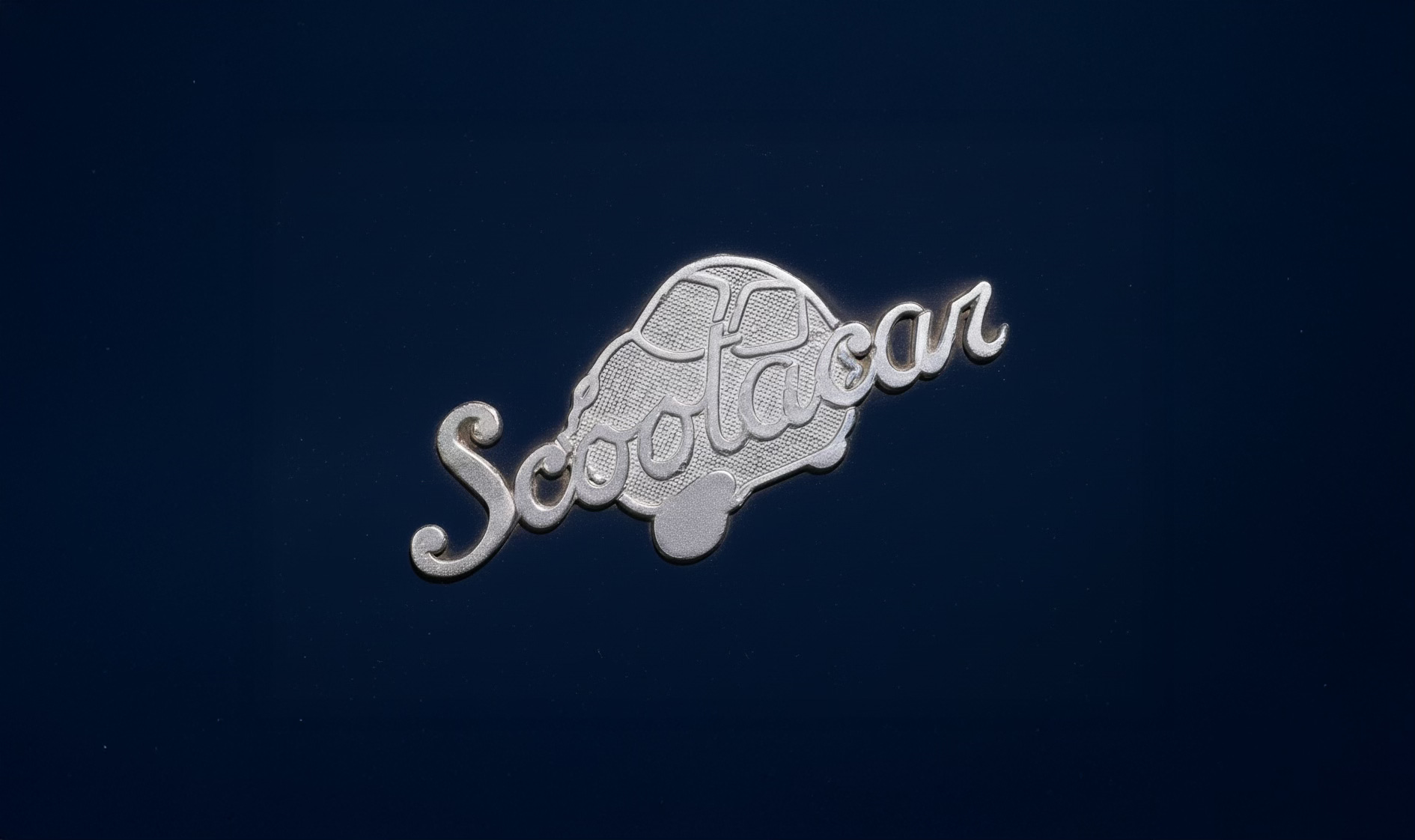
The Scootacar used a steel tubular frame with a fiberglass body (new and innovative for the era). It had a Villiers 197 cc or 250 cc two-stroke single-cylinder engine, usually paired with a motorcycle-type gearbox. With three wheels, it fit into the “cyclecar” tax bracket in the UK and could be driven on a motorcycle license.
Top speed: around 40–50 mph, depending on the model.
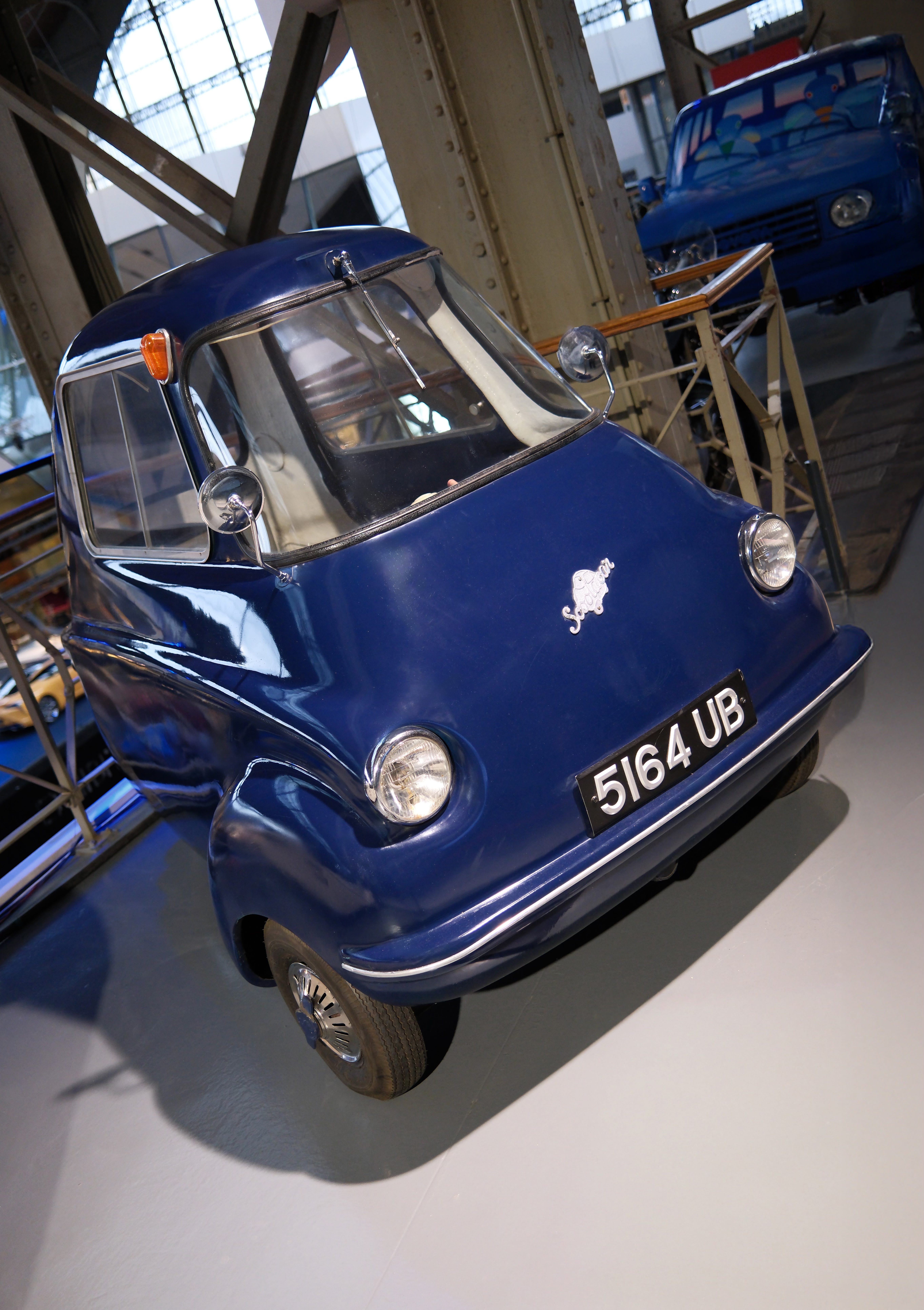
1964 Scootacar MK1.
Approximately 750 Scootacars were produced between 1957 and 1964. The shape of the car was designed by Henry Brown. The body is made of glass fibre.
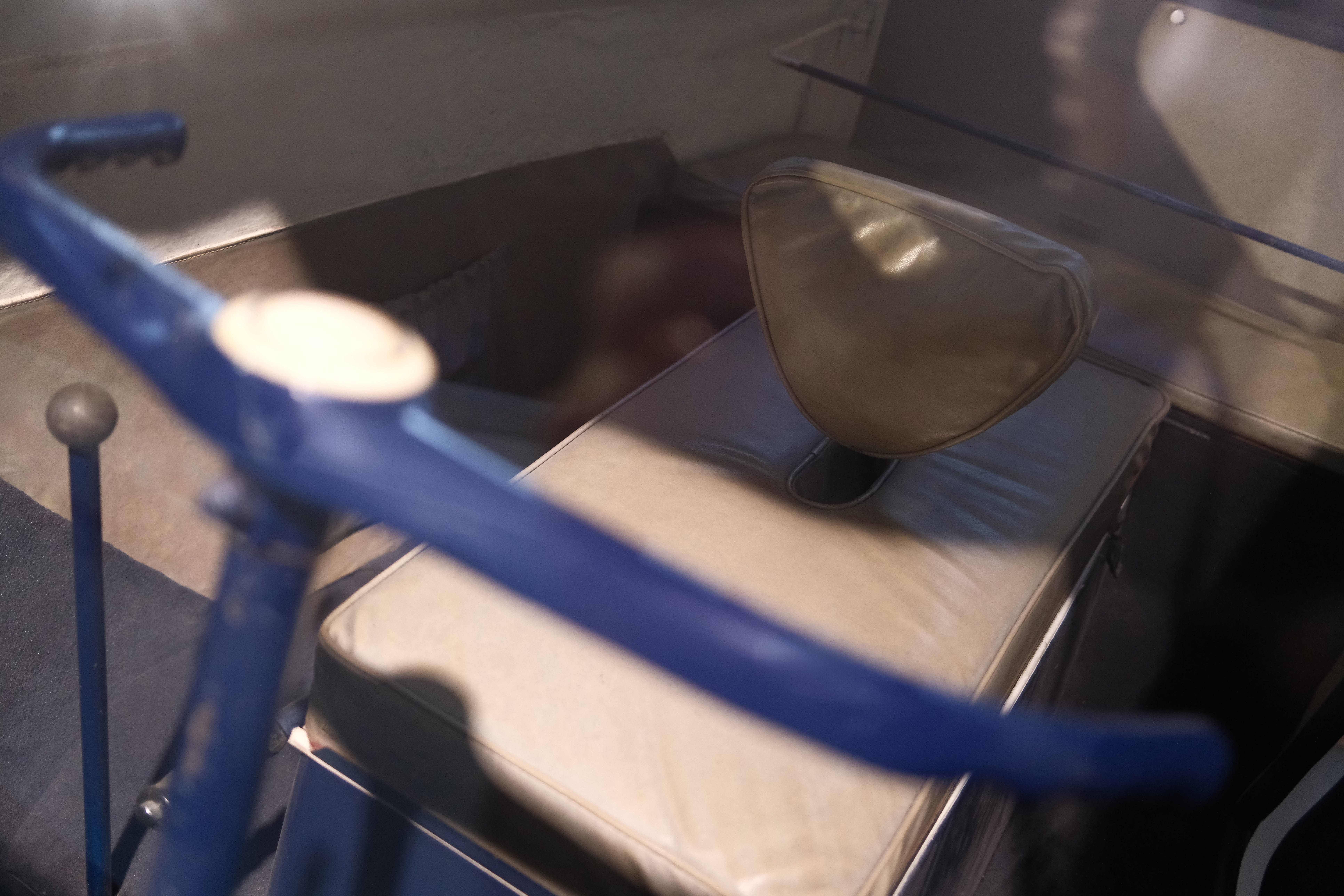
It was nicknamed “the telephone booth”. Two people could be carried with a passenger behind the driver or alternatively just squeezed in alongside. This one is at Autoworld in Brussels, Belgium.