


A Quiet Craft of German Coachbuilding.
Rünge Karosserie was one of the many small but highly skilled German coachbuilders that flourished during the interwar period, when automobiles were still as much crafted objects as industrial products. Active primarily in the 1920s and early 1930s, Rünge operated in Wuppertal, an industrial city whose metalworking and precision trades supported a thriving culture of bespoke manufacture.
At the time, most premium automobiles were sold as rolling chassis—engine, frame, and drivetrain—leaving customers to commission a body that reflected their taste, status, and practical needs. Rünge filled this role quietly and competently, building custom bodies for established German marques such as Mercedes-Benz, Horch, Adler, and others. Their output included stately limousines, elegant cabriolets, and formal touring cars, often tailored for private owners rather than mass markets.
Unlike large firms such as Erdmann & Rossi or Gläser, Rünge remained a regional atelier, favoring craftsmanship over publicity. This modest scale is part of why the company is little known today. Yet surviving cars and period badges—most notably the enamel shield bearing a stylized eagle and the name “RÜNGE”—reveal a workshop that took pride in its work. The eagle emblem, rendered in relief on a soft enamel field, symbolized solidity, precision, and German artisanal tradition rather than corporate ambition.
The decline of Rünge followed the broader fate of independent coachbuilders. By the mid-1930s, manufacturers increasingly offered factory-bodied cars, while economic pressure and later wartime production ended most bespoke bodywork. Rünge disappeared without fanfare, leaving no large archives, only scattered traces: a badge on a grille, a name in a registry, a photograph in a period album.
Today, Rünge survives as a whisper of an era—a reminder that early automobiles were collaborative creations, shaped not only by engineers and brands, but by small workshops whose hands gave machines their human form.
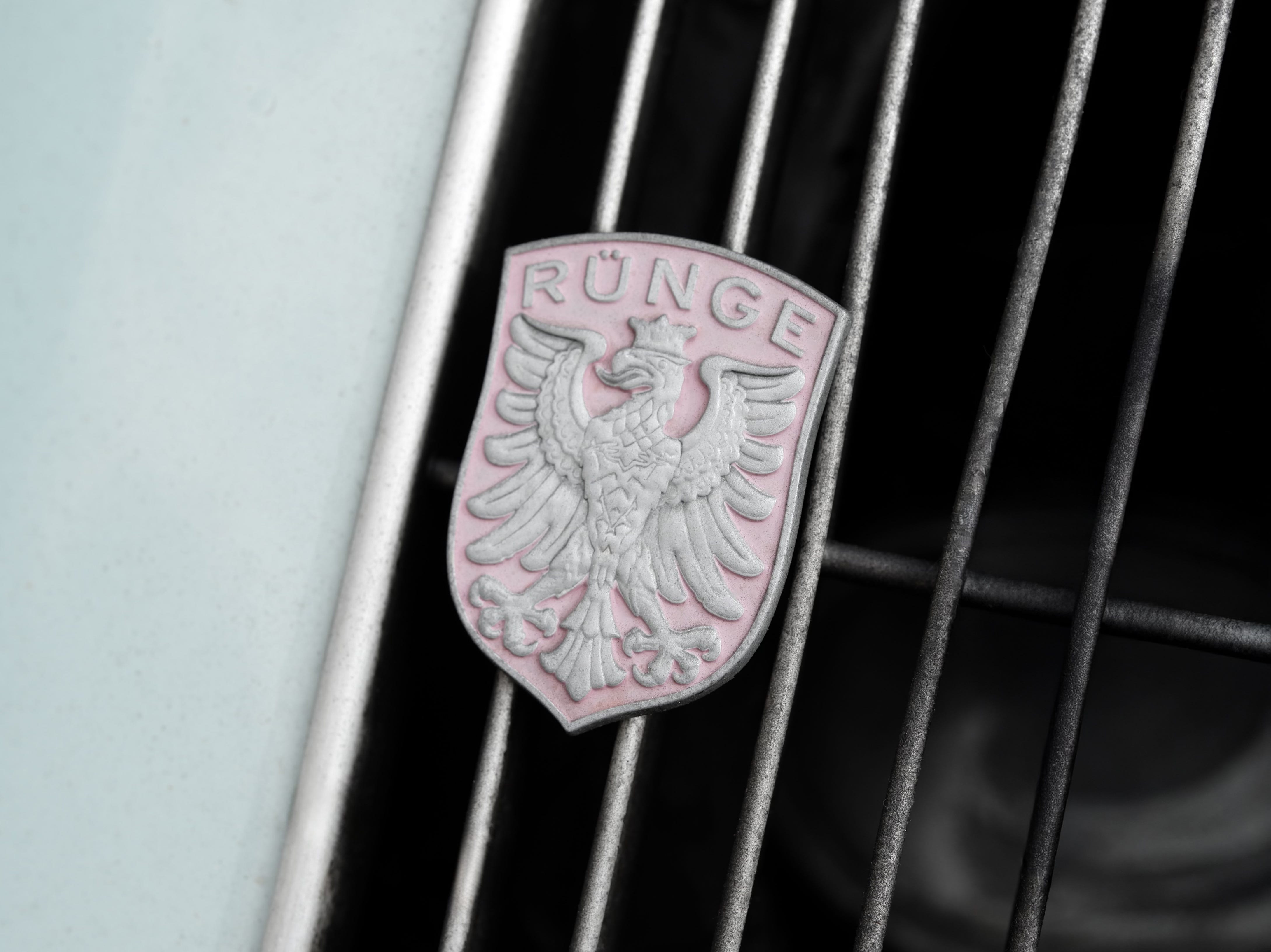
beautiful like jewelry