


The Rud. Ley Maschinenfabrik was founded in 1856 by Rudolf (Rud.) Ley in Arnstadt.
Unlike many early automobile companies that began as bicycle manufacturers, Loreley grew out of a successful machinery business. Originally, the company manufactured sewing machines, shoe-making machinery, dynamos, and electric motors. By the turn of the twentieth century it had become one of the region's leading engineering firms.
After Rudolf Ley died in 1901, his son Alfred Ley, a talented engineer, became fascinated by the rapidly emerging automobile industry. He designed the company's first automobile around 1903–1905, and production began shortly afterward.
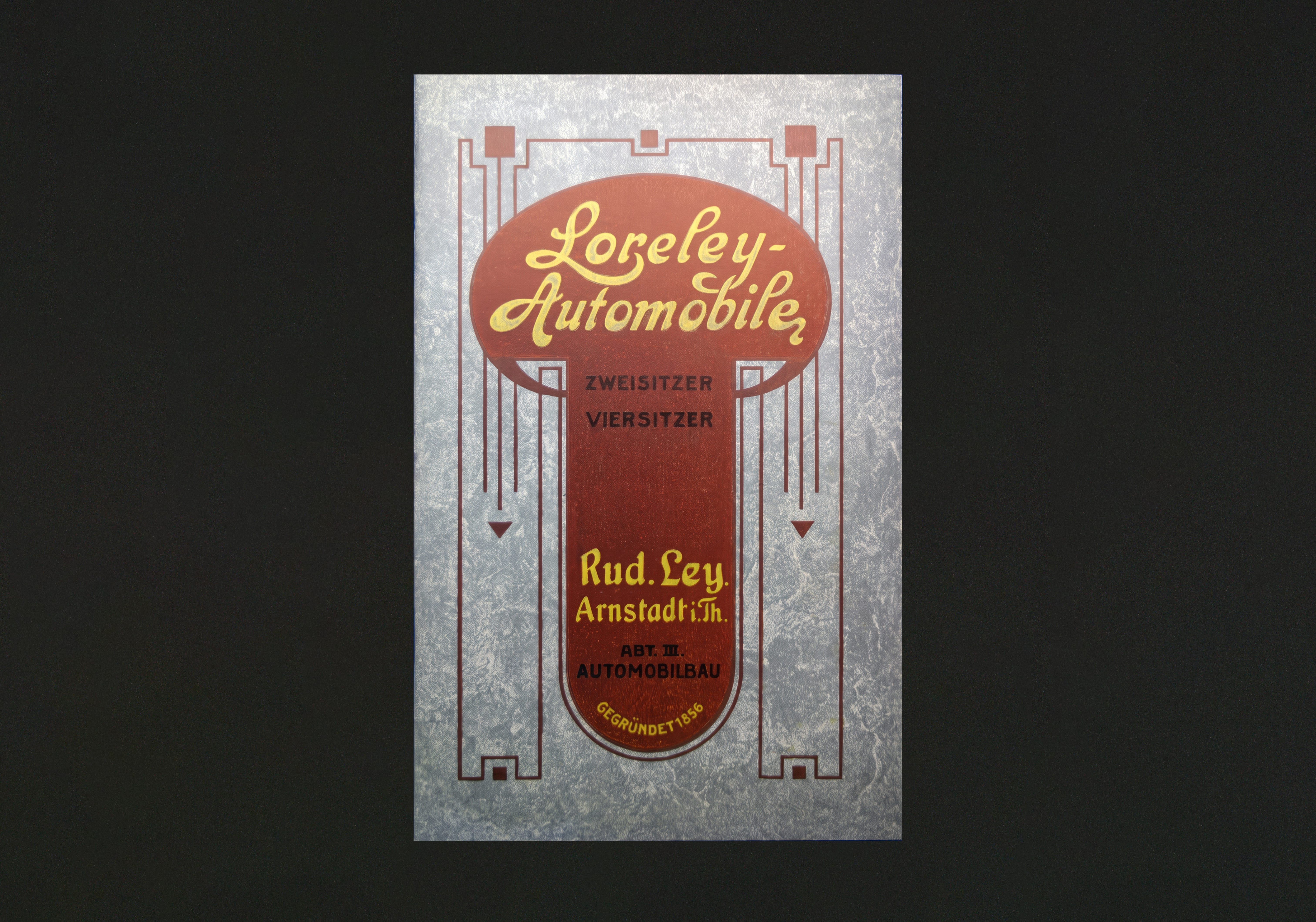
The cars were marketed under the name Loreley, inspired by the legendary maiden of the Rhine River whose beauty supposedly lured sailors to disaster.
The name was chosen because it sounded elegant and distinctly German, making it memorable in export markets. Contrary to an old myth, the cars were not named after a daughter of the Ley family—the automobiles had already carried the Loreley name years before Alfred Ley’s daughter Lore was born.
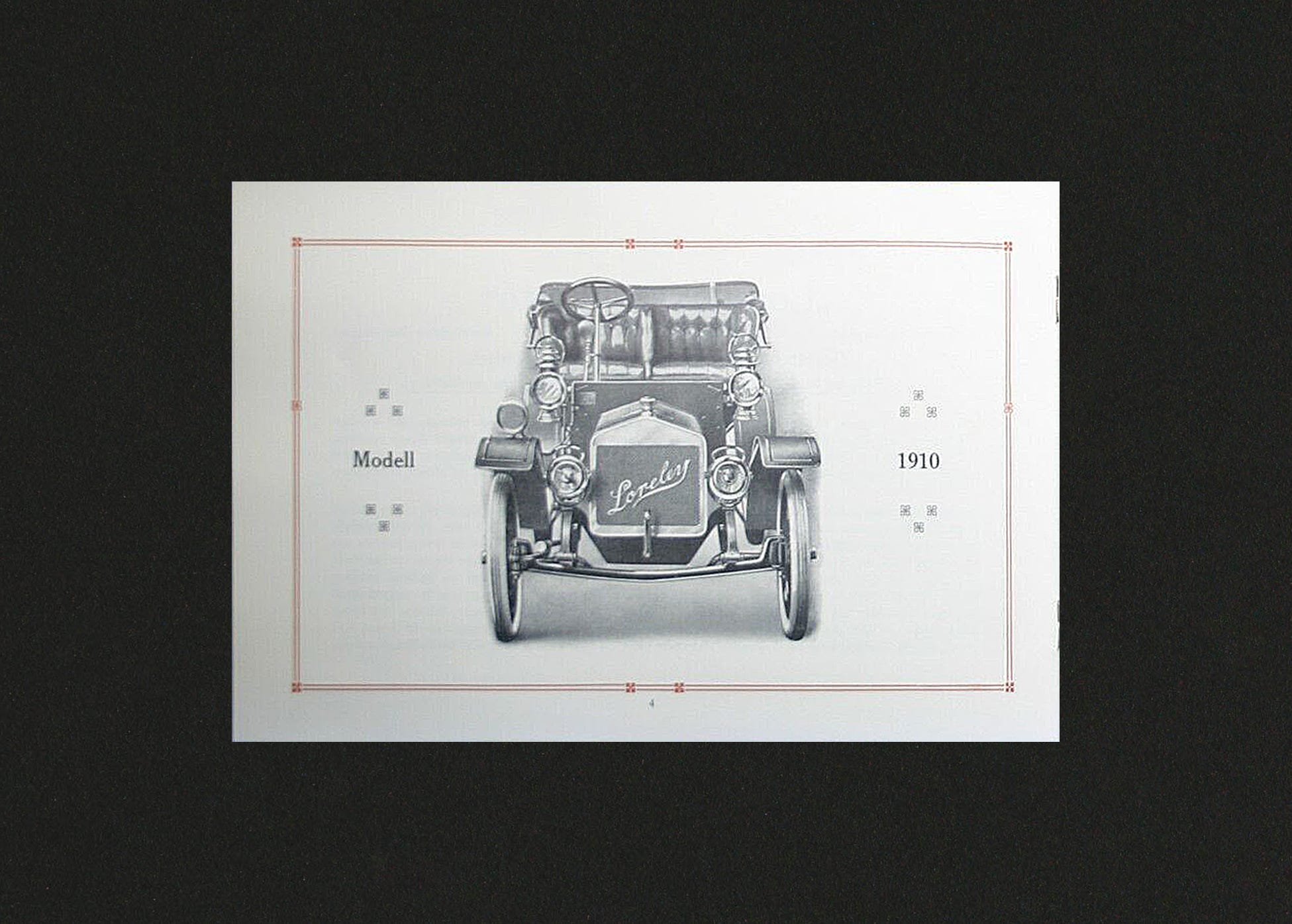
The first production model was the Loreley 6/10 PS (1905–1906) with a 1.5-liter four-cylinder engine making approximately 10 horsepower with a top speed around 60 km/h (37 mph).
Its moderate price and reliable engineering made it one of Germany's better-known light automobiles. Alfred Ley focused on practical cars for everyday owners rather than expensive luxury machines. Remarkably, by 1907 Loreley introduced a compact six-cylinder automobile, something almost unheard of in this class. It demonstrated Alfred Ley's willingness to innovate.
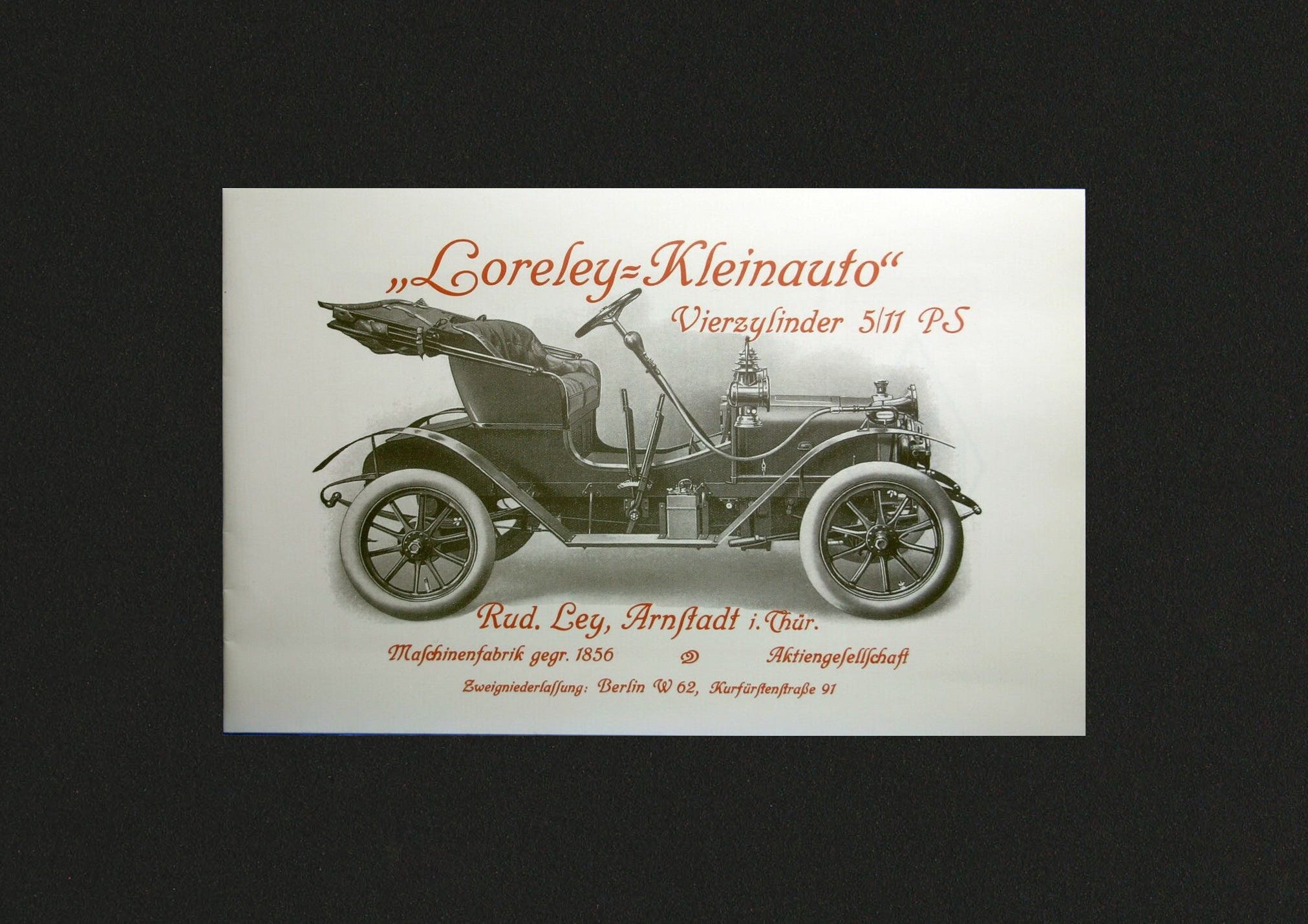
The Loreley-Kleinauto 5/11 PS was one of the company’s lightweight four-cylinder models aimed at buyers wanting an economical touring car.
Loreley quickly developed a strong export business and using the Ley family's existing worldwide machinery sales network, automobiles were exported all over the world. They even established a dedicated Loreley Autocar Company Ltd. in London to market the cars in Britain.
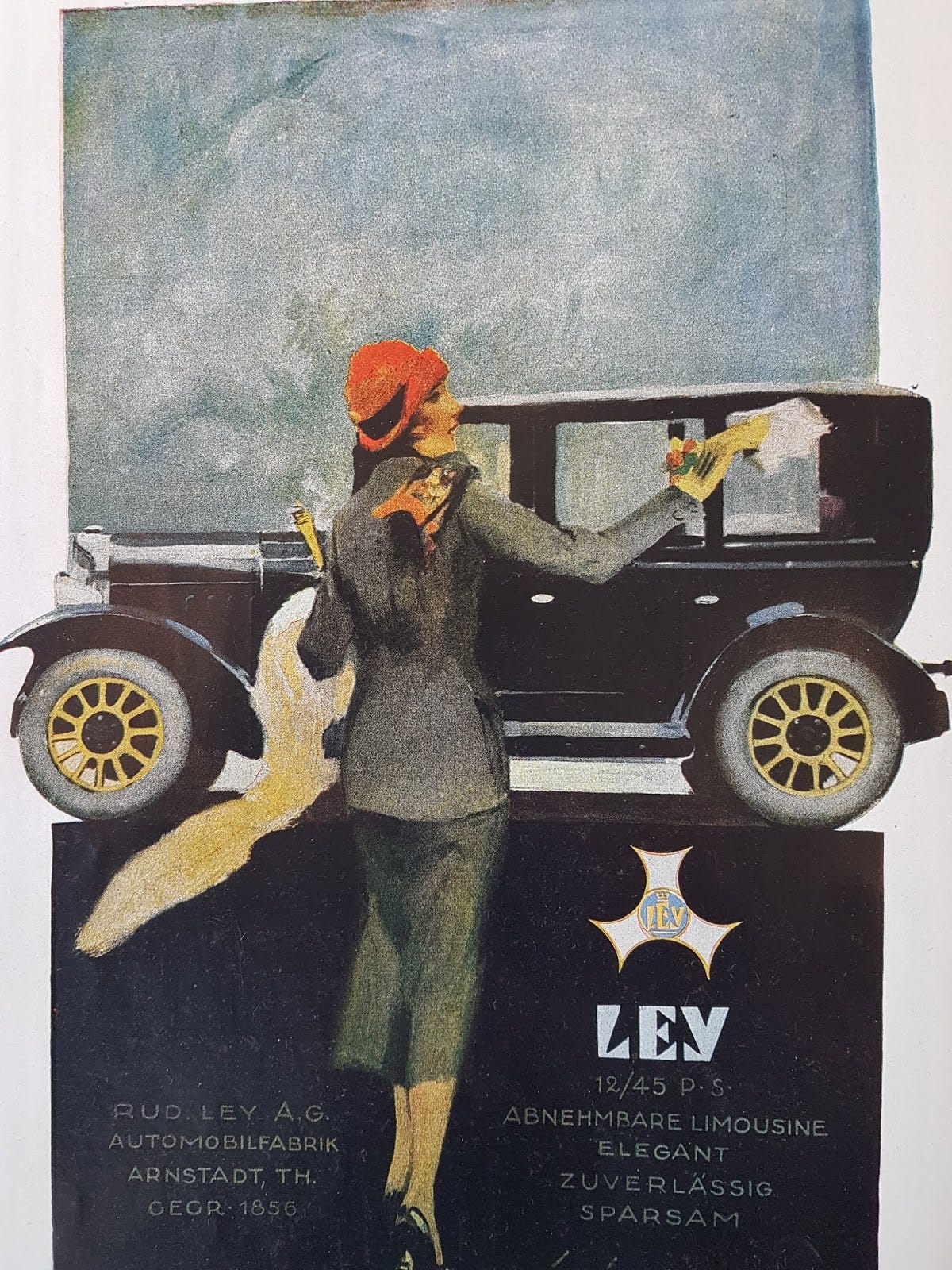
Following World War I production resumed in 1919 and the automobiles gradually began carrying simply the Ley name.
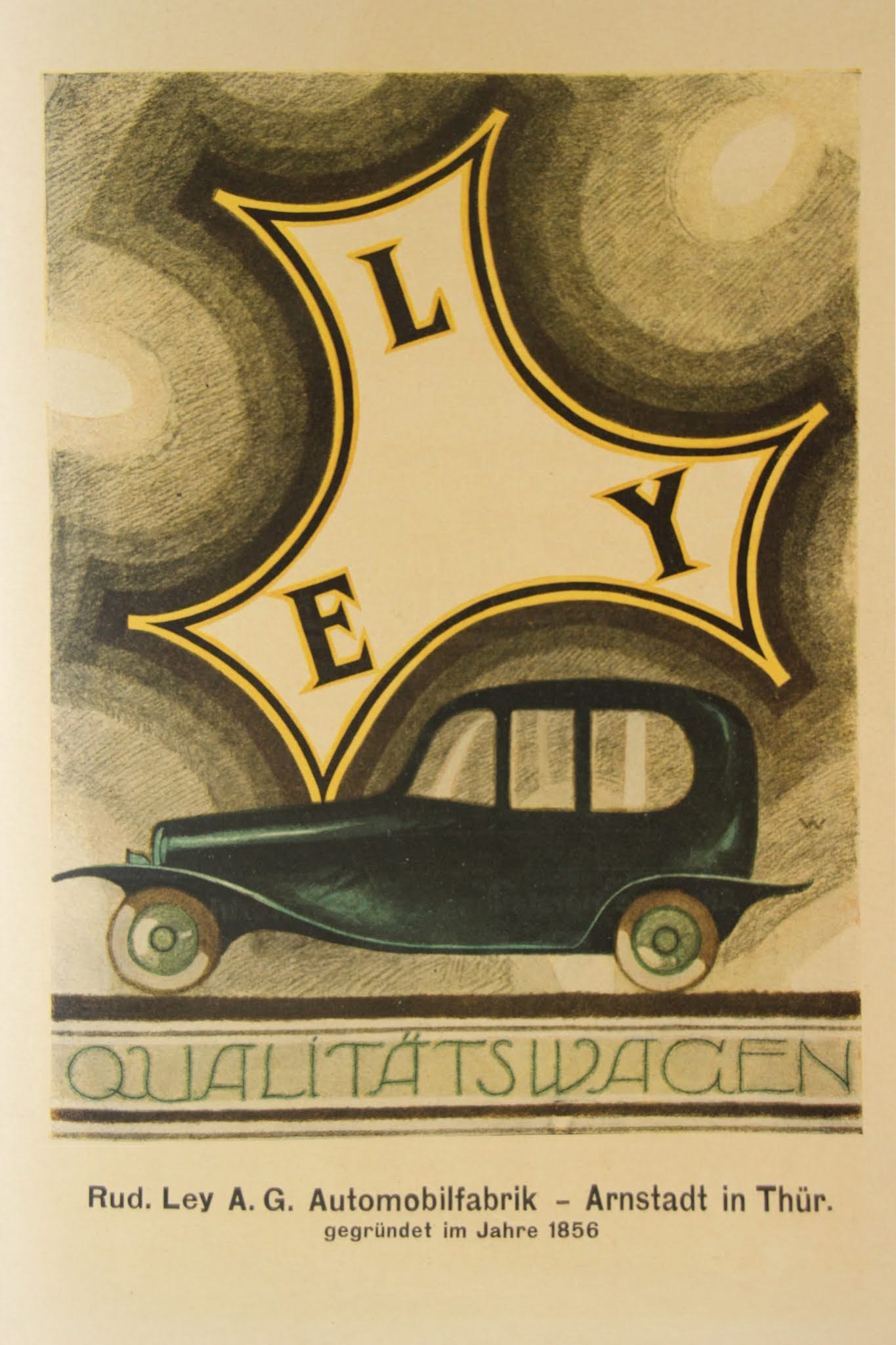
One particularly fascinating project occurred in 1922, when aerodynamic pioneer Paul Jaray collaborated with Alfred Ley to build one of the world’s earliest streamlined automobile prototypes—a concept decades ahead of its time.
Like many independent German manufacturers, Ley struggled during the Great Depression.
Passenger-car production ended around 1933, while the company continued producing commercial vehicles, machinery, and engineering products until after World War II. Following the war, the factory was expropriated under Soviet occupation, bringing the Ley company to an end.
Today, only a handful of Loreley automobiles survive. The earliest Loreley 6/10 PS is exceptionally rare—only about three examples are known to exist, making them among the rarest surviving German automobiles of the Brass Era.
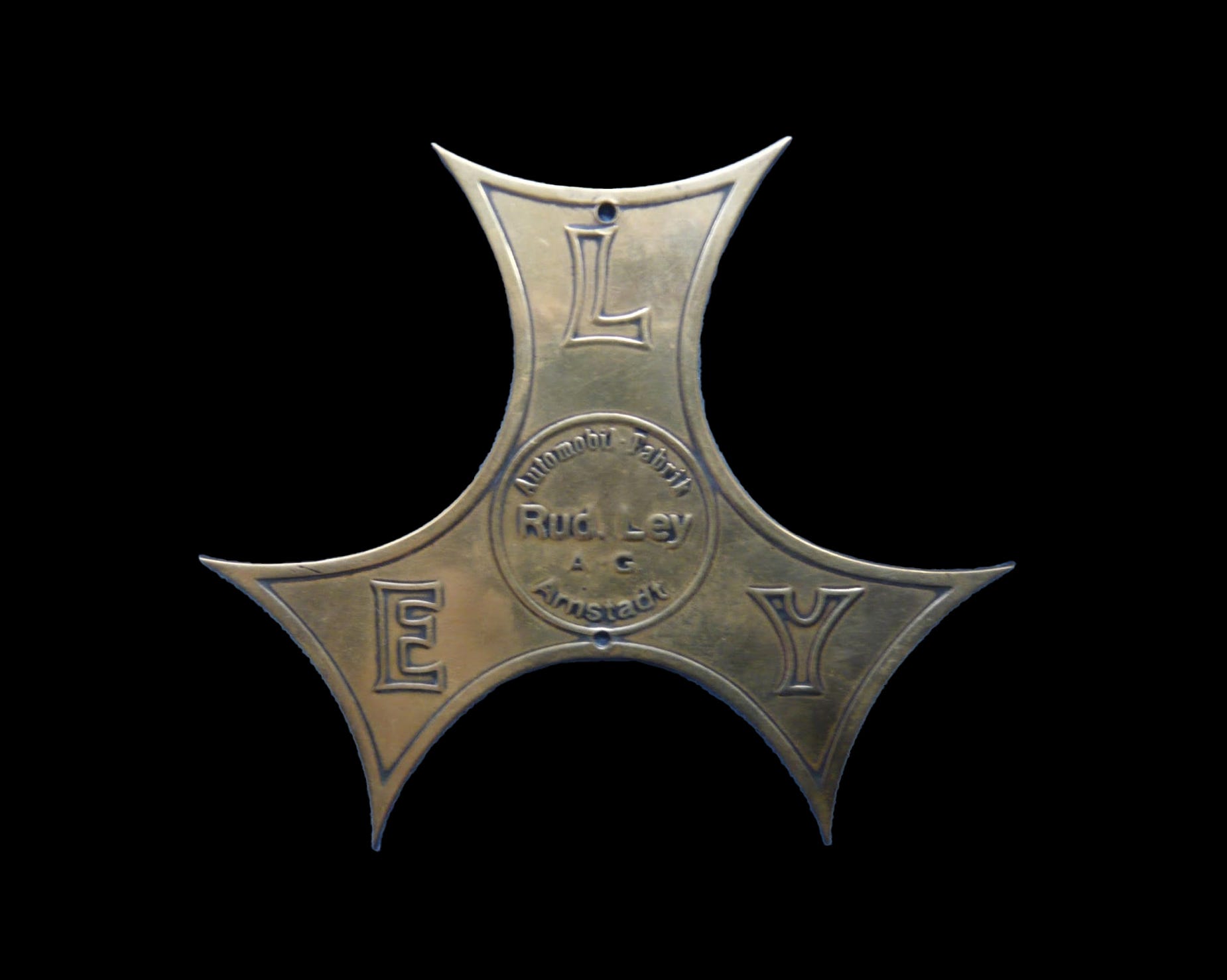
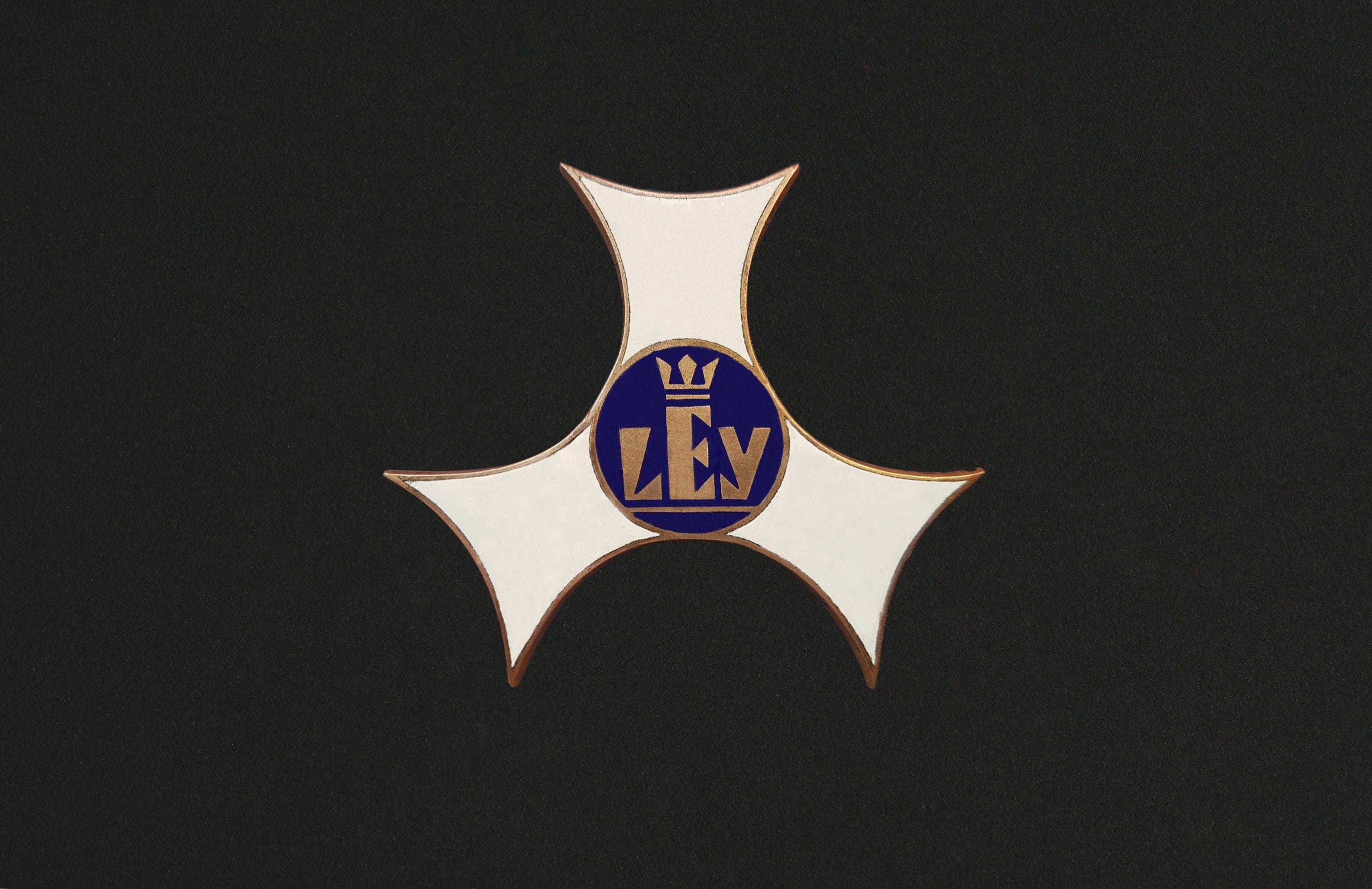
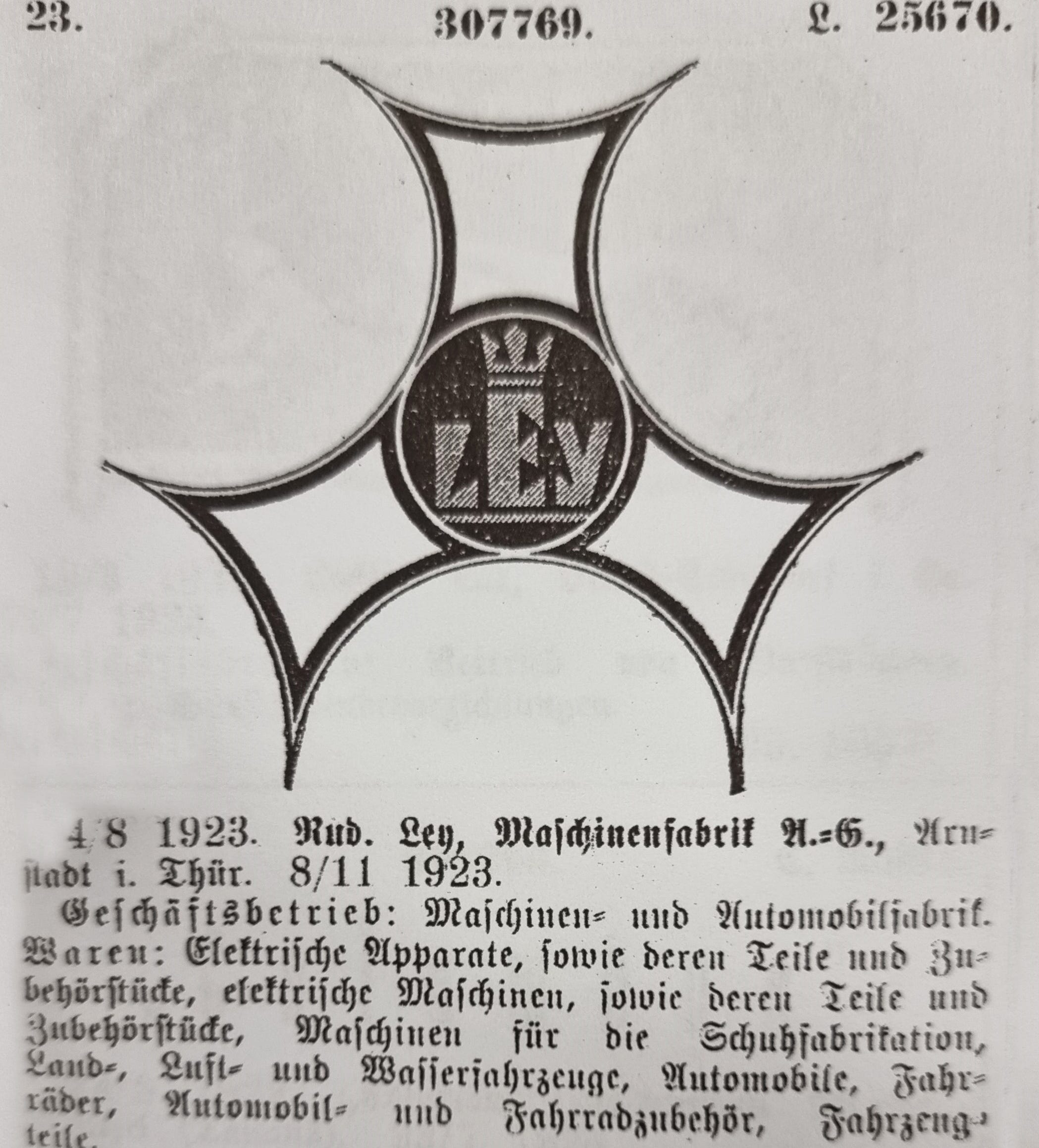
There are actually three versions of the Loreley/Ley logo.
Early Loreley radiator emblem (c. 1909–1914) is the emblem most closely associated with the Loreley name. It has a circular white enamel border with a red three-armed cross (or trefoil) with the letters L, E, and Y. A black center medallion reads: Rud. Ley A.-G. Automobil-Fabrik Arnstadt and the outer ring features RUD. LEY AUTOMOBILFABRIK A.-G. ARNSTADT.
A second version uses the same red three-point design but omits the white circular border. This version appears on some period literature and surviving badges.
After World War I, the company gradually dropped the Loreley name and marketed its cars simply as Ley. The emblem became a flowing black script reading “Ley”, which appeared on brochures and later automobiles.
Although the cars were sold as Loreley, the emblem itself cleverly spells LEY, emphasizing the family name while promoting the Loreley brand.
(sources: Wikipedia, Ley Automobil)