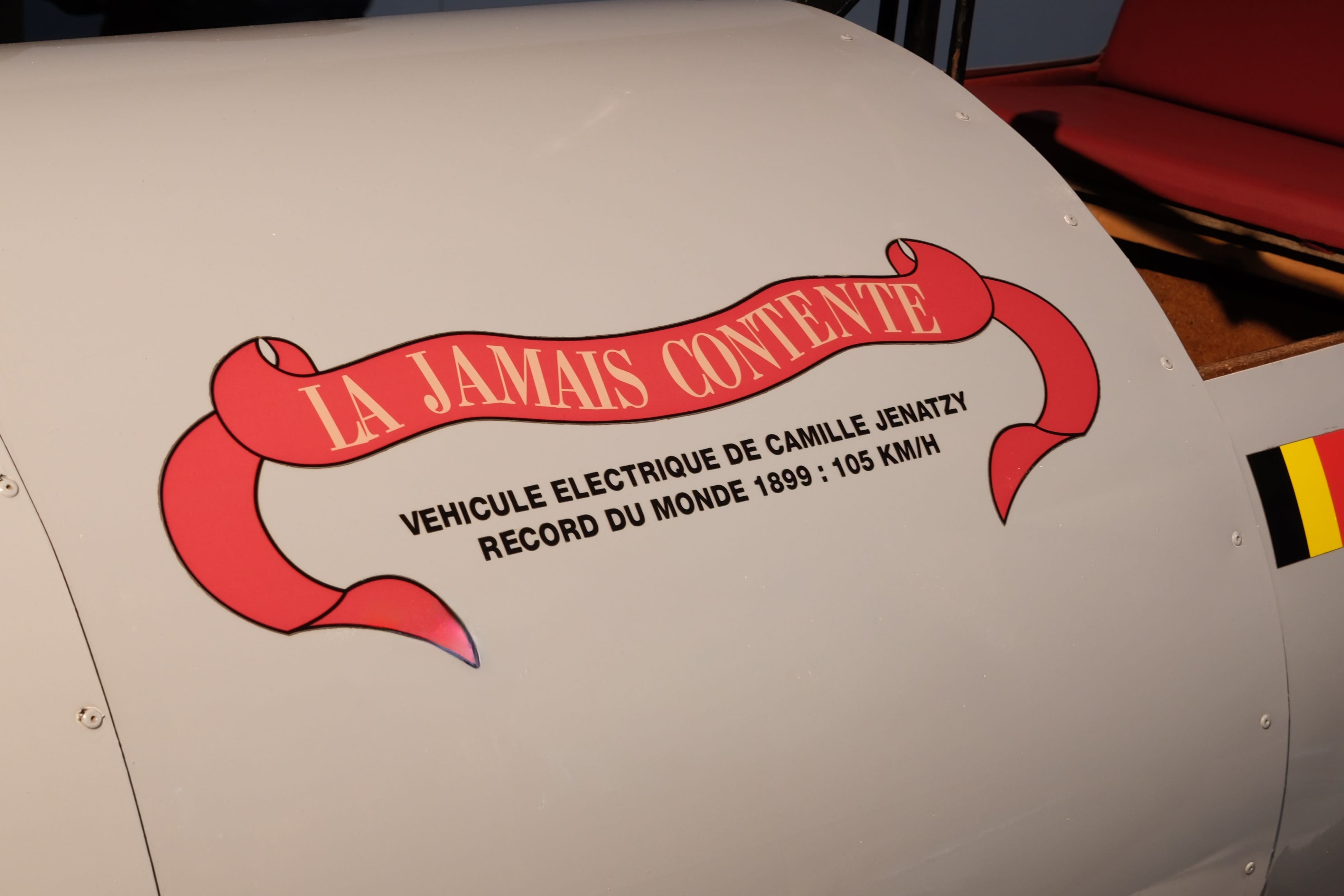
La Jamais Contente (“The Never Satisfied”) is one of the most important vehicles in automotive history—and a landmark for electric mobility.
Built in 1899, it became the first automobile ever to exceed 100 km/h (62 mph), proving that electric power was not only viable but dominant at the dawn of the automobile age.

La Jamais Contente was designed and driven by Camille Jenatzy, a Belgian engineer, race driver, and electric-vehicle pioneer. Born in Schaerbeek, Belgium, Jenatzy was the son of a rubber manufacturer and had deep technical knowledge combined with a competitive racing spirit.
At the end of the 19th century, there was intense rivalry between electric, steam, and internal combustion vehicles. Jenatzy was locked in a public speed duel with French electric-car manufacturer Gaston de Chasseloup-Laubat, each repeatedly breaking speed records within months of one another.
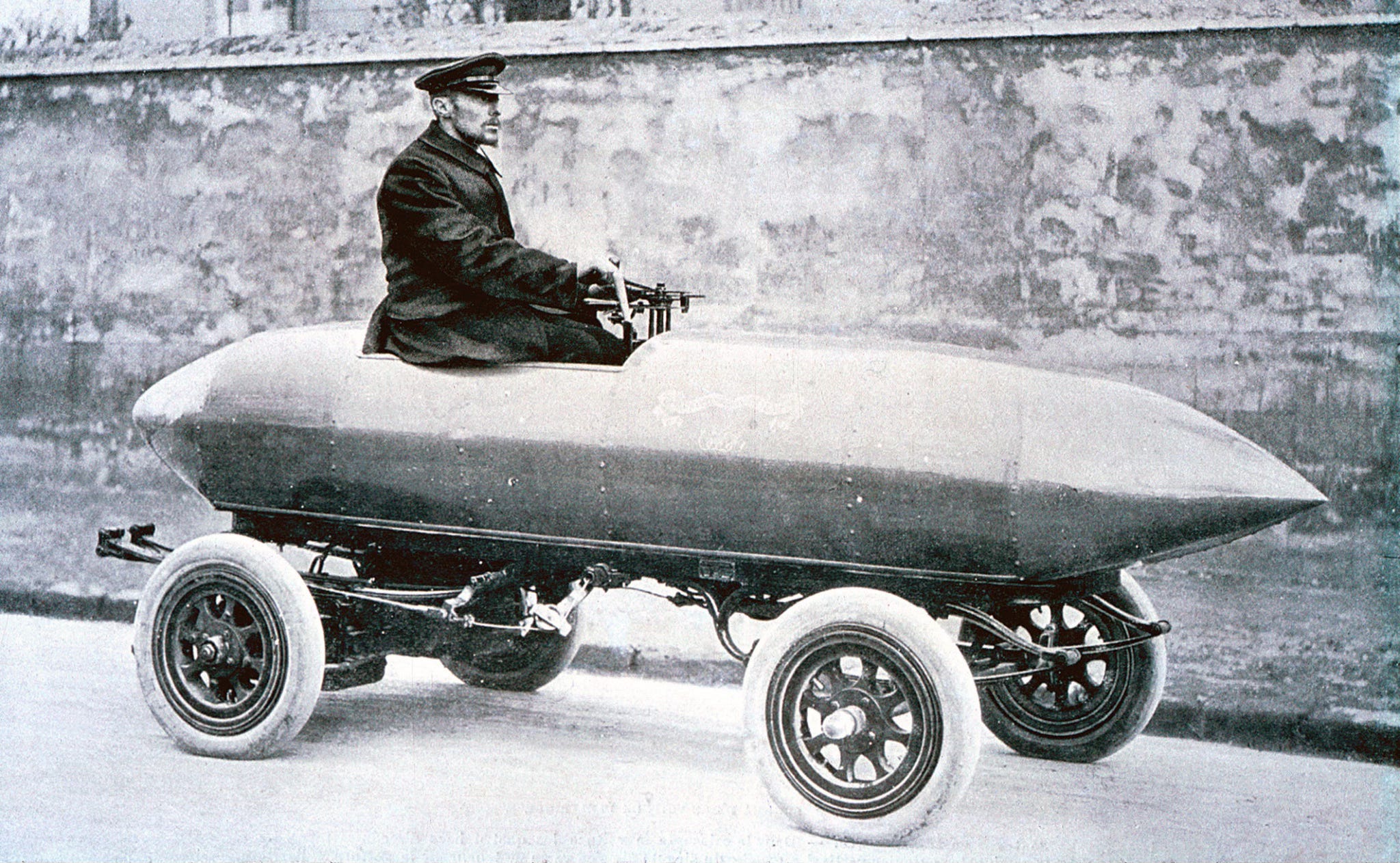
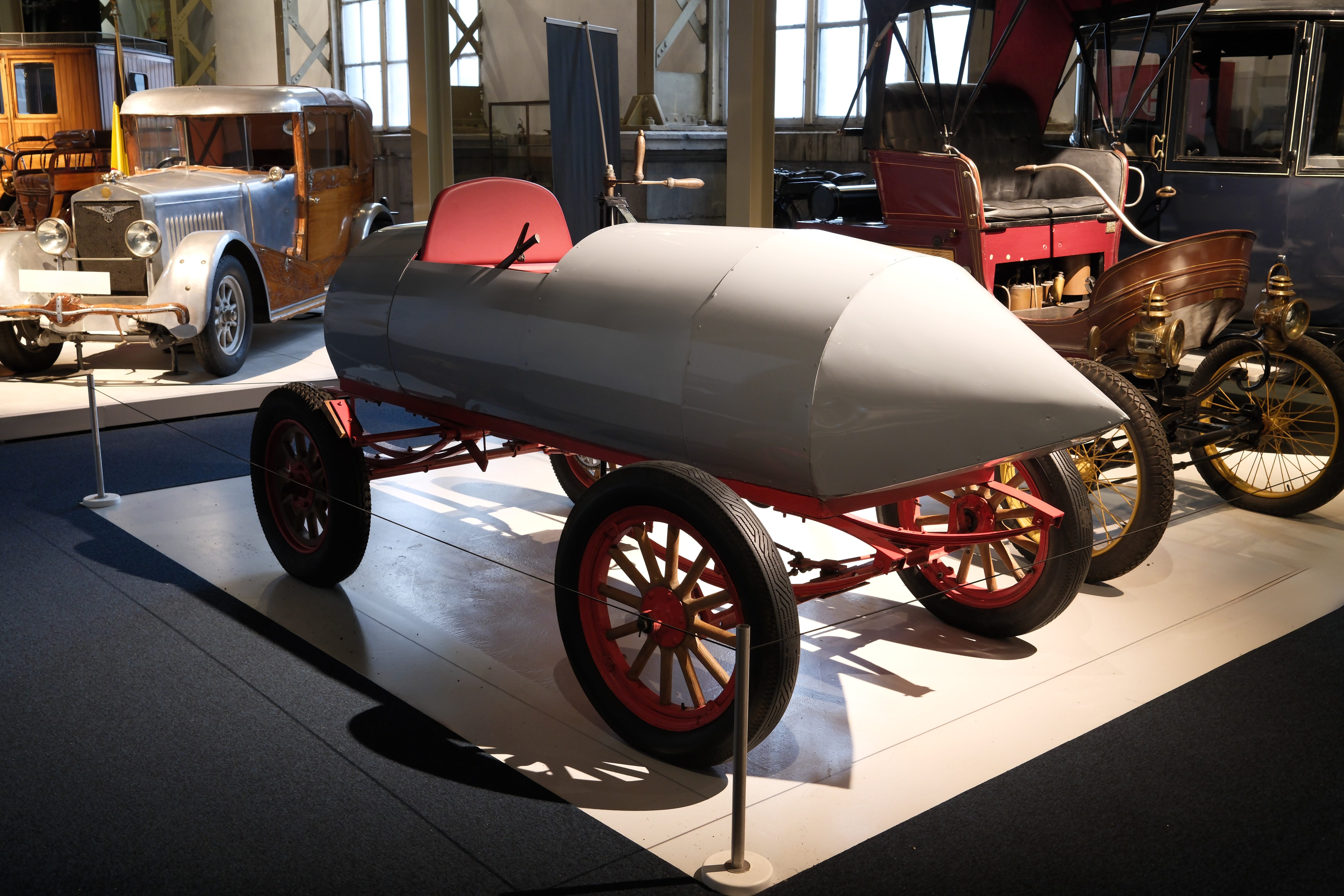
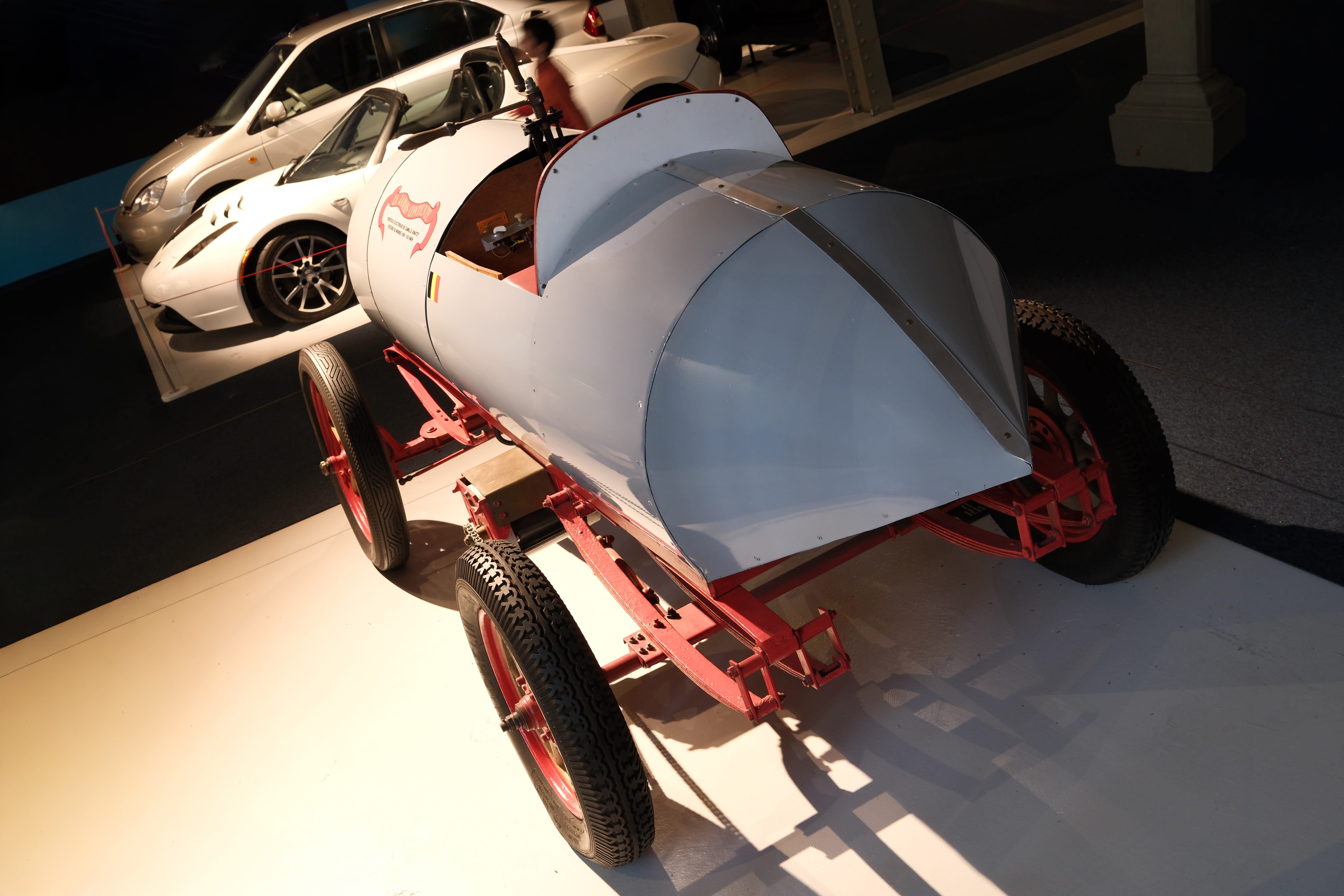
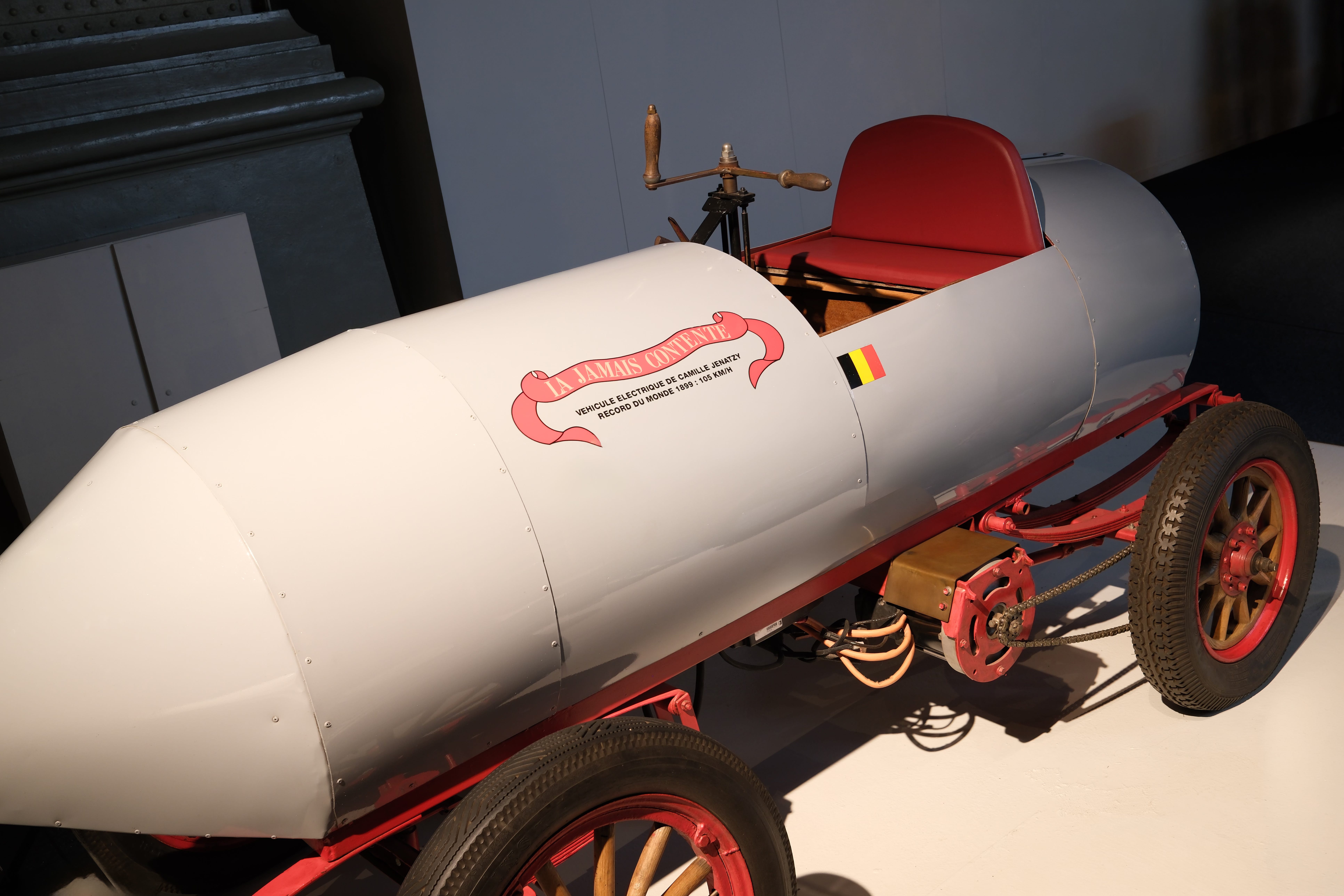
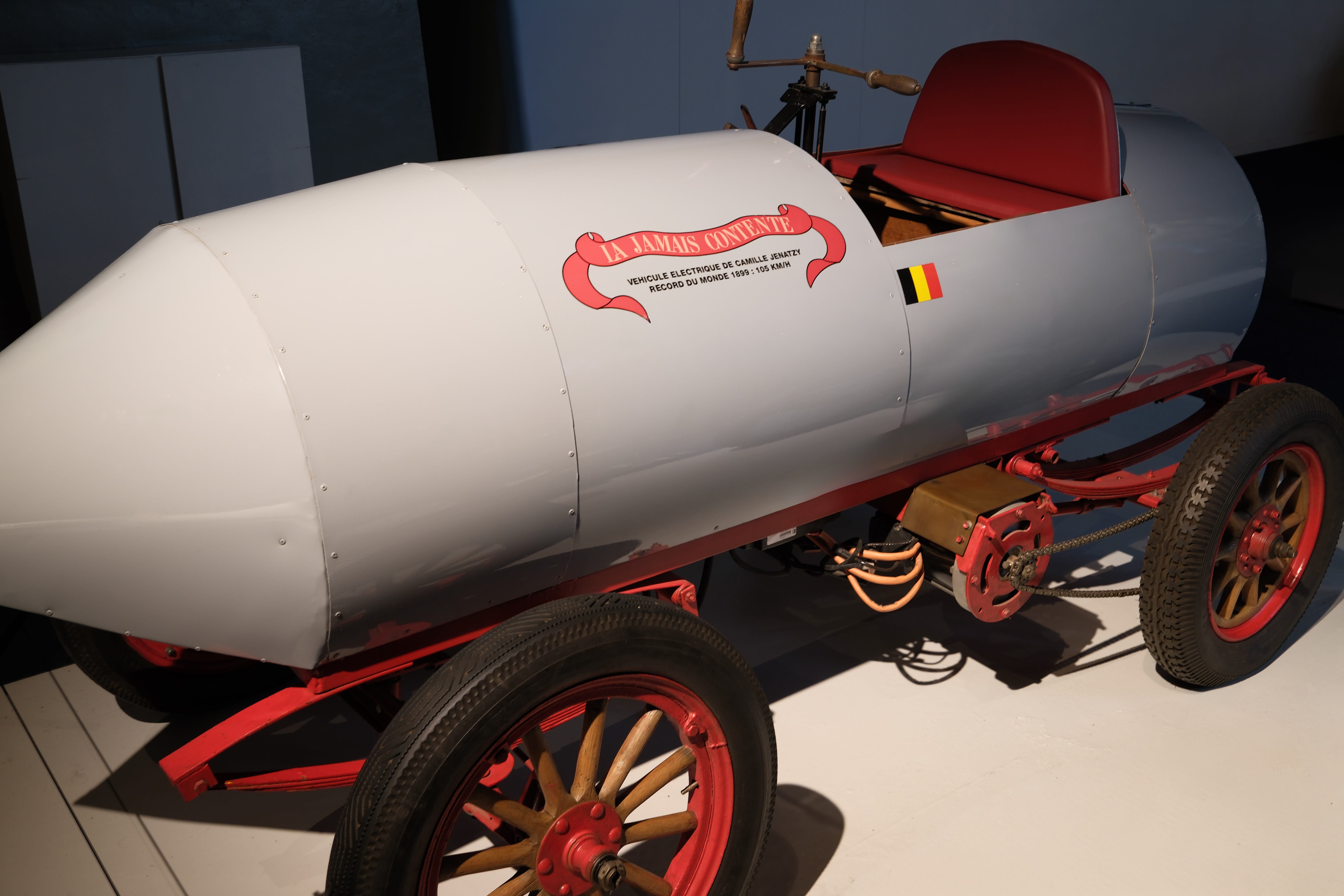
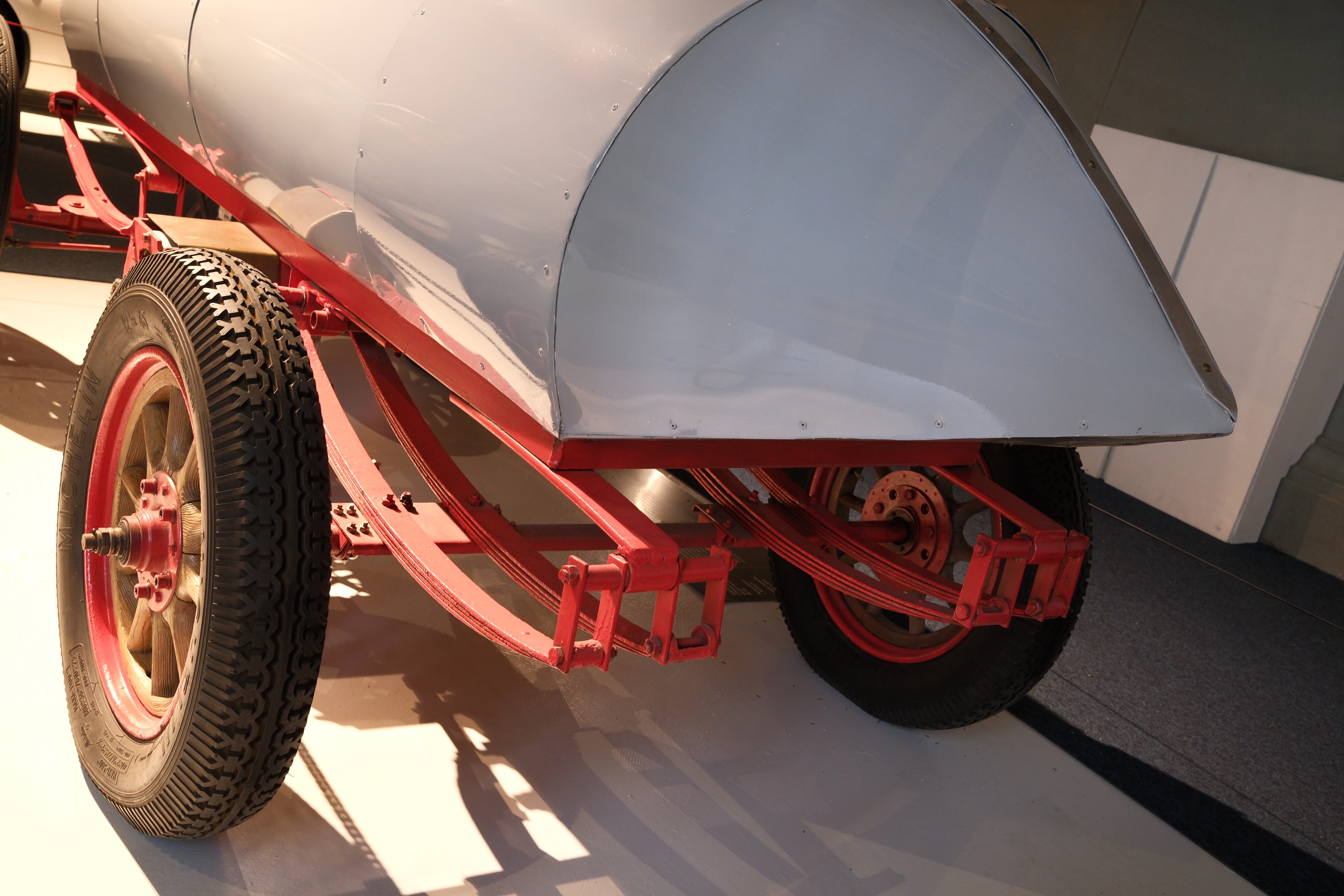
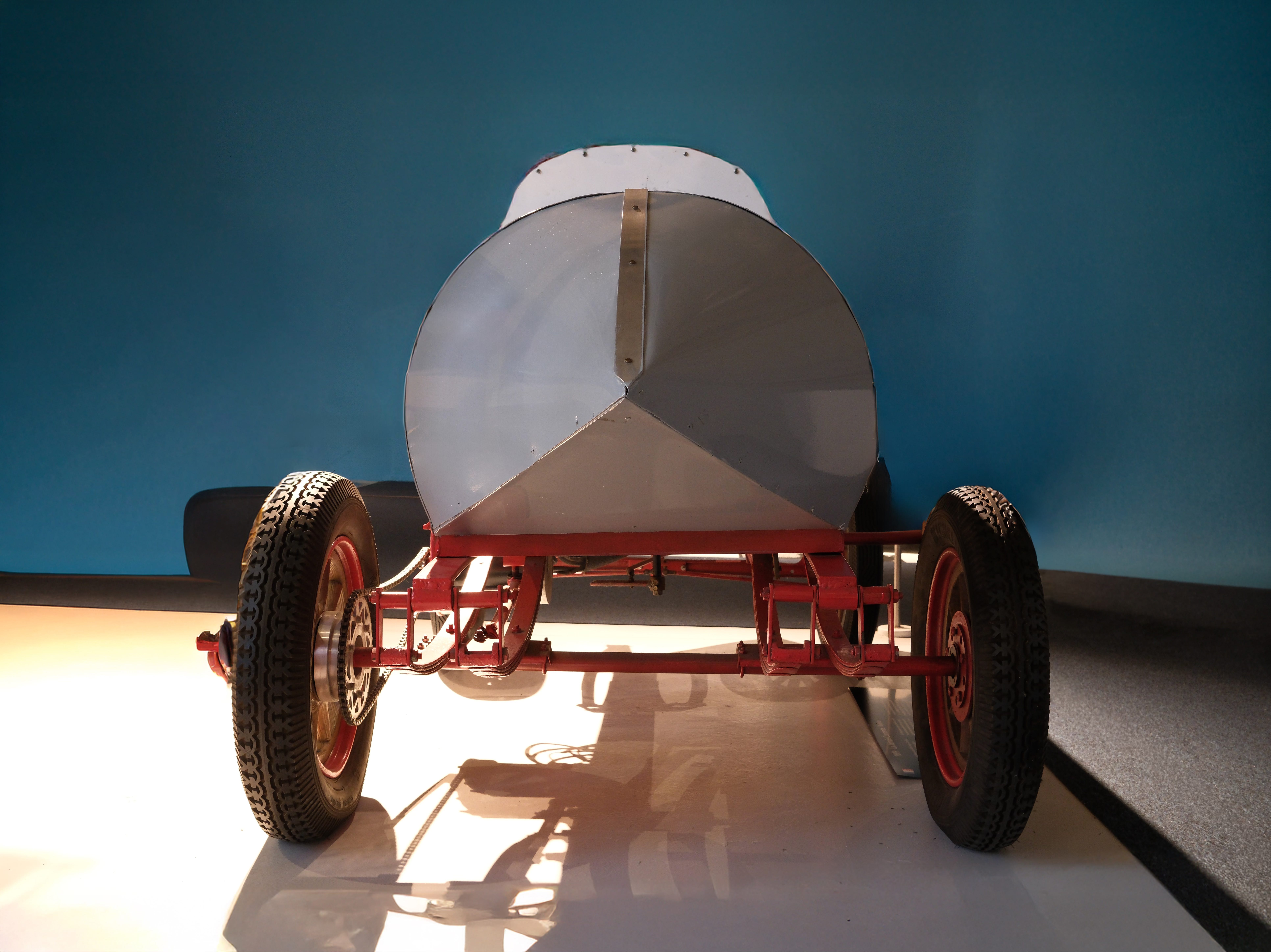
Unlike conventional carriage-style automobiles of the era, La Jamais Contente was radically futuristic with a streamlined torpedo-shaped body, decades ahead of its time. It was constructed from partinium (an early aluminum alloy) for reduced weight and had Two direct-drive electric motors, each producing about 25 kW (≈68 hp total) and powered by Fulmen batteries. The vehicle was mounted on Michelin pneumatic tires, still experimental at the time.
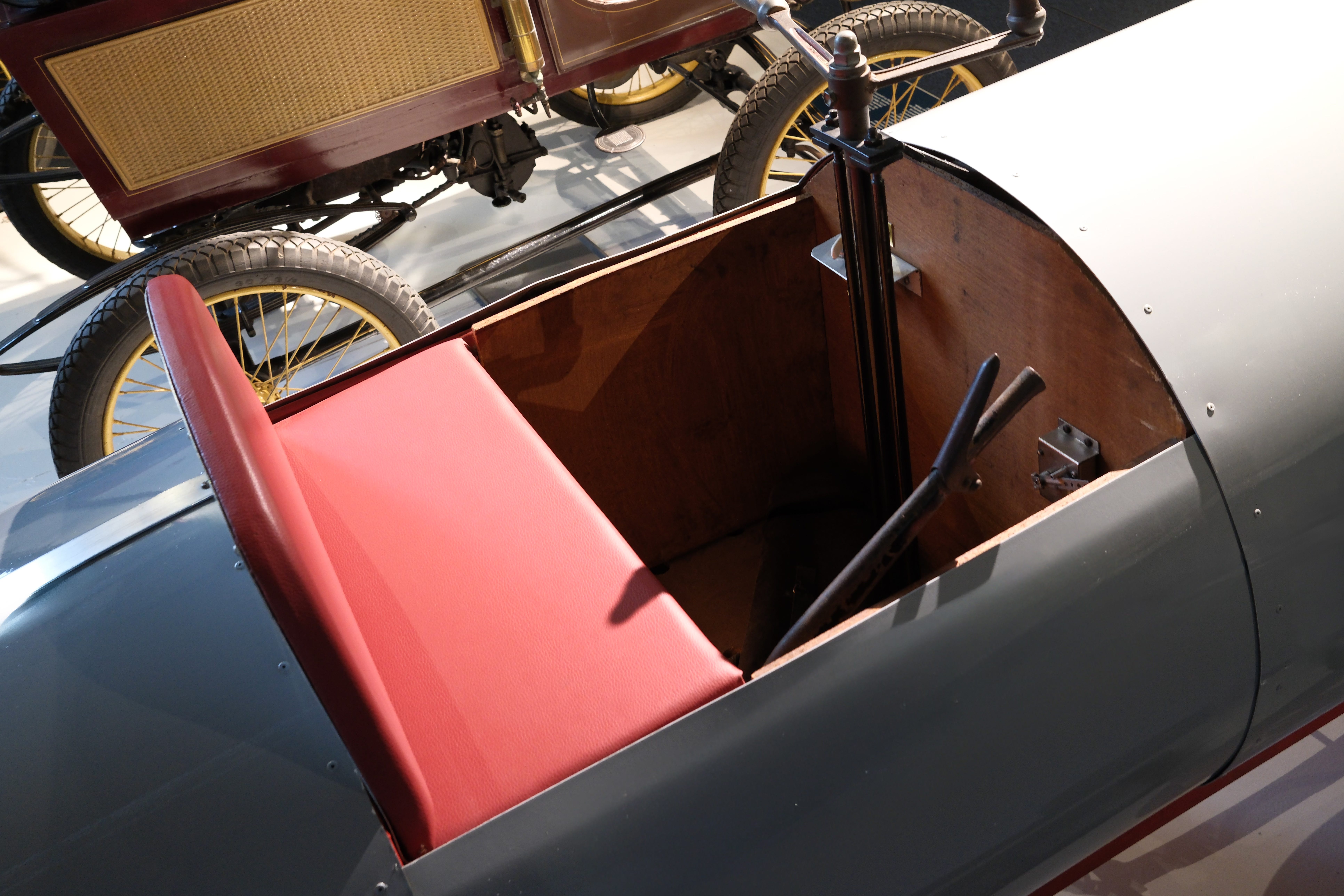
The driver sat high and exposed, with no windshield, seatbelt, or protection—illustrating how experimental early racing still was.
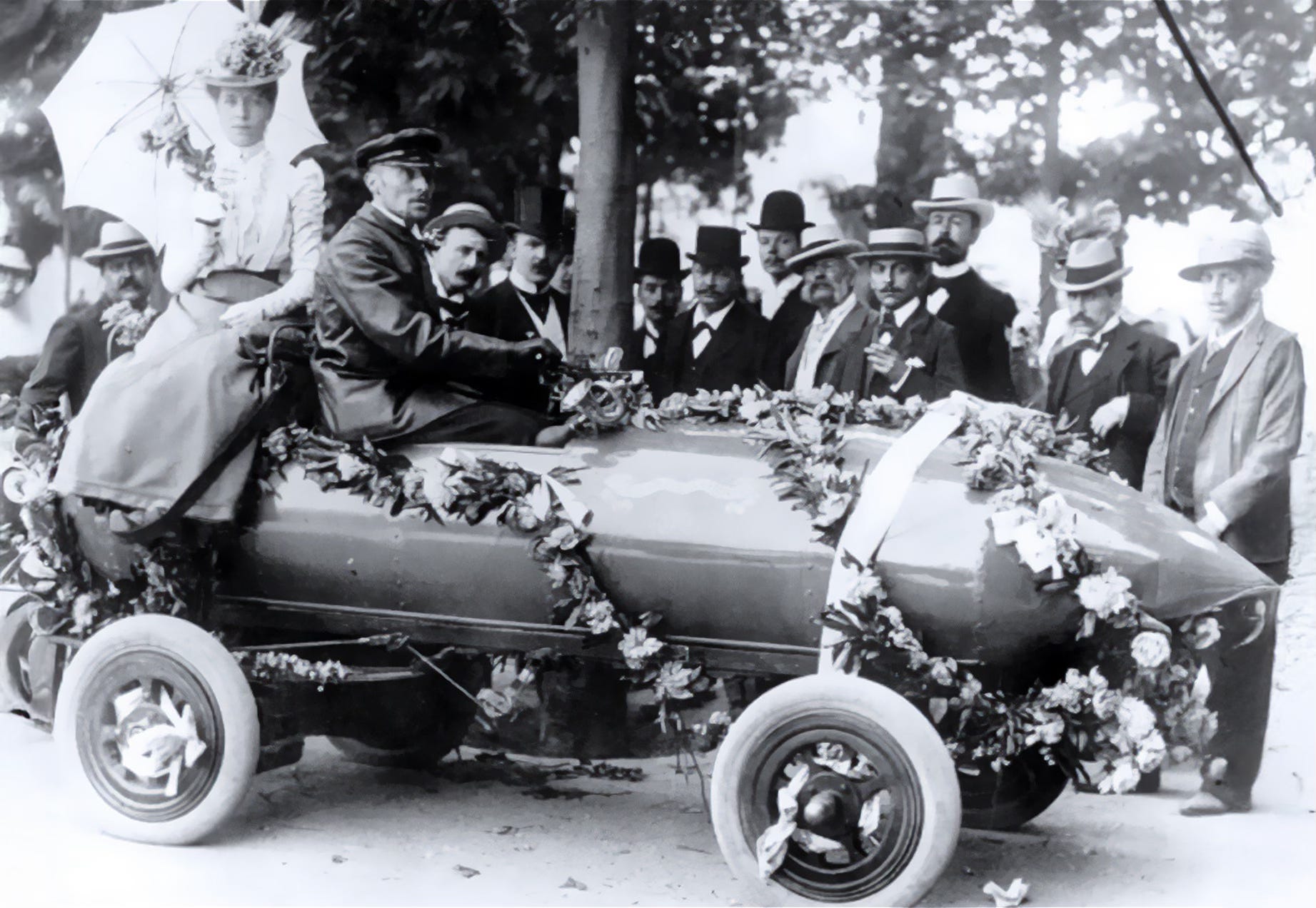
On April 29, 1899, at Achères near Paris, Jenatzy drove La Jamais Contente to a certified speed of 105.882 km/h (65.79 mph). This made it the first car to surpass 100 km/h, the fastest land vehicle on Earth at the time and an electric vehicle world speed record holder.
1899 La Jamais Contente.
This original example is at Musée National De L’automobile in Mulhouse, France.
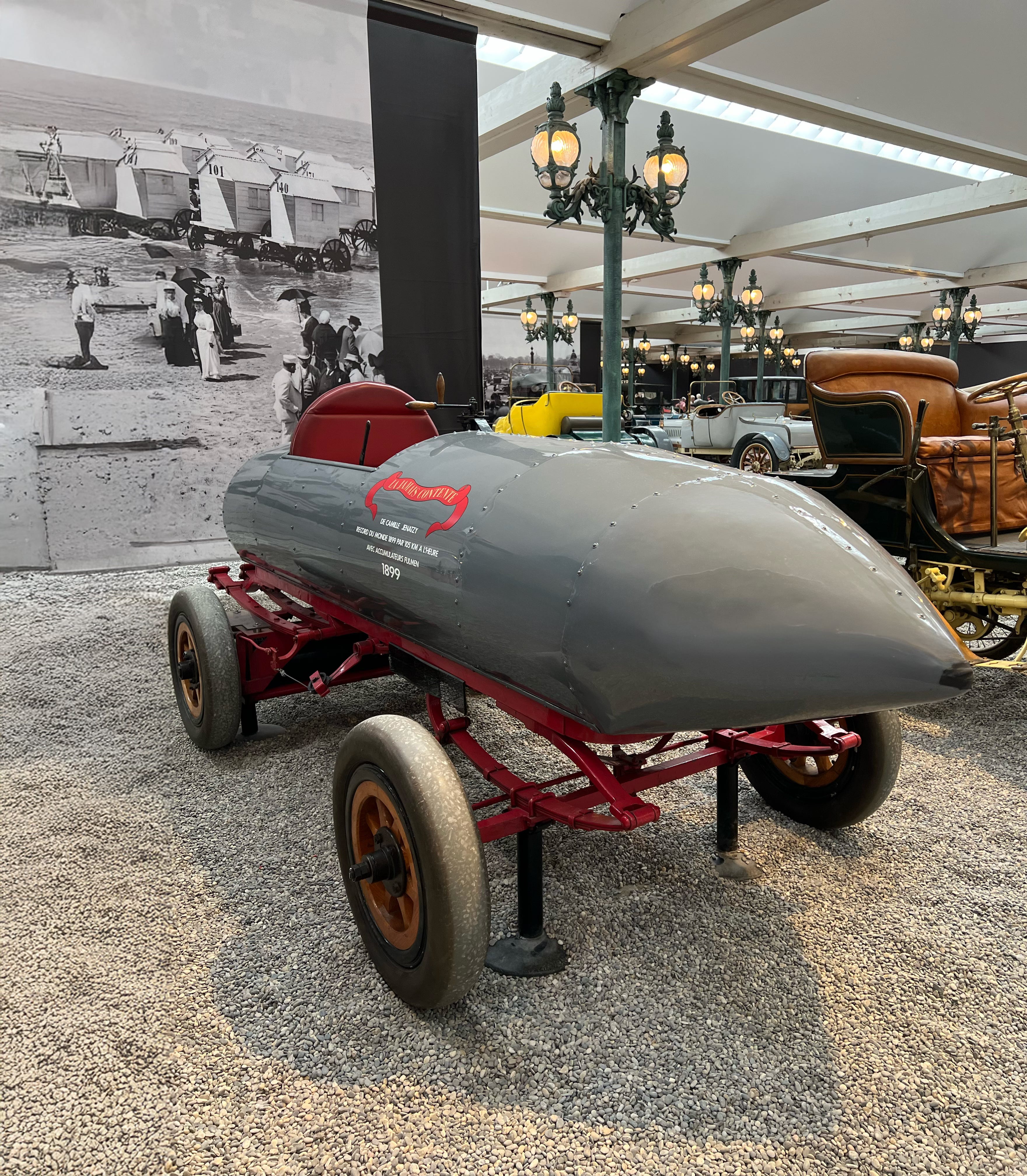
1899 La Jamais Contente replica.
The replica is at Autoworld in Brussels, Belgium.