Although Gutbrod was never one of Germany's largest automakers, it was remarkably innovative and became one of the pioneers of modern small cars after World War II.
Gutbrod was founded in 1926 by Wilhelm Gutbrod in Stuttgart, Germany. They did not initially build automobiles. Instead, they manufactured agricultural machinery and small equipment, serving Germany's farming industry during the difficult economic years following World War I.
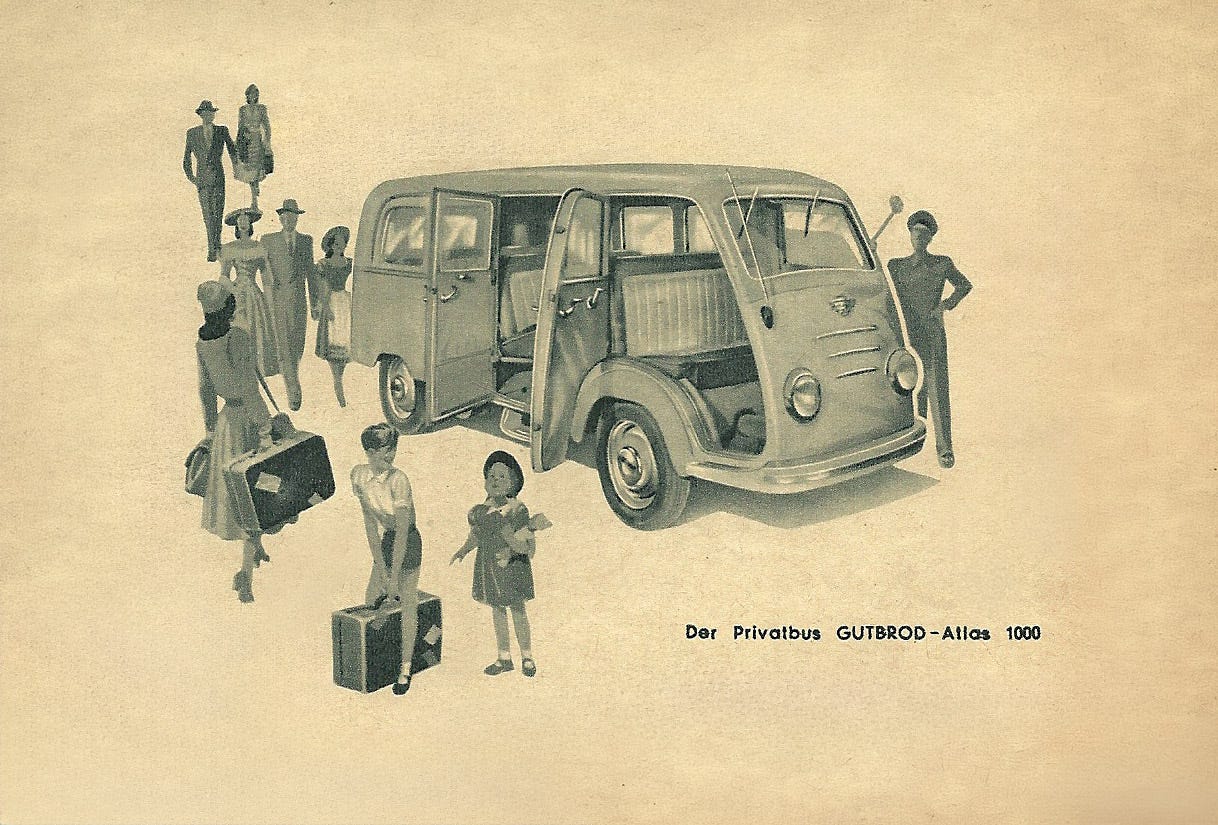
As the company expanded, Gutbrod diversified into small tractors, motorized farm equipment, delivery vehicles and industrial machinery. By the 1930s, Gutbrod had become known for producing compact commercial vehicles, delivery vans, small utility trucks and agricultural tractors.
Rather than competing with Mercedes-Benz or Auto Union, Gutbrod concentrated on practical transportation for tradesmen, farmers, and small businesses.
The original factory was heavily damaged during the Second World War.
Rather than rebuilding conventional automobiles, Wilhelm Gutbrod decided Germany needed small, economical cars that ordinary families could afford.
This decision led to the Gutbrod Superior, introduced in 1950.
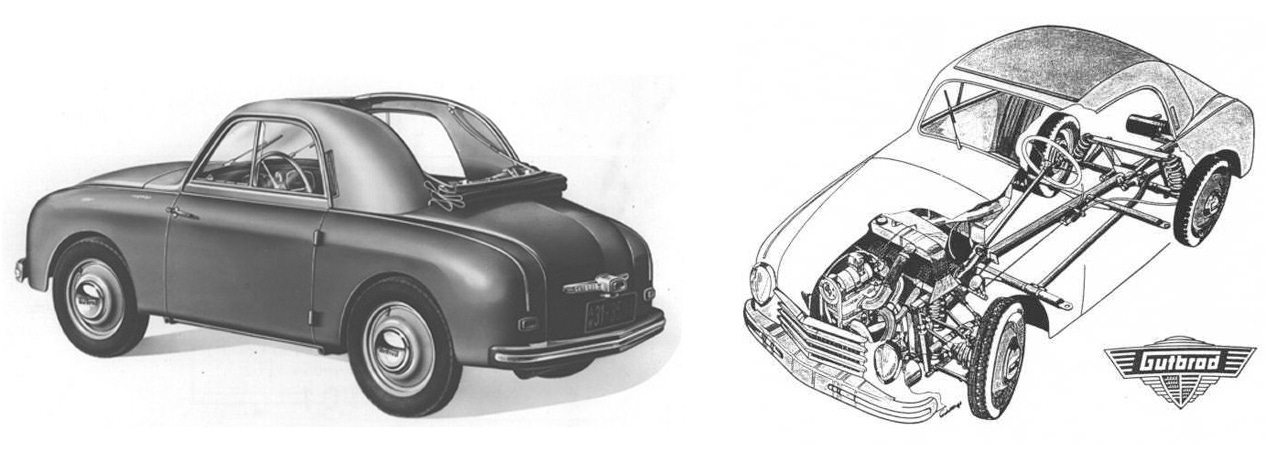
Gutbrod made automotive history in 1952.
The Gutbrod Superior 700E became one of the first production passenger cars in the world equipped with gasoline direct fuel injection. The fuel-injection system was developed by Bosch, years before fuel injection became common on sports cars and luxury vehicles. This was a remarkable technological achievement for such a small company.
Unfortunately, Gutbrod faced increasingly intense competition from manufacturers with far greater resources. The immensely popular Volkswagen Beetle dominated the economy-car market, making it difficult for smaller companies to survive.
Although the cars earned praise for their engineering, Gutbrod lacked the production volume and dealer network needed to compete against Germany’s major manufacturers. Only a few thousand passenger cars were built.
Automobile production ended in 1954.