


Cubitt was a short-lived British automobile manufacturer that attempted to revolutionize the country’s motor industry by producing affordable, American-style cars using modern mass-production methods.
Manufactured in Aylesbury, Buckinghamshire, between 1919 and 1925, Cubitt automobiles were known for their robust construction, spacious bodies and competitive prices. Although the company had ambitions to become one of Britain’s major automobile manufacturers, it ultimately produced only about 3,000 vehicles before collapsing in 1925.

What makes Cubitt particularly interesting is its connection to one of Britain’s most prominent 19th-century construction businesses, and its ultimately unsuccessful attempt to challenge American manufacturers such as Ford.
Cubitt’s automotive origins can be traced to the famous Cubitt family of builders, whose businesses helped shape Victorian London.
The family’s construction enterprises were associated with major projects including Covent Garden Market, railway infrastructure, and additions to Buckingham Palace.
In 1883, the Cubitt building business was acquired by Holland & Hannen, eventually becoming Holland, Hannen & Cubitts.
During the First World War, the company became involved in munitions production and aviation-related industrial work. When the war ended in 1918, management faced a problem: what to do with its manufacturing equipment, factories and experienced workforce?
The solution was to enter the rapidly growing automobile industry.

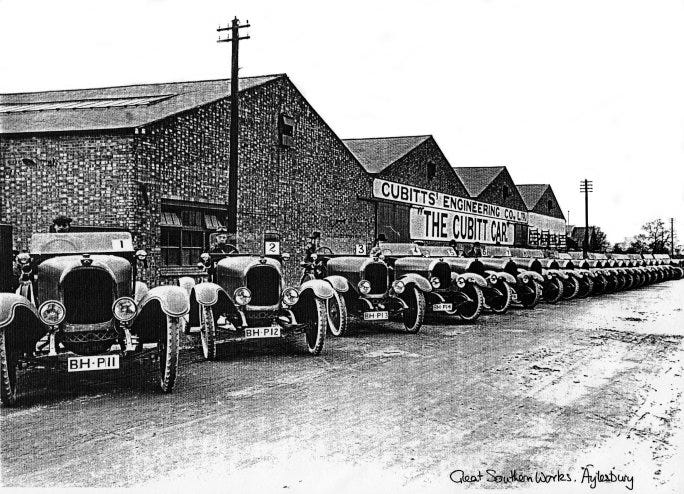
On May 27, 1919, Cubitts’ Engineering Company was registered as a motor-manufacturing subsidiary. Its factory was established on Bicester Road in Aylesbury, using facilities previously associated with wartime manufacturing.
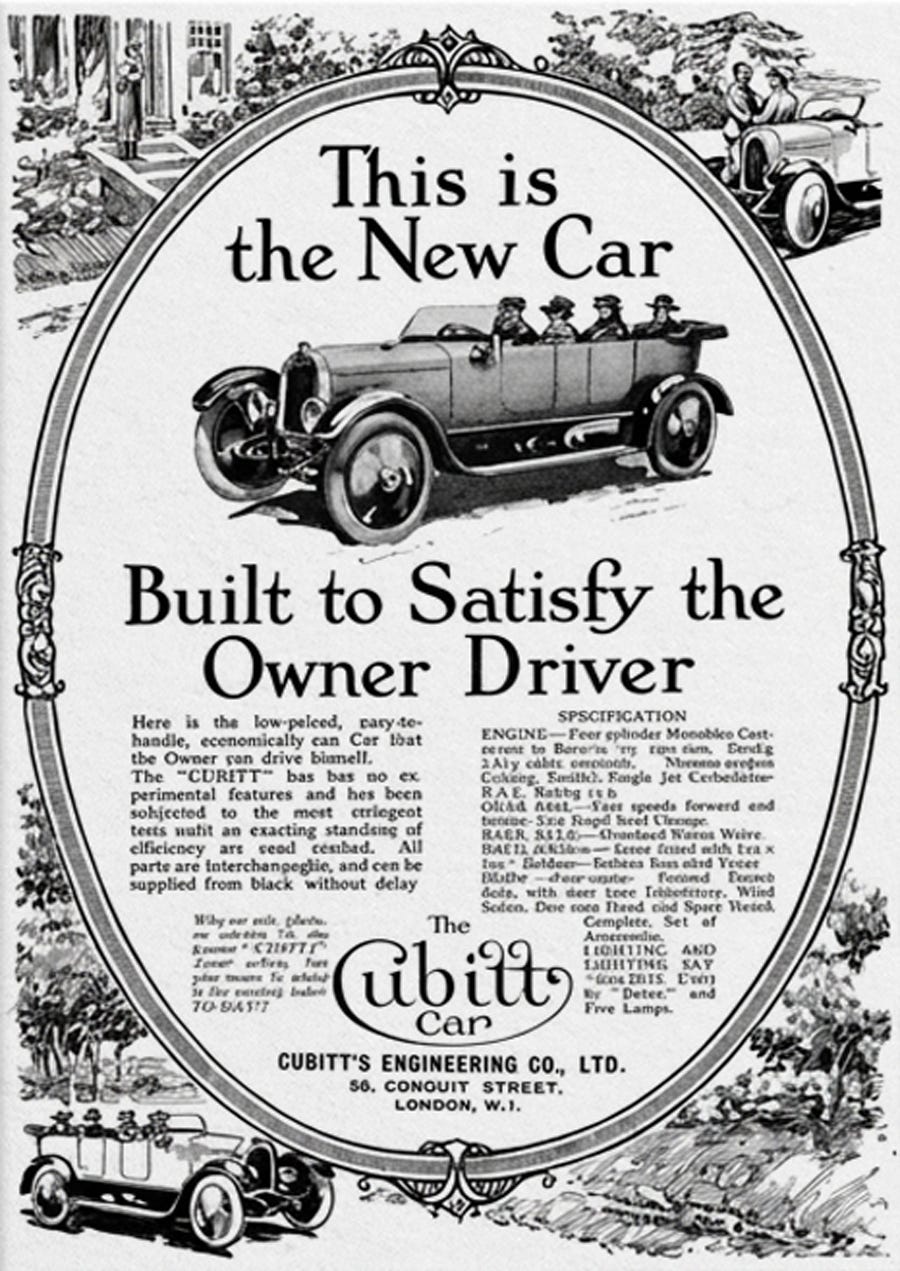
The company’s objective was ambitious: produce approximately 5,000 automobiles annually, using American-style production methods to compete with imported cars.
The first production car was the Cubitt 16/20 HP, a relatively large automobile designed to offer the comfort and durability of more expensive British cars at a lower price.
Its construction was deliberately conventional. Rather than introduce revolutionary engineering, Cubitt emphasized mechanical simplicity, durability, and economical mass production.
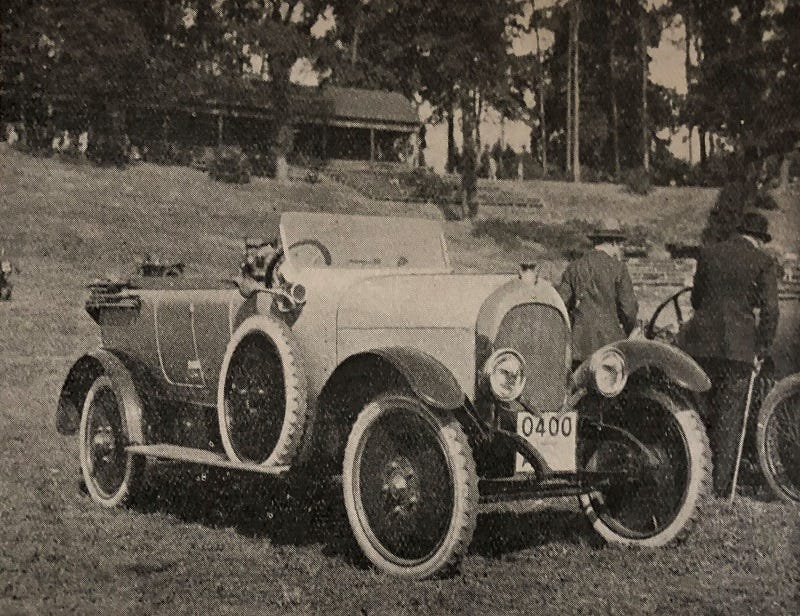
The car featured electric starting and lighting, unusual selling points for a relatively inexpensive British family automobile of the period.
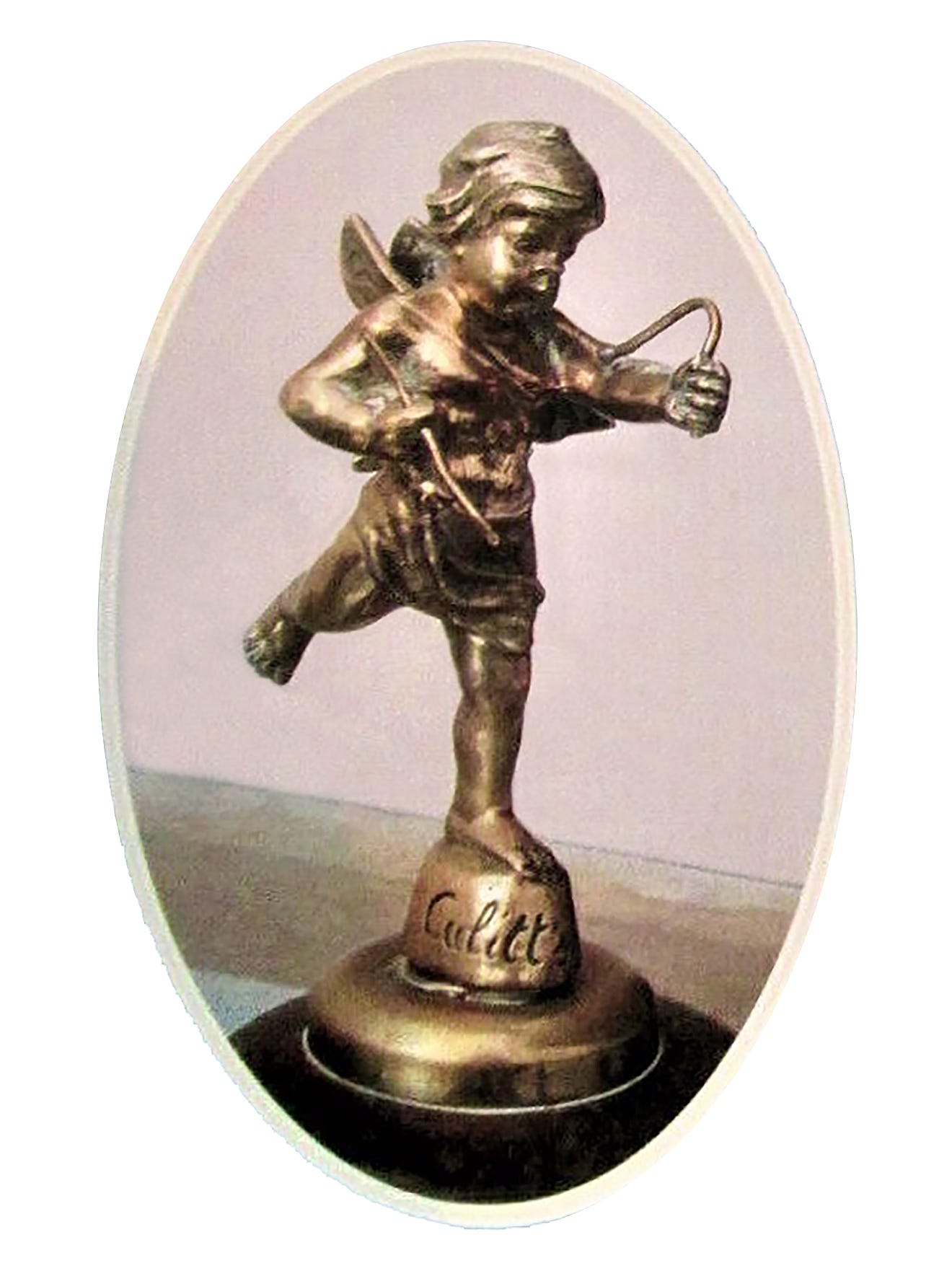
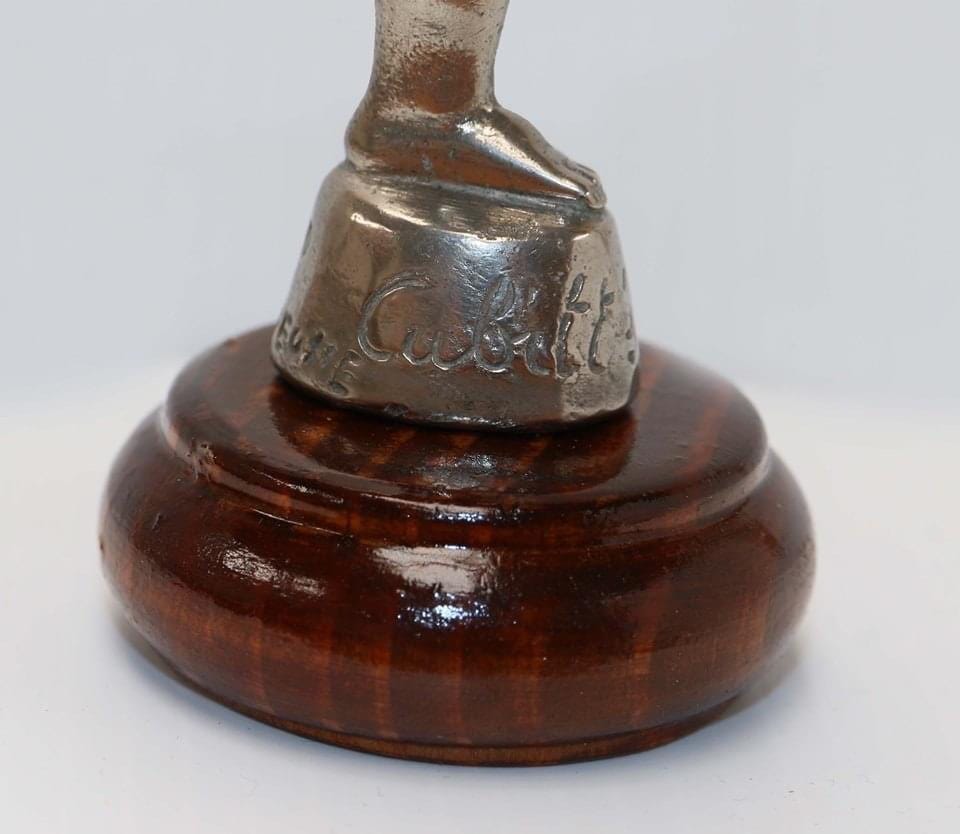
Cubitt is also associated with a distinctive winged Cupid bonnet mascot holding a bow and arrow. Surviving examples feature the Cubitt name on the figure's base.

By 1922, Cubitt was struggling financially. Its initial investment in machinery and factory facilities had been substantial, while production volumes remained disappointing.
The death of managing director Eric May in a motoring accident in January 1922 further disrupted the company.
A prominent figure in the British automobile industry, Selwyn Francis Edge, became involved in rescuing the business. Edge was closely associated with Napier, AC Cars and British Anzani.
He brought in automobile engineer J. S. Napier, previously associated with Arrol-Johnston, to improve the Cubitt.
Cubitt’s failure were financial and structural. Output peaked at around 60 cars per week, well below the level needed to cover substantial manufacturing costs. By the time the company collapsed, accumulated net losses reportedly totaled £420,026, an enormous sum in the 1920s.
A compulsory winding-up order was made on June 23, 1925, bringing the automotive venture to an end.
(sources: The Society of Automotive Historians, Tringlocalhistory, Wikipedia)
Another fascinating bit of automotive history! I knew the Cubitt name from British construction history, but hadn't connected it with automobile manufacturing. What an ambitious undertaking, especially trying to apply American mass-production methods to the British market just after the First World War. And that winged Cupid radiator mascot is absolutely wonderful! It's remarkable how many manufacturers from this period had grand plans and such short lives.