


The Crest Manufacturing Company was a small but surprisingly ambitious pioneer of the American automobile industry.
Based in Cambridge, Massachusetts, it manufactured the Crestmobile, one of the many lightweight gasoline cars that appeared during the experimental years immediately before automobile design became standardized.
The company began by making gasoline engines, ignition coils, spark plugs and other automobile components. Around 1900, it demonstrated that it could manufacture an entire vehicle, initially experimenting with a three-wheeler before introducing a conventional four-wheel automobile in 1901.

The first production Crestmobiles were extremely simple two-passenger runabouts, with Model A producing approximately 2 horsepower, Model B with 3½ horsepower and Model C with 5 horsepower.
All used vertically mounted, air-cooled single-cylinder engines. The earliest cars drove the rear wheels by chain and had very short wheelbases, light tubular frames and tiller steering. Crest adopted shaft drive by 1903, an important improvement that the company emphasized heavily in its advertisements.
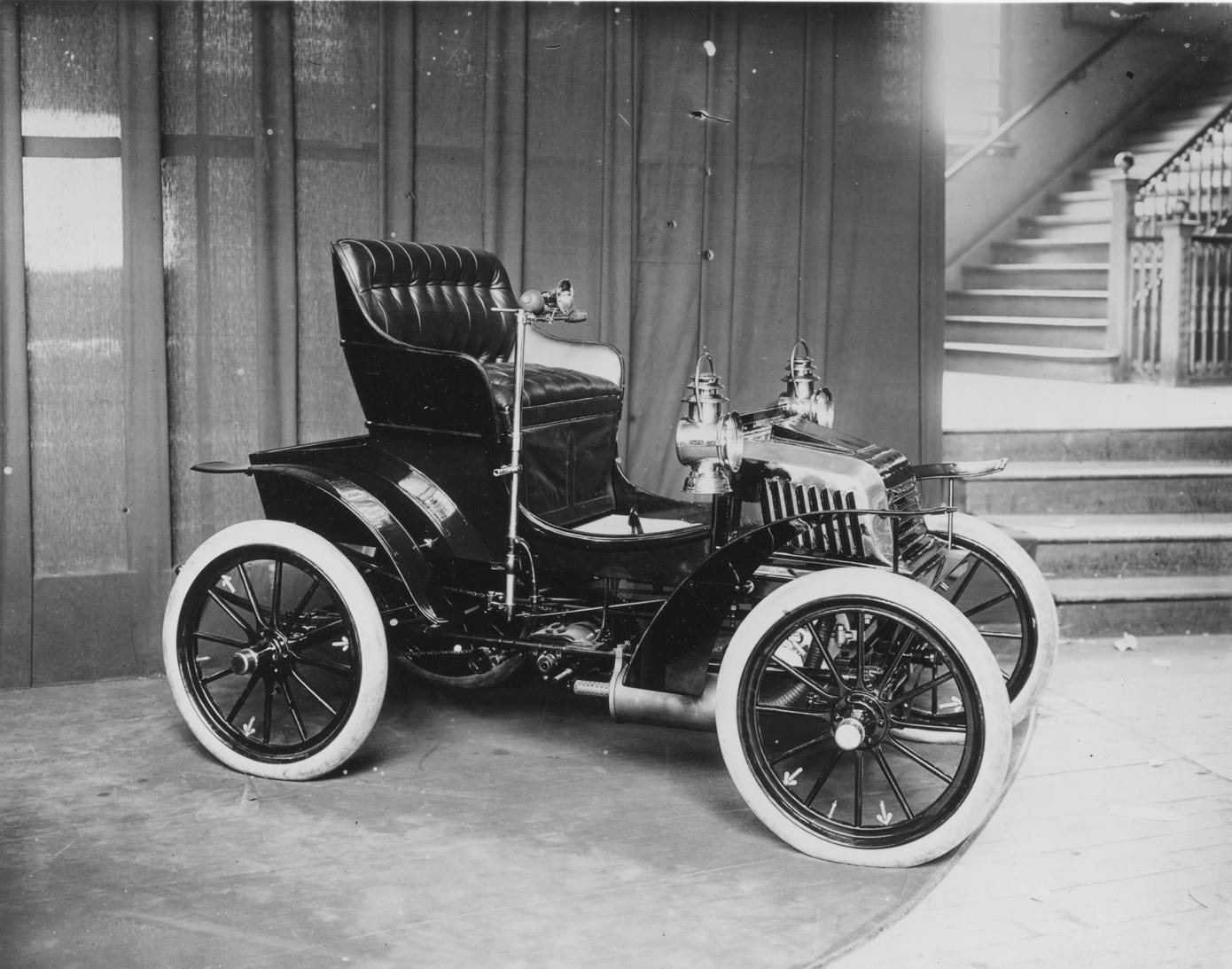
By 1903 and 1904, Crest offered more substantial versions. The later Model D developed approximately 8 to 8½ horsepower and used a two-speed transmission.
The advertisements show how Crest positioned the car: simple, attractive, mechanically accessible and less expensive than larger automobiles. Early examples were advertised around $600; later two-passenger cars were approximately $750, while a four-passenger version cost around $850.
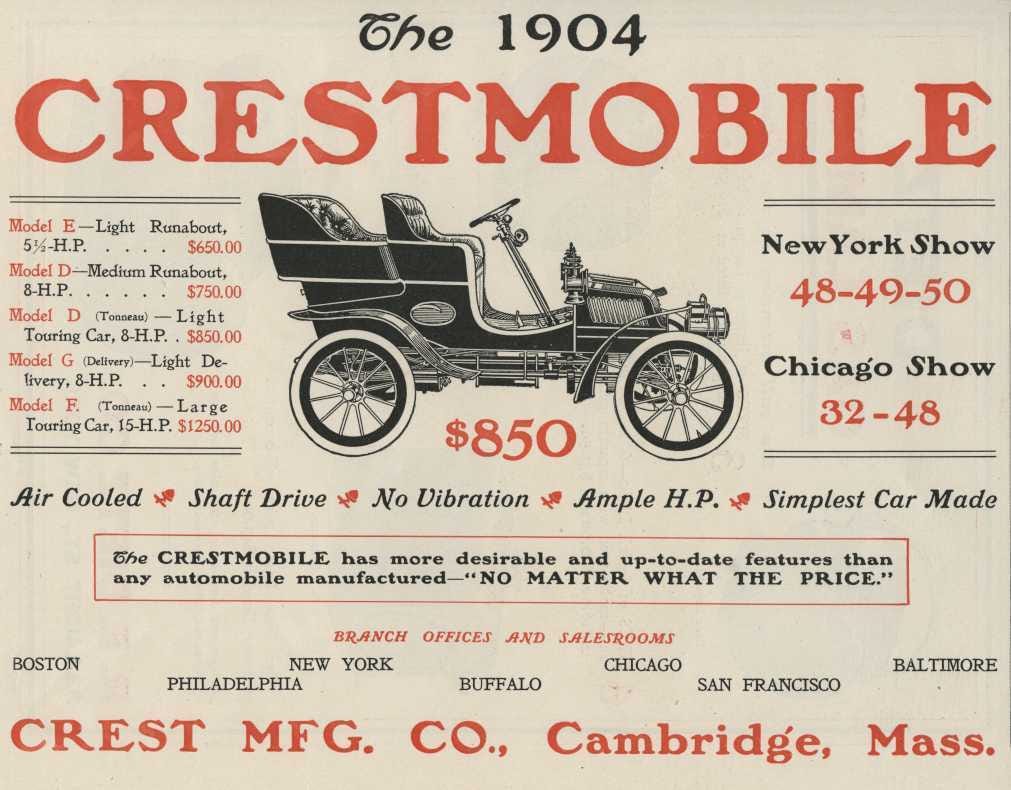
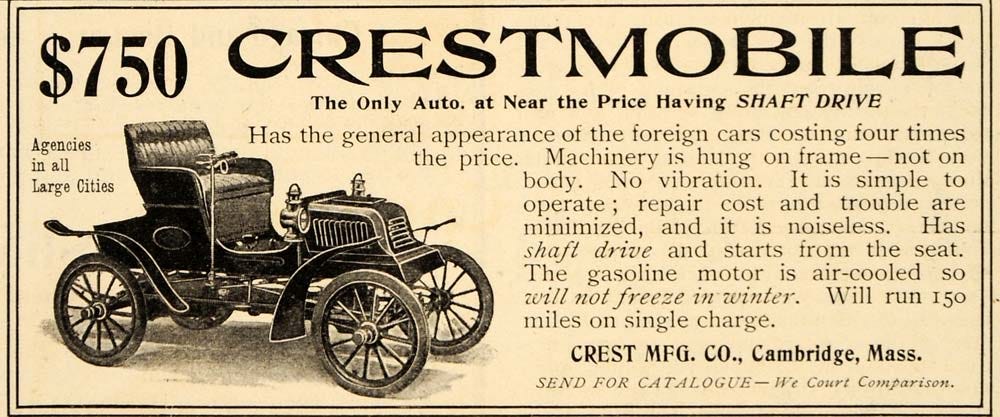
For such a short-lived manufacturer, Crest reached a meaningful scale. A Cambridge historical account reports that in 1904 the company employed approximately 300 workers and was producing about five automobiles per day. Crest claimed to have produced more than 1,000 vehicles. Financial difficulties appeared near the end of 1904, and automobile production effectively ended in 1905.
(sources: History Cambridge, Bonhams, Veteran Car Run)