


The Apperson Brothers Automobile Company of Kokomo, Indiana, was one of America’s pioneering automobile manufacturers and among the most technically innovative independent automakers of the Brass Era.
Although it never achieved the production numbers of Ford, Buick, or Cadillac, Apperson earned a reputation for engineering excellence, speed, and luxury. The company produced automobiles from 1901 until 1926, leaving an important legacy in early American automotive history.
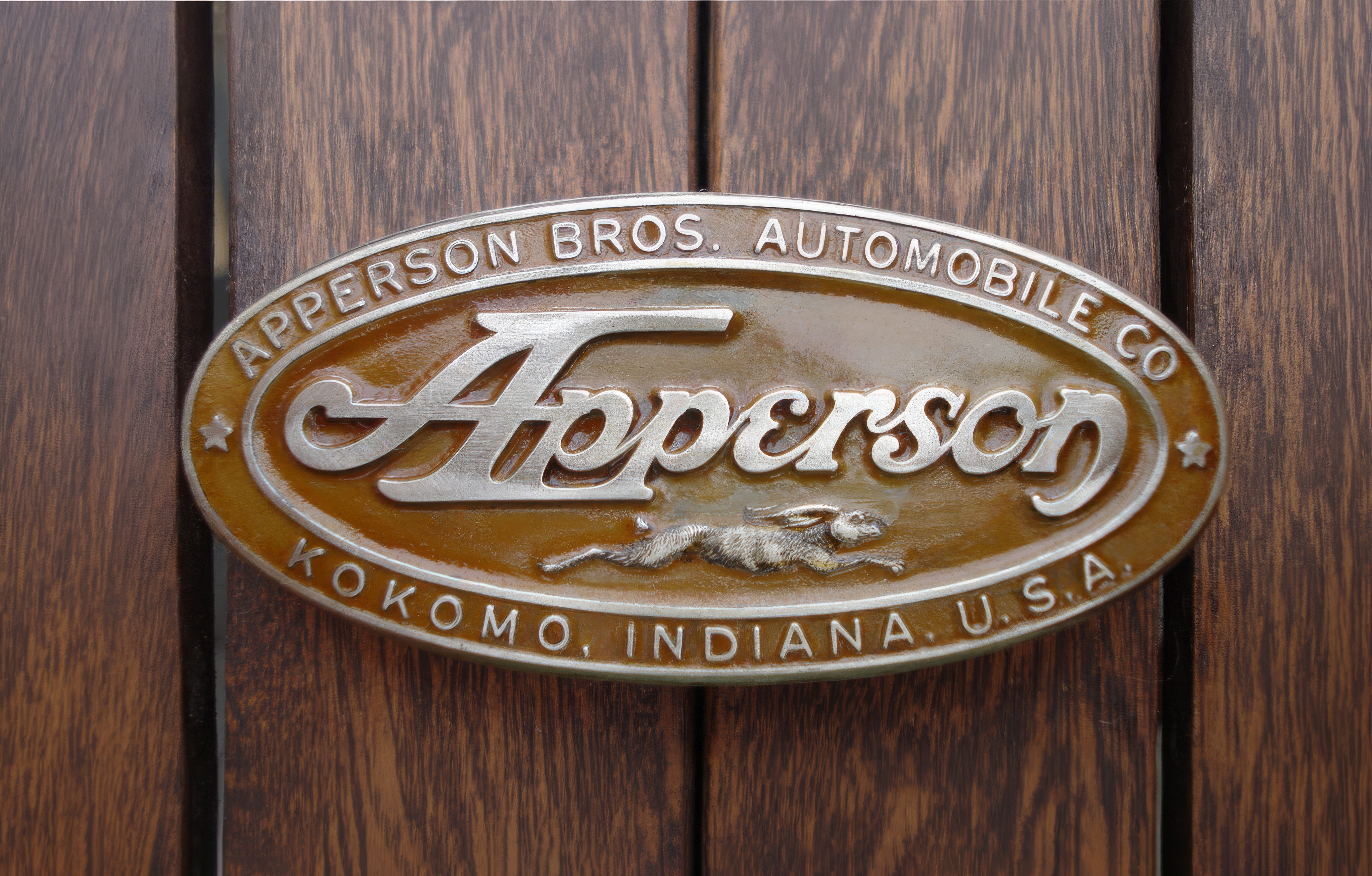
The company’s story begins before the automobile industry truly existed.
In the late 1880s, Elmer Apperson operated the Riverside Machine Works in Kokomo, Indiana. His younger brother Edgar Apperson joined the business, where they built and repaired machinery for local industries.
In 1893–1894, inventor Elwood Haynes approached the brothers about building a gasoline-powered carriage. Edgar became the chief mechanic on the project, and on July 4, 1894, the completed vehicle made its famous test drive through Kokomo. It is widely recognized as one of the first successful gasoline-powered automobiles built in the United States.
The success of this machine led to formation of the Haynes-Apperson Company, one of America's earliest automobile manufacturers.
Differences over management and finances eventually caused the partnership with Haynes to dissolve.
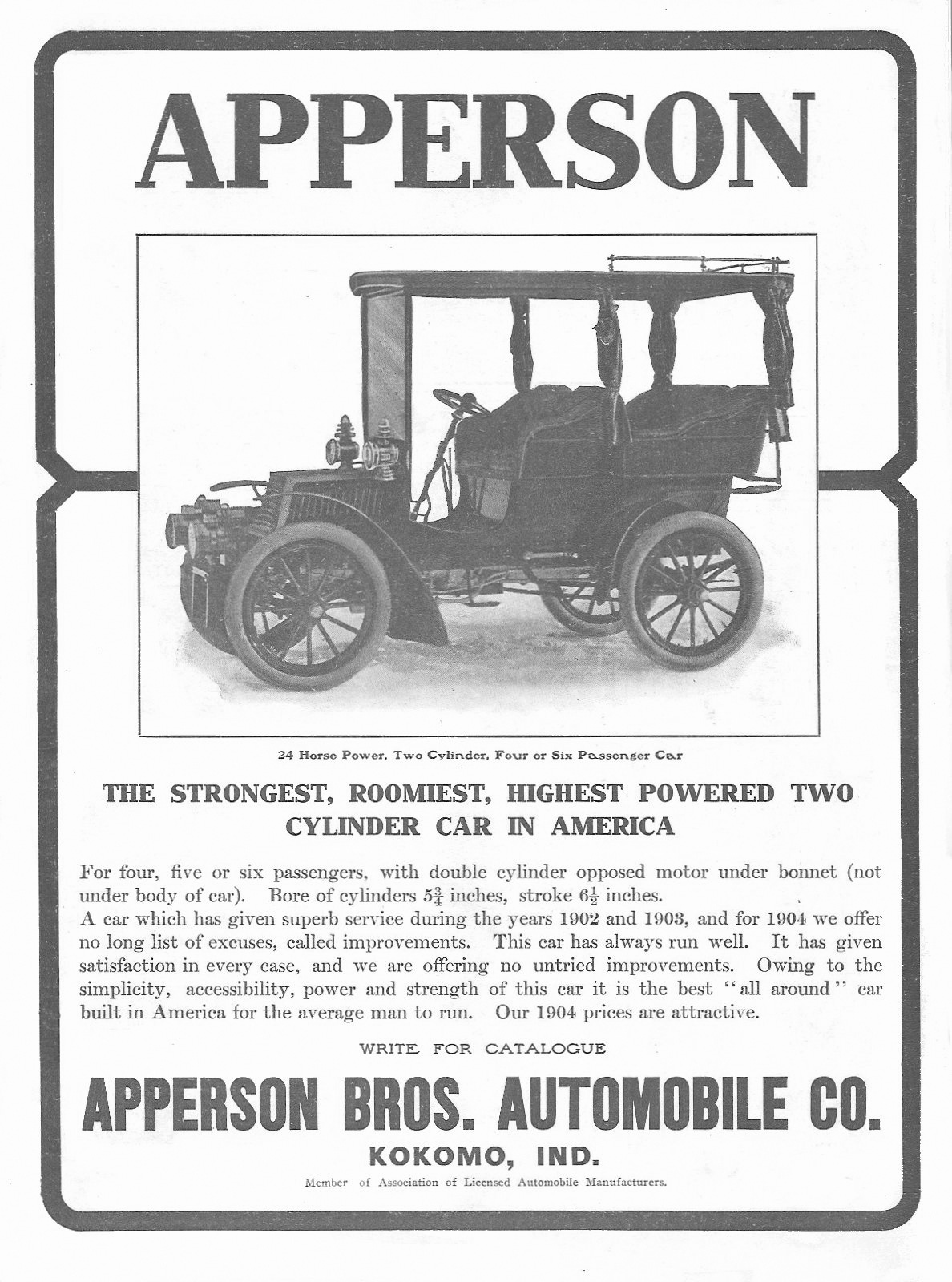
In 1901, Edgar and Elmer founded the Apperson Brothers Automobile Company in Kokomo. The company was formally incorporated later, expanding into one of Indiana’s leading automobile manufacturers. Its stated purpose extended beyond automobiles to include motorcycles, self-propelled vehicles, and related machinery.
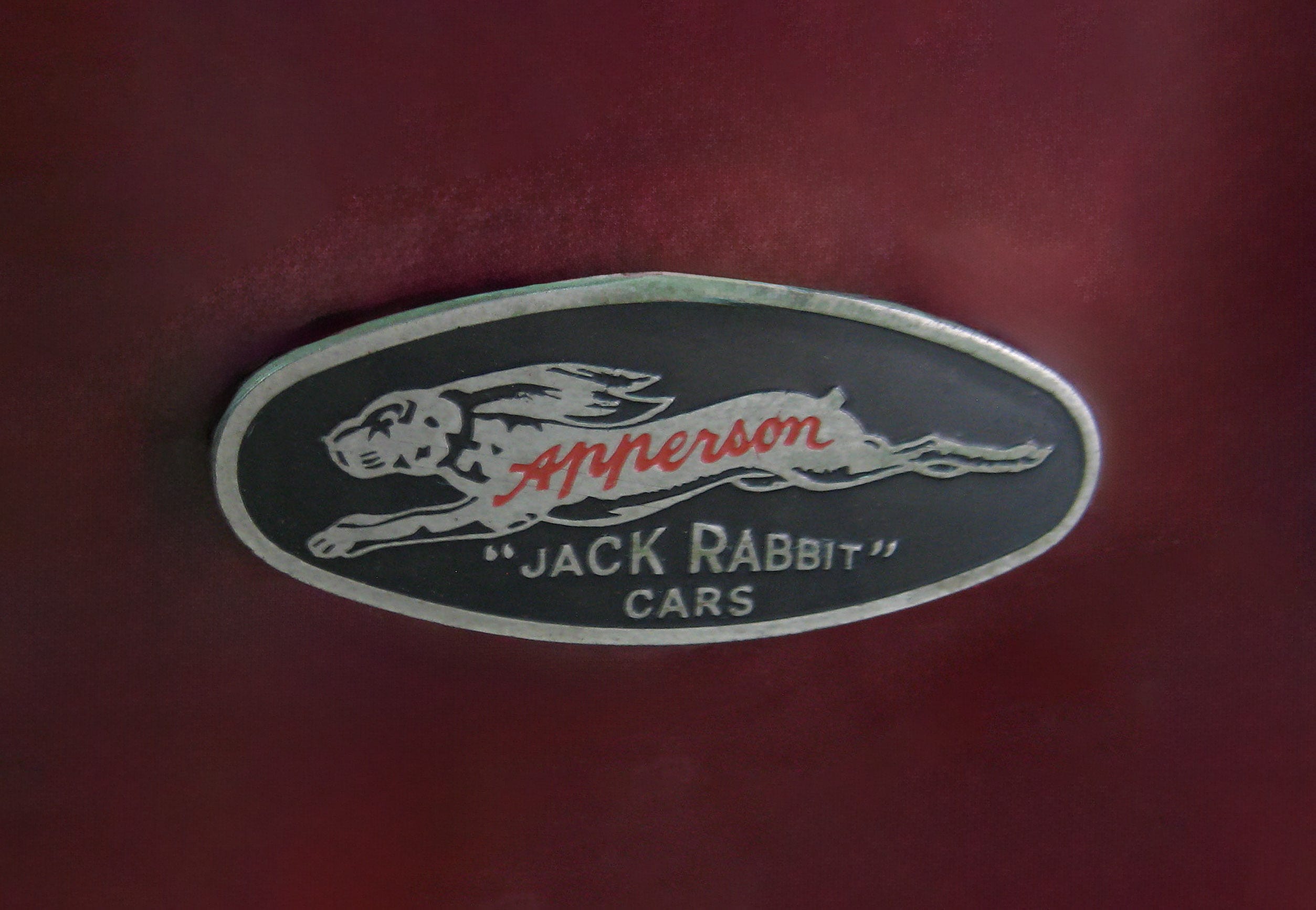
Unlike many early manufacturers that produced simple runabouts, Apperson quickly established itself as a builder of high-performance and luxury automobiles.
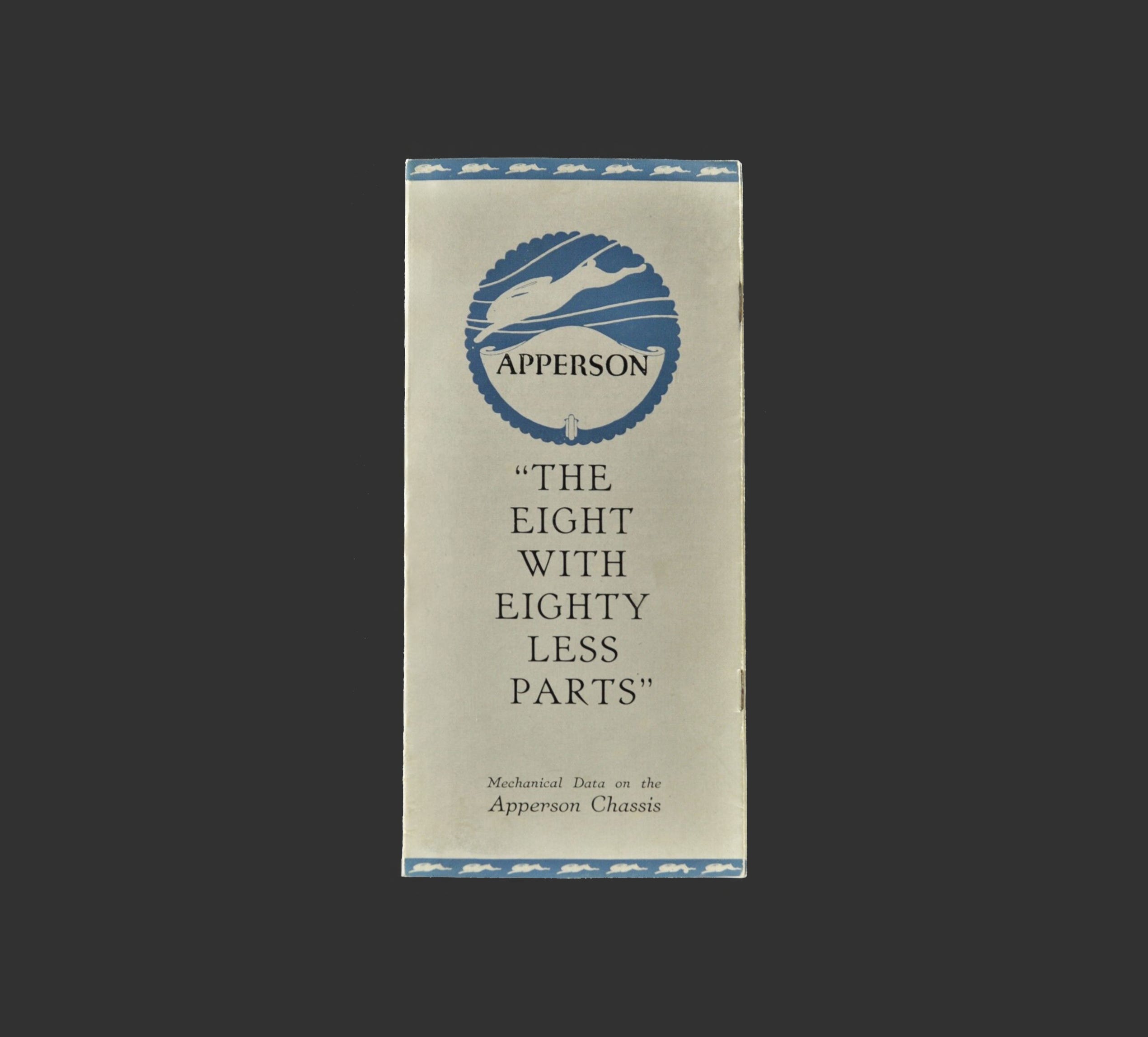
Perhaps the company’s best-known model was the Jack Rabbit, introduced in 1907.
The Jack Rabbit became synonymous with speed.
Early versions produced around 60 horsepower, allowing speeds approaching 75 mph, remarkable performance for the era. Advertisements proudly emphasized both reliability and racing success, and the rabbit mascot became one of the most recognizable automotive emblems of the Brass Era.
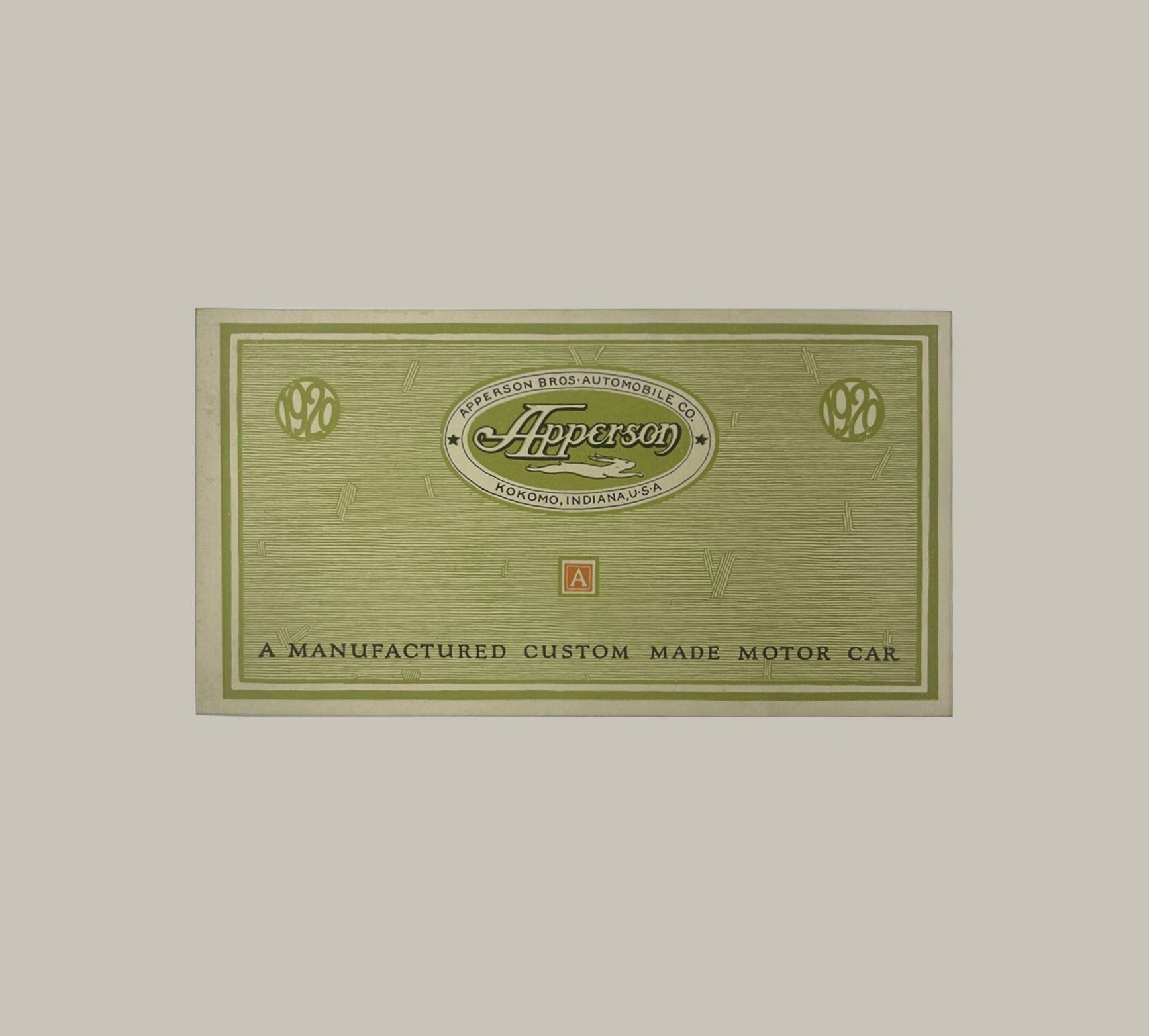
One of Apperson’s greatest achievements arrived in 1917.
To commemorate roughly twenty-five years of automotive work by the Apperson brothers, the company introduced the elegant Anniversary Eight. Automotive historians often regard it as one of the most beautiful American touring cars of the late 1910s. Because production was limited, surviving examples are extremely rare today.
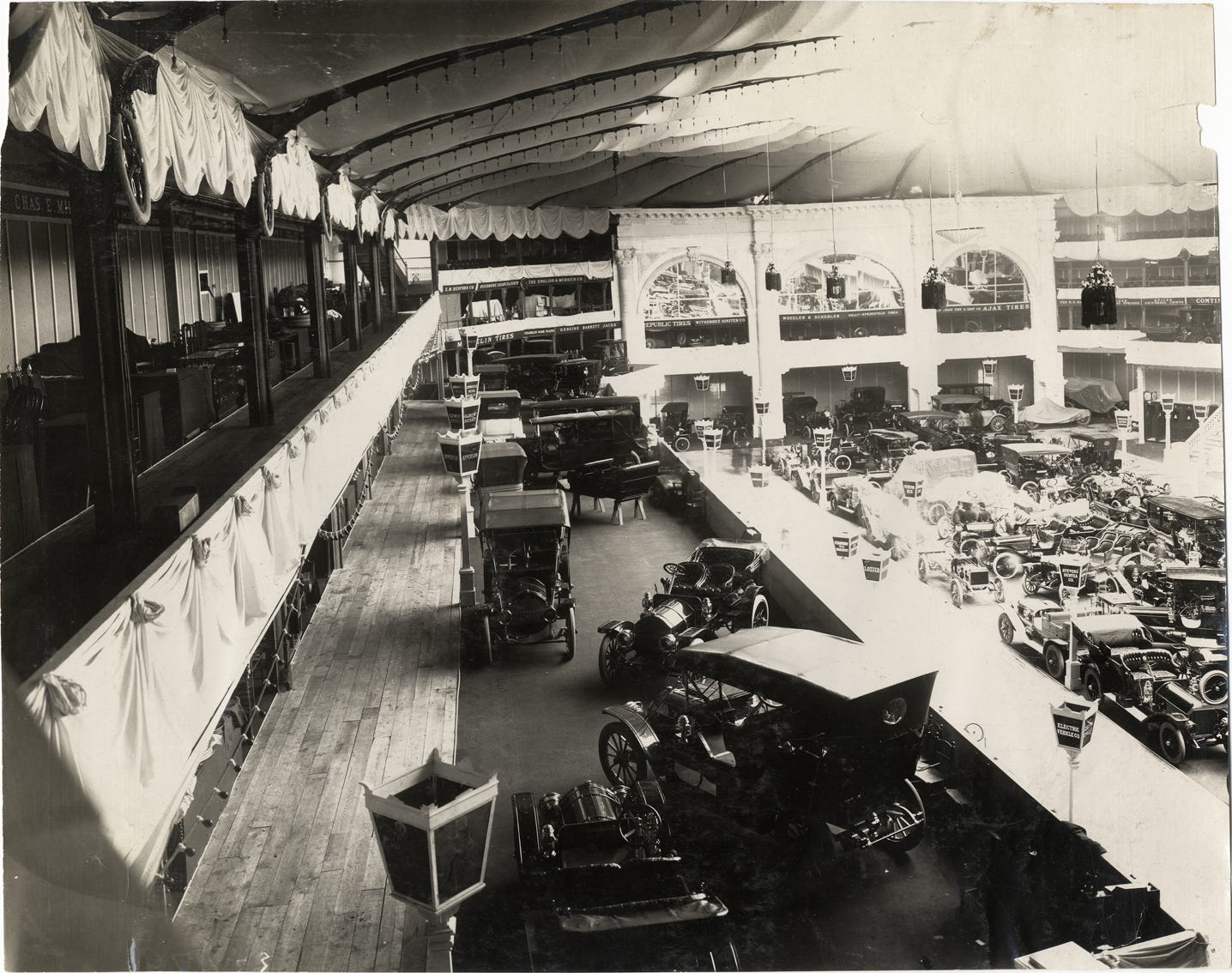
Apperson remained a relatively small manufacturer.
Annual production generally ranged from several hundred to around 2,000 automobiles, with peak output occurring around 1916. Every vehicle required significant hand labor, which limited production but enhanced quality.
Several factors contributed to the company’s downfall:
Henry Ford’s mass-production methods dramatically lowered automobile prices.
Consumers increasingly preferred less expensive cars.
Luxury independent manufacturers faced intense competition after World War I.
Elmer Apperson died in 1920, depriving the company of one of its founders and technical leaders.
By 1924, the company reorganized under the name Pioneer Automobile Company, but the change could not reverse declining fortunes. Production ended in 1926.