Redesigned Citroen logo for 2009. Designed by Landor Associates Paris and Citroën's in-house team led by Jean-Pierre Ploué
Subscribe to our web feeds:
Type, Articles, Vehicles
Quick Links (i.e. Blog)
Citroen (France). 1919 to date.
You might imagine that the forward-pointing chevron pattern symbolises Citroen's forward-looking, advanced approach to engineering. But no: Andre Citroen started in the motor trade by building gear wheels, and the twin chevrons are meant to represent gear teeth.
(text from CAR magazine, July 1999. Written by Martin Buckley.)

Redesigned Citroen logo for 2009. Designed by Landor Associates Paris and Citroën's in-house team led by Jean-Pierre Ploué
Engineer Andre Citroen had spent many years in the automotive industry making gears; during the war he manufactured munitions.
His first car, the Type A launched in 1919, had a sv 1327cc engine. In 1922 came the Type B of 1453cc. The same year saw the first of the famous Citroen expeditions with the Citroen-Kgresse half-track across the Sahara. It was also the year of the popular "Cloverleaf" Type C of 855cc. This remarkable car was very popular, due to its low price and high reliability. Between May 1922 and May I926, 80,232 Cloverleaves were built, but Citroen's record during the vintage period was for the C4 with 134,000 cars built in a little more than four years.
Citroen introduced mass production on the American pattern into France. With the B10 in 1925, he introduced France's first all-steel body. The C-Series followed, of which the most interesting was the C6 six-cylinder available in two versions (2442cc and 2650cc).
In 1934, Citroen presented the revolutionary 7cv "Traction Avant", but its development costs bankrupted him, and the firm was taken over by Michelin. Between 1934 and 1940 the factory made the Traction Avant in no fewer than 21 different versions, the three basic models being the 7 cv and 11 cv fours and the 15 cv six. It also presented a prototype of a sensational V8-engined front-wheel-drive which never saw production.
After the war, Citroen resumed production with the 11 cv and the 15 cv, sold only in black. At the Paris Motor Show of 1949, Citroen launched the amazing 2cv, a strange and spartan car, front-wheel driven with a 375cc air-cooled flat-twin engine. For many years the Traction Avant and the Deux Chevaux were the only models; in 1954 the 15 cv was equipped with hydropneumatic suspension.
The year after, Citroen presented the car of the new era, the immortal DS 19. The old "Traction" nevertheless remained in production until 1957. A simpler version of the DS, the ID 19, was presented in 1956, and 1961 was the year of the Ami 6, a sort of "super 2 cv". The DS 21 followed the DS 19 in 1967, and the year after the Dyane appeared, still with the air-cooled flat-twin.
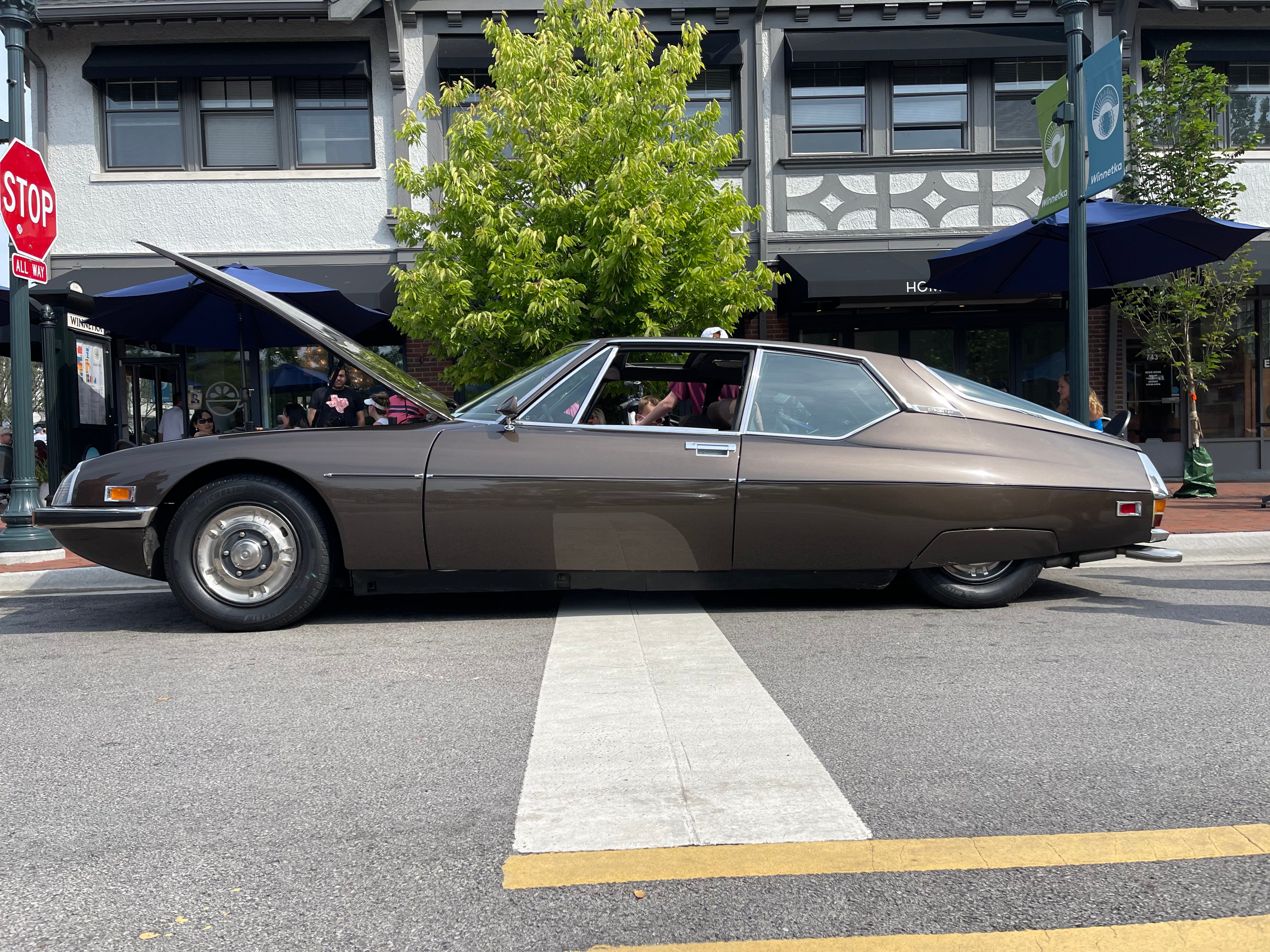
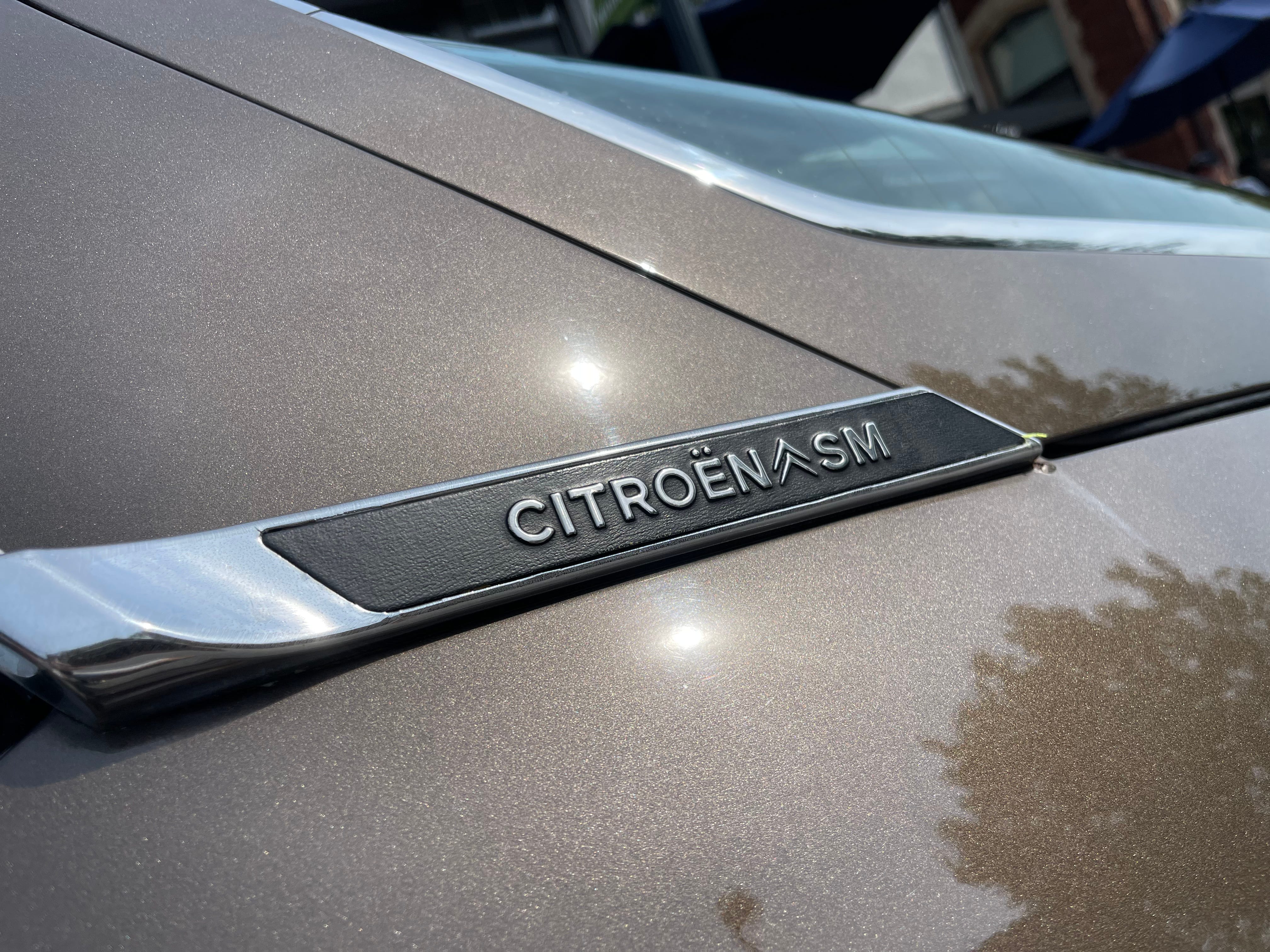
In 1968 a strange vehicle left the works, the plastics-bodied Mahari, which ressembled a Jeep. The most significant car of that year was the GS, with a flat-four engine, and 1969 saw the luxurious SM with the dohc Maserati V6 of 2675cc. In 1975, the DS gave way to the CX 2000, later enlarged to 2200cc, 2400cc and 2500cc.
Having come under the control of Peugeot, Citroen presented the LN, a marriage of a Peugeot body with a Citroen engine.
(Vintage European Automobiles)
Citroen logo.

| ABOUT | EDITORS | CONTACT |
Much of the material on this website is copyrighted. Original articles appearing herein are subject to copyright. Please don't copy stuff from the site without asking; it may belong to someone! Any trademarks appearing on this site are the sole property of the registered owners. No endorsement by trademark owners is to be construed. The products, brand names, characters, related slogans and indicia are or may by claimed as trademarks of their respective owners. Every effort has been made whenever possible to credit the sources. The use of such material falls under the Fair Use provisions of intellectual property laws.
Citroën DS is my ultimate car. I do not have a drivind license, but getting that one car would turn me to get one:
I was hitchicking from the north back to Helsinki, and got a lift. Soon we came to a bit of road reserved for air force emergency use; a widened straight of 3 km. I noticed we were going fast, when I saw a car with a trailer wizzing past. I thaught it was stationary, but it was in fact going 100 km/h. We were doing pretty good pace; when I managed to look at the meter, we were slowed to 210 km/h.
I liked that ride.
Citroën DS is The Most Beautiful Car in the World.
(After some talk with the year…)